Get your free personalized podcast brief
We scan new podcasts and send you the top 5 insights daily.
While investing carries risks, holding cash guarantees a loss of purchasing power due to inflation. Therefore, the decision to abstain from investing is a far riskier financial gamble than participating in the market over the long term.

Related Insights
Unlike missing a tech stock's upside, choosing not to hold Bitcoin is an active decision to remain in a fiat system that guarantees wealth erosion through debasement. Inaction means your financial situation and standard of living actively get worse.

Holding cash is a losing strategy because governments consistently respond to economic crises by printing money. This devalues savings, effectively forcing individuals to invest in assets like stocks simply to protect their purchasing power against inflation.

Contrary to its perceived safety, holding cash is a losing proposition over the long term. Deutsche Bank's historical data over 200 years shows a global real return of -2% per year for cash, eroding purchasing power significantly.
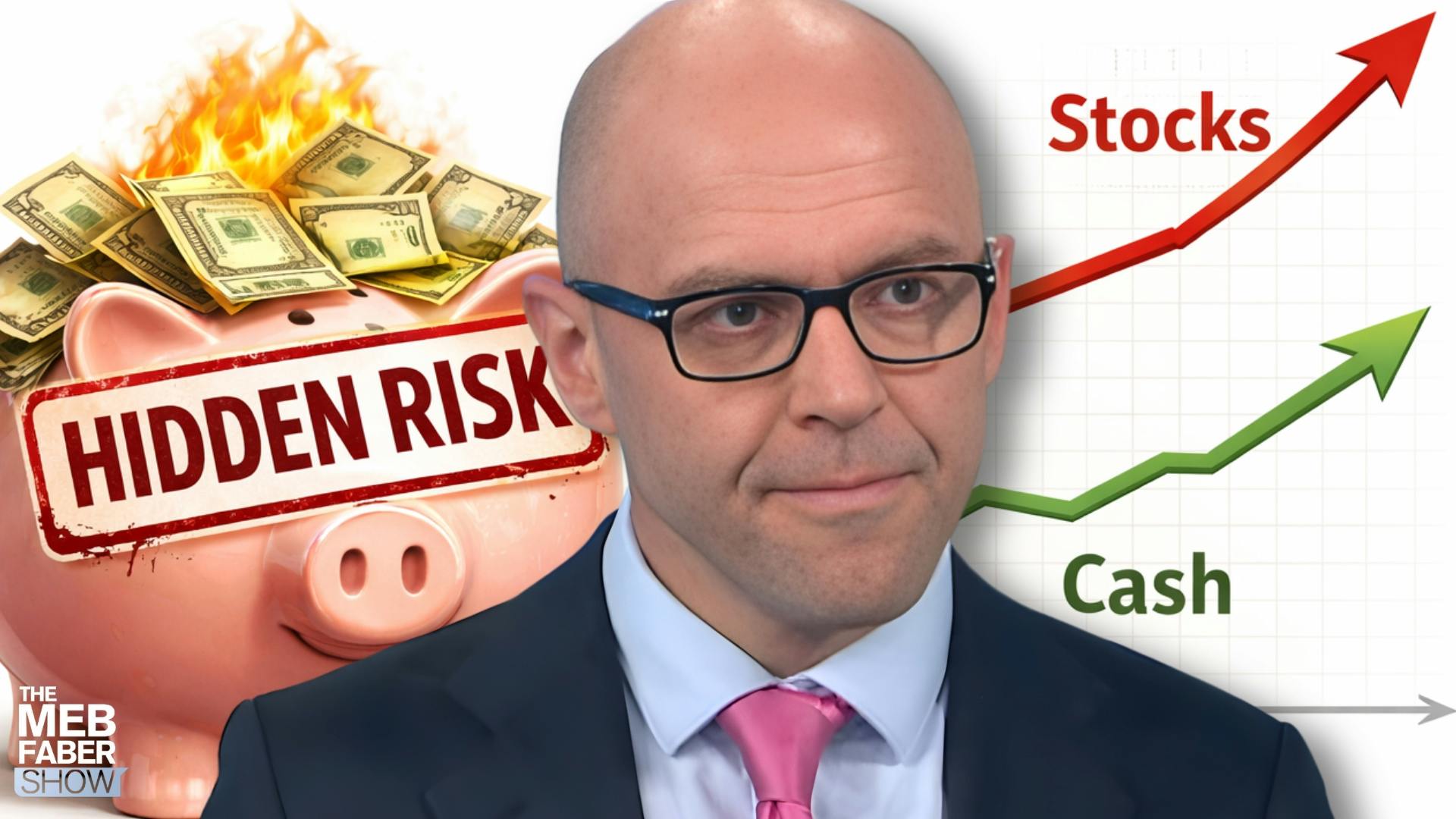
In an economic system with persistent currency debasement, holding cash in a savings account guarantees a loss of purchasing power. Prosperity is no longer achievable through simple saving; it requires actively "betting" on assets that can't be inflated, such as stocks, real estate, or crypto.

Investor Peter Lynch's advice highlights that trying to anticipate downturns often leads to missed gains, which can be more costly than the losses from the downturns themselves. The best strategy is often to stay invested rather than waiting on the sidelines for a crash that is impossible to predict.

During profound economic instability, the winning strategy isn't chasing the highest returns, but rather avoiding catastrophic loss. The greatest risks are not missed upside, but holding only cash as inflation erodes its value or relying solely on a paycheck.

Cash is not a long-term wealth-building tool due to inflation. Its purpose is strategic and short-term. You should only accumulate cash for an emergency fund, a specific large purchase like a house down payment, or to deploy into investments during a market downturn.
Investors often fixate on nominal returns relative to the dollar. However, the true measure of wealth is purchasing power. A 10% gain in the stock market is actually a net loss if inflation causes your living costs to rise by 20%, or if other assets like gold appreciate faster.
Framing investing as a form of gambling—even low-volatility, long-term strategies—forces an honest acknowledgment of inherent risk. This mindset prevents the dangerous and false assumption that investing is a guaranteed, "only up" phenomenon, leading to better decision-making.
In an environment dominated by government debt and money printing, holding cash is not a neutral act of saving; it's direct exposure to inflation. As the government devalues the currency to manage its interest payments, the purchasing power of cash diminishes. The priority must shift from simply saving to owning productive or scarce assets as a defense.
