Get your free personalized podcast brief
We scan new podcasts and send you the top 5 insights daily.
The government's new America.gov platform marks a strategic shift towards operating like a tech startup. By leveraging AI and modern infrastructure, the goal is to streamline bureaucracy, improve citizen services, and overcome the inefficiencies of outdated systems, like paper records stored in mine shafts.

Related Insights
Governor Hochul's administration deployed AI to analyze every state rule and regulation for obsolescence and inefficiency. This initiative, which would have taken humans years, quickly identified thousands of reforms, with the first 50 saving businesses and individuals over 1.5 million hours.

Youngkin's administration spent three years manually cutting 25% of state regulations. They then deployed an AI tool from a startup which, in a matter of months, identified an additional 10-15% for streamlining. This demonstrates AI's power to radically accelerate complex bureaucratic tasks.

Municipalities, despite being resource-strapped, spend up to 50% of staff time on tasks AI can already automate. This immense "capabilities overhang" presents a unique opportunity for a new class of civic-minded entrepreneurs to build capital-efficient AI tools specifically for public sector transformation.

The Under Secretary of War, a former Uber executive, likens his government role to his startup experience. The key parallel is being a "political disruptor" who examines a massive, entrenched bureaucracy like the Department of War with a "clean sheet of paper," questioning existing processes and empowering change from first principles.

Despite perceptions that China was far ahead in integrating AI into its government, the US is catching up with surprising speed. This acceleration is fueled by both a new wave of patriotic entrepreneurs and an increased willingness within government agencies to change rules and adopt cutting-edge technology.

Rather than pursuing a ground-up, AI-native overhaul, the federal government's approach to AI is pragmatic. The strategy is to apply existing tools like ChatGPT to mundane tasks, such as summarizing public comments, to achieve modest but immediate 3-10% efficiency gains and build momentum for modernization.

Instead of only using AI to help people comply with complex regulations, its real power lies in helping policymakers simplify them. AI can analyze thousands of pages of rules to identify what is vestigial, conflicting, or redundant, enabling the simplification required for scalable government services.

The government's core model for funding, oversight, and talent management is a relic of the post-WWII industrial era. Slapping modern technology like AI onto this outdated 'operating system' is a recipe for failure. A fundamental backend overhaul is required, not just a frontend facelift.
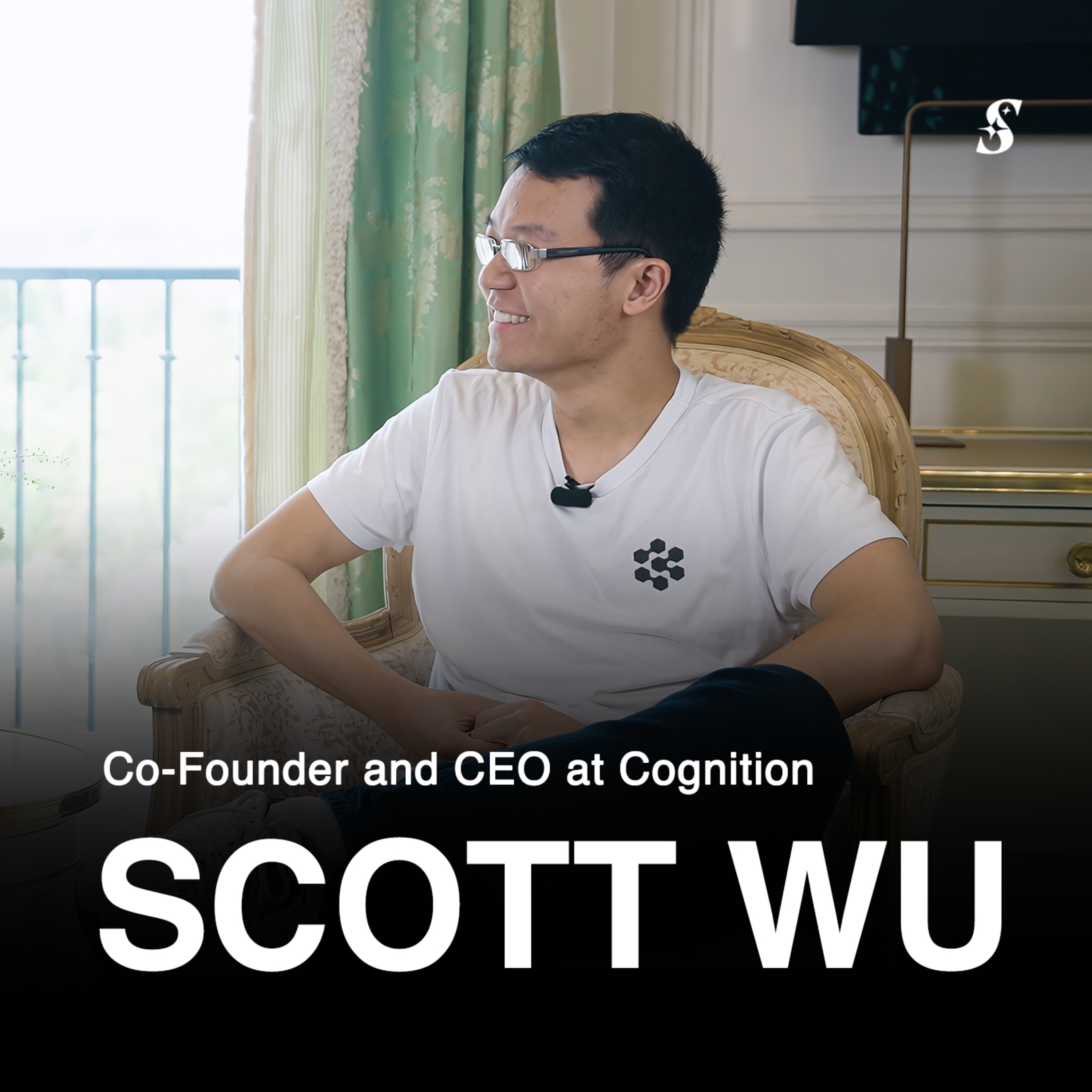
Scott Wu identifies government as a massive, underserved market for AI-driven software development. He views agencies as having the greatest need for engineering resources to overcome archaic software and processes. This positions government modernization not just as a business opportunity but as a crucial policy imperative.
AI can analyze and simplify vast, unmanageable rule-sets, like the 7,119 pages of New Jersey's unemployment regulations. It provides a technical path to simplification, but human political will is still required to enact the recommended changes.
