Get your free personalized podcast brief
We scan new podcasts and send you the top 5 insights daily.
Kalanick's massive funding for Atoms exemplifies a bimodal venture trend: backing both young founders and 'iconic seasoned veterans.' VCs are writing huge checks to proven leaders like Kalanick, Bezos, and Musk for capital-intensive projects, prioritizing the founder's track record over the specific business plan.

Related Insights
Kalanick initially pitched separate companies for mining and food. However, early investors were primarily betting on him. In response, he merged the entities into a singular company, simplifying the cap table and fundraising process, a contrast to Elon Musk's multi-company strategy.

Travis Kalanick initially pitched separate companies for food, mining, and transport. However, early investors consistently wanted to back him directly, not a specific vertical. This prompted him to merge the subsidiaries into a single entity, demonstrating that for serial entrepreneurs, the personal track record is the primary asset.

Kalanick compares his focus on food logistics to his early work in taxis, noting that both were seen as "boring" or "weird" ideas. He believes the best markets are often less competitive because they are difficult and unattractive to others, creating huge potential for founders who embrace the challenge.

Kalanick created a competitive fundraising dynamic by telling investors the price was "at least X" and then increasing that floor with each subsequent meeting. This "winner-takes-all auction" forces VCs to act quickly and aggressively, preventing them from meeting in the middle.
The founder of Uber, Travis Kalanick, has resurfaced with a new venture, "Atoms," that makes a specific bet on the future of robotics. He argues against the current hype around general-purpose humanoid robots, believing the more immediate and efficient path to industrial automation lies with specialized, wheeled robots.

Travis Kalanick reveals Uber treated fundraising as a systematized operation, not a discrete event. They ran four rooms in parallel for different check sizes and used a dynamic book-building process to optimize pricing. This turned capital acquisition into a scalable machine, making it a strategic weapon in their "capital wars."
In hyper-competitive, winner-take-all markets like ride-sharing or AI, Kalanick argues that the ability to attract capital is itself a core competency and strategic weapon. Being the best at fundraising is as critical as having the best product, as capital enables scale and endurance against rivals.
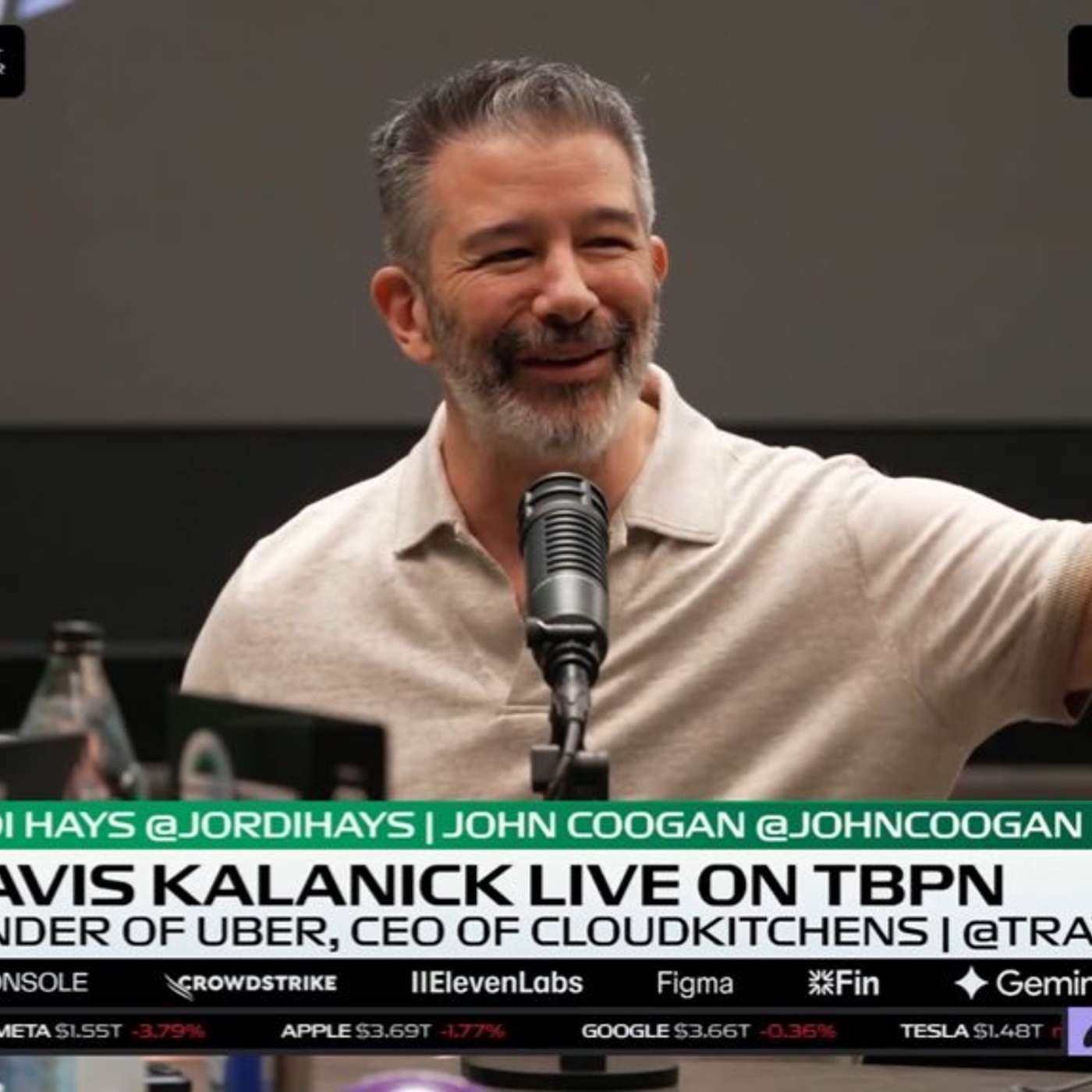
In capital-intensive markets like AI, capital is a competitive weapon. If fundraising feels easy, it's a signal you weren't aggressive enough. Kalanick's philosophy suggests you should have pushed for a much larger round to create a significant moat against competitors, treating capital as a strategic advantage.
A founder's credibility acts as a multiplier on the perceived value of their narrative. An entrepreneur like Elon Musk, with a track record of success, receives a "multiple expansion on trust," allowing their futuristic stories to attract capital at valuations and scales that a first-time founder could not achieve.

xAI secured a $20B round, up from a rumored $15B, despite skepticism about its traction. The narrative shifted when possibilities of a merger into a larger "Elon Inc. Megacorp" with SpaceX emerged. This suggests that for certain high-profile founders, a grand, entertaining vision can trump conventional product metrics for investors.