Get your free personalized podcast brief
We scan new podcasts and send you the top 5 insights daily.
The rapid growth of private credit during the zero-interest-rate period parallels the pre-2008 subprime mortgage boom. In both cases, immense capital inflows created pressure to originate assets, leading to rushed due diligence and a degradation of underwriting standards to fill the newly created investment vehicles.

Related Insights
While private credit is a viable asset class, Ed Perks expresses caution. The tremendous amount of capital flooding the space creates pressure to deploy it, which can lead to less disciplined underwriting and potential credit quality issues. He notes this space warrants close monitoring due to its lack of transparency.

PIMCO's Marc Seidner warns that a chart overlaying recent private credit issuance on pre-2008 subprime mortgage debt shows an "uncanny" similarity. This suggests too much capital has led to deteriorating discipline, underwriting, and investor protections, creating systemic risks.
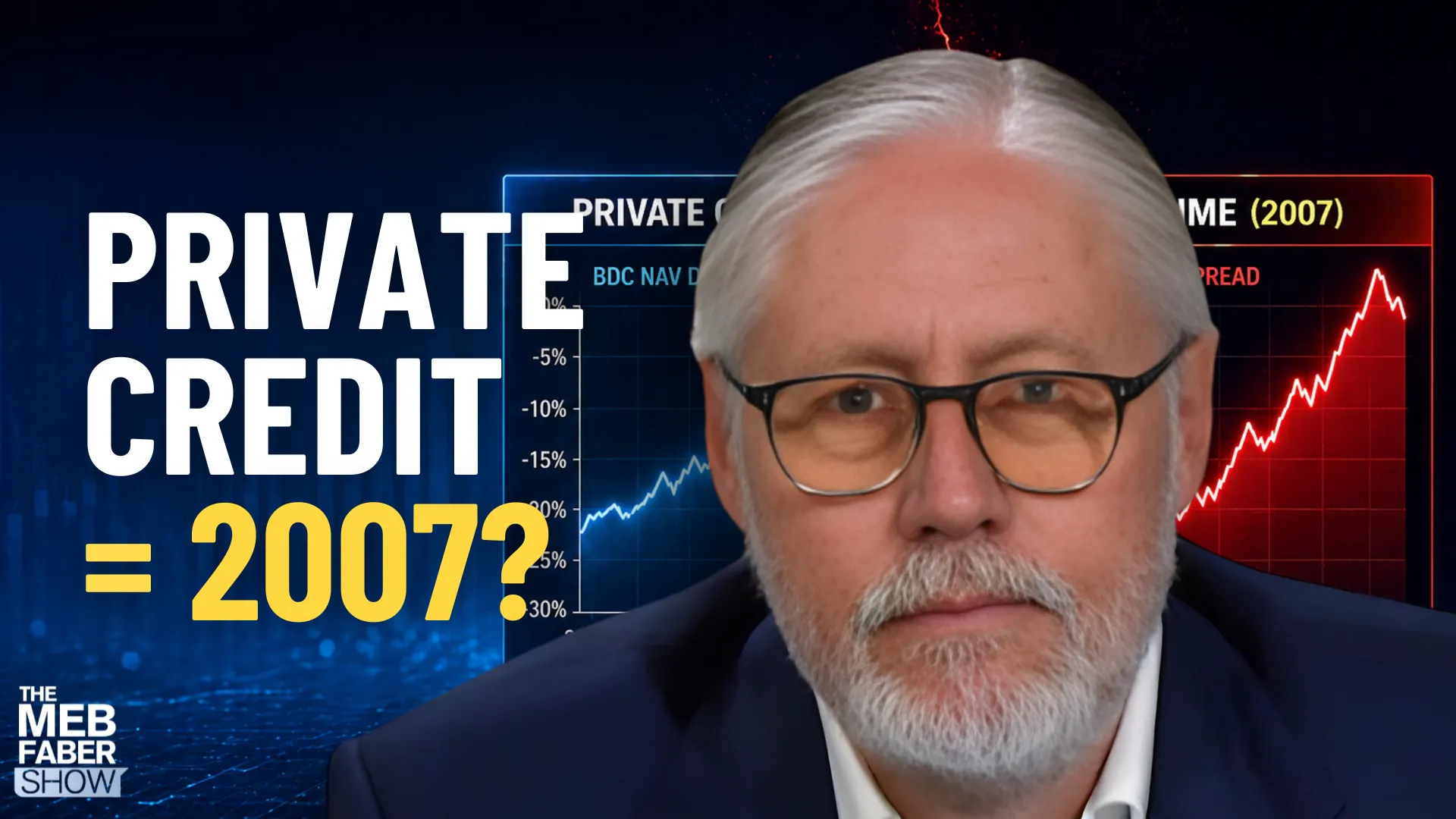
Private credit grew by taking on riskier loans that banks shed after Dodd-Frank, making the core banking system safer. However, banks now provide wholesale leverage to these private credit funds with minimal due diligence, creating a new, less transparent concentration of risk.

The private credit market is exhibiting behaviors reminiscent of the 2007-2008 subprime crisis. These include major funds blocking investor withdrawals ("gating") and large banks proactively disclosing their exposure, suggesting growing internal anxiety and a desire to manage public perception before a potential downturn.

In 2022, as public bond funds declined due to rising rates, private credit funds appeared deceptively stable because they weren't marking assets to market. This perceived safety attracted massive capital inflows, which in turn forced managers into more aggressive underwriting to deploy the new cash quickly.
A key risk identified in a Bloomberg survey is worsening underwriting standards. This is driven by new entrants ('tourists') to the private credit market who may be offering looser loan terms and conditions in an effort to quickly build their portfolios.
After PIMCO's highly profitable $2 billion gain on a loan to a Meta data center, other private credit lenders are piling into the space. This fierce competition is driving down rates and weakening investor protections like covenants, a classic sign of a frothy market nearing its peak.
The fundamental model of private credit is sound. The primary risk stems from the sector's own success, which has attracted massive capital inflows. This creates pressure for managers to deploy capital, potentially leading to weakened underwriting standards and undisciplined growth.

The recent surge of retail capital into private credit had a tangible market impact, forcing managers to deploy capital quickly. This resulted in tighter spreads and weaker lending terms. As these flows moderate, this trend is reversing, creating better opportunities for new investments.

Banks can use more leverage and hold less capital by lending to a private credit fund than by making the same risky loans directly to a business. Former FDIC Chair Sheila Bair states this regulatory arbitrage in risk-based capital rules is the primary driver of the private credit boom.