Get your free personalized podcast brief
We scan new podcasts and send you the top 5 insights daily.
Iterative AI agent loops, like Andre Karpathy's Auto Research, are not just another tool but a new foundational building block of work. Similar to how spreadsheets or email became ubiquitous across all roles and industries, these loops will be a core component of how knowledge work is performed, fundamentally changing process and productivity.

Related Insights
The evolution of 'agentic AI' extends beyond content generation to automating the connective tissue of business operations. Its future value is in initiating workflows that span departments, such as kickstarting creative briefs for marketing, creating product backlogs from feedback, and generating service tickets, streamlining operational handoffs.

With agent loops automating execution, the highest-value human skill becomes designing the environment and rules for the AI. This involves writing the strategy document (like 'program.md'), defining success metrics, and constructing the evaluation function. Your job is no longer to do the work, but to architect the system in which the work gets done.
The emergence of personal AI assistants that can be integrated with private data (email, Slack) and execute tasks (send emails, build CRMs) represents a new paradigm. This moves AI from a passive research tool to an active, autonomous agent capable of performing complex knowledge work, fundamentally changing productivity.

Instead of serial tasking, advanced users are becoming "agent jockeys," managing multiple AI instances simultaneously. Each agent performs a complex task in the background (e.g., ad generation, outreach), requiring the user to context-switch and manage a portfolio of automated workstreams to maximize output.
![Claude Code marketing masterclass [from idea to making $$] thumbnail](https://assets.flightcast.com/workspaces/vde7jbg9rfhsyiw9o46f9sj8/podcasts/ordbkg8yojpehffas7vr7qpc/t8c97hs8oy7a2xnobsfu5p42.jpg)
Moving beyond chatbots, tools like Claude Cowork empower non-coders to create complex, multi-step autonomous workflows using natural language. This 'agentic' capability—connecting documents, searches, and data—is a key trend that will democratize automation and software creation for all knowledge workers.

The most significant gains from AI will not come from automating existing human tasks. Instead, value is unlocked by allowing AI agents to develop entirely new, non-human processes to achieve goals. This requires a shift from process mapping to goal-oriented process invention.
Unlike previous technologies that integrated into existing workflows, AI agents require us to fundamentally re-engineer our work processes to make them effective. Early adopters who adapt their operations to how agents "think" will gain compounding advantages over competitors.
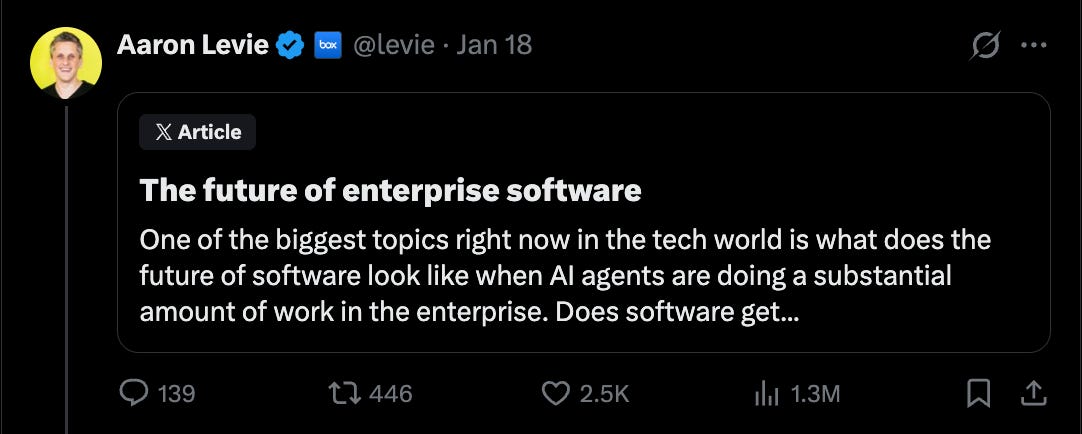
The future of software isn't just AI-powered features. It's a fundamental shift from tools that assist humans to autonomous agents that perform tasks. Human roles will evolve from *doing* the work to *orchestrating* thousands of these agents.
The paradigm shift with AI agents is from "tools to click buttons in" (like CRMs) to autonomous systems that work for you in the background. This is a new form of productivity, akin to delegating tasks to a team member rather than just using a better tool yourself.
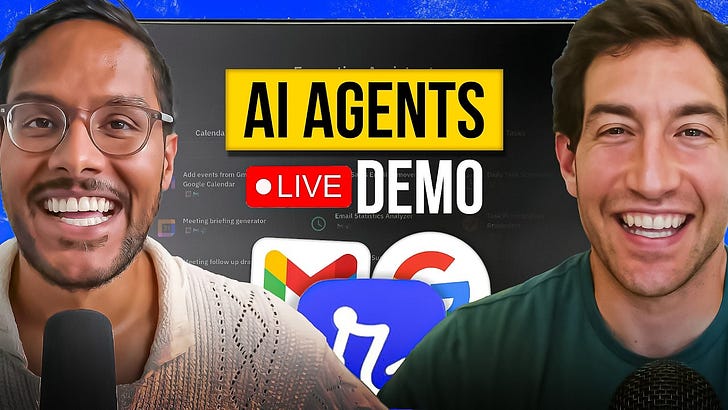
Contrary to their name, software development agents are not just for coders. Their ability to interact with files, apps, and data makes them powerful productivity tools for non-technical roles like sales. This signals their evolution from niche coding assistants to general-purpose AI systems for any computer-based work.
