Get your free personalized podcast brief
We scan new podcasts and send you the top 5 insights daily.
To incorporate site scanning, Dusty Robotics leveraged a service partner network rather than building the technology itself. These partners bundle scanning, design coordination, and Dusty's layout printing into a single, higher-value package, creating a more profitable distribution channel for the company.

Related Insights
Baby2Baby chose a B2B-like model, supplying partner organizations rather than individual families. This avoided the complex logistics of direct service, enabling them to reach vastly more people and scale their operations efficiently by leveraging existing community infrastructure.

Designs that are perfect in software often fail on-site because they don't account for real-world imperfections. Dusty's portal solves this by allowing designs to be coordinated with the actual site conditions before work begins, moving a critical, error-prone step from the physical world to a digital one.
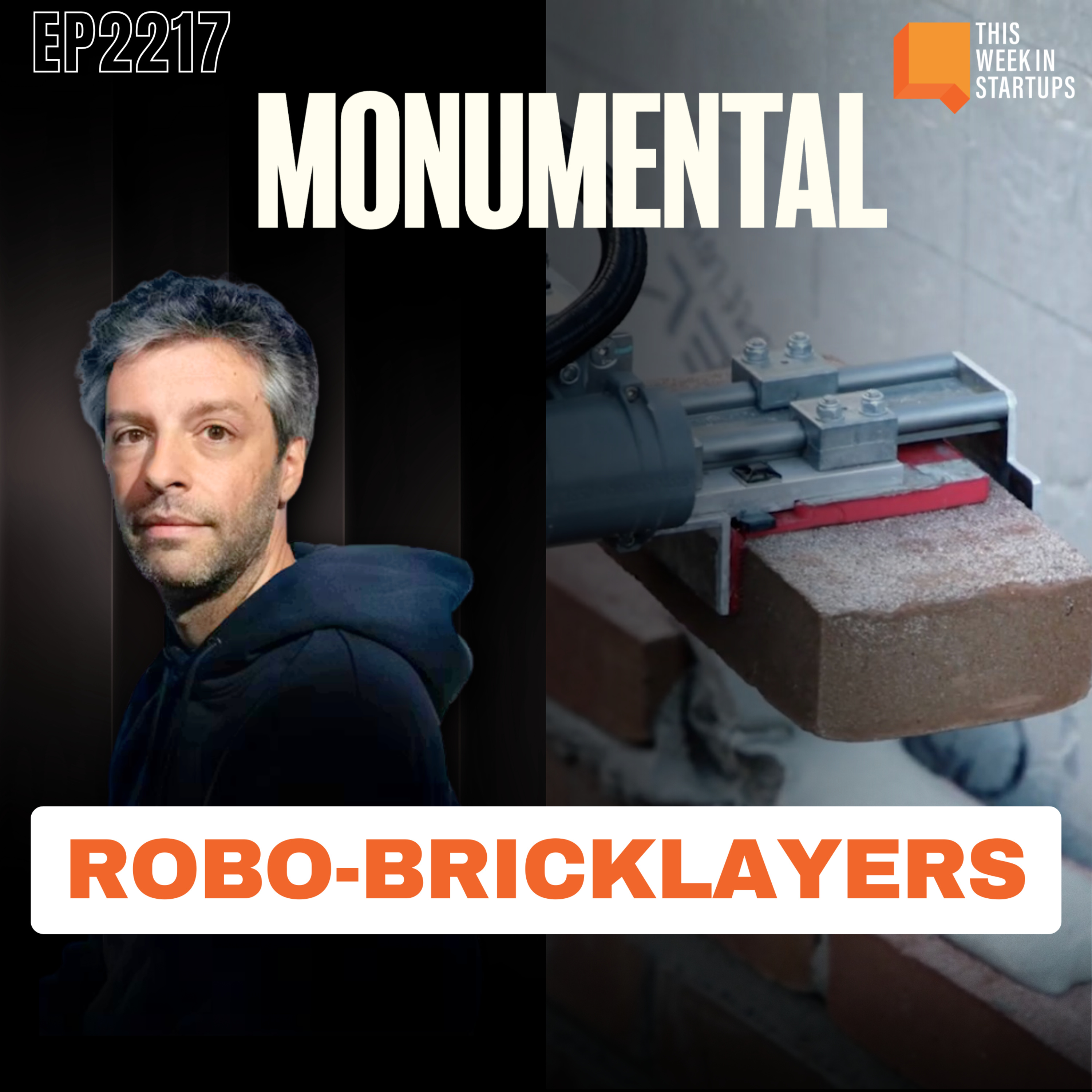
To overcome the construction industry's conservatism, Monumental operates as a subcontractor. This model is easier to sell than a large capital expenditure like a robot, as it fits existing project budgets and workflows, de-risking adoption for general contractors.
For its $5k average deal size, SkillVari found a direct US sales model unviable, as travel costs could erase profits. Instead, they built a network of 10 regional resellers, incentivized with commissions up to 20%, to provide local, hands-on demos and support.

Adoption of Dusty Robotics is being driven top-down by the ultimate project owners. Recognizing the speed and accuracy benefits, major data center companies now require their general contractors to use Dusty's technology, turning it from a "nice to have" tool into a mandatory requirement.
Shield Technology Partners is executing an AI-powered roll-up of IT Managed Service Providers (MSPs). Instead of centralizing operations, their model is to acquire successful local MSPs, keep their existing teams and customer relationships intact, and then layer on proprietary AI tools to enhance the service offering and drive growth.

The company sees its layouts as the "linchpin" of construction. By embedding machine-readable QR codes into its floor plans, it is creating a foundational instruction set for all future robots on the job site. It is building the operating system for the automated construction site.
Previously, Dusty's robots required surveyor-placed control points, limiting them to large, new construction projects. A new feature allows the robot to align with existing features like walls, removing this dependency and opening up the massive, previously inaccessible market for smaller jobs and renovations.
Instead of franchising or owning locations, a service business can scale by creating a platform connecting clients (e.g., real estate owners), freelance operators, and content partners (e.g., streamers). This creates a network effect but requires priming multiple sides of the marketplace.

ICON's long-term strategy isn't just to be a construction company but a technology provider. By selling their new multi-story printers to other builders and channel partners, they can scale their impact on the global housing crisis much faster than by building every home themselves.