Get your free personalized podcast brief
We scan new podcasts and send you the top 5 insights daily.
Wordle went viral not because of complex features, but because of their absence. By removing all barriers to entry (no app, no login) and adding a simple, spoiler-free sharing feature, it created a frictionless experience that fueled its explosive growth.

Related Insights
Moltbook went from concept to viral phenomenon in a single weekend, illustrating a new development paradigm of 'vibe coding'. By rapidly building a product on a simple premise, using LLMs for content and social media for distribution, teams can generate massive hype and user attention almost instantaneously without traditional marketing.
The company's second and third games failed commercially, forcing a tough analysis. They realized Exploding Kittens worked because it was simple, fast, and intensely social. The flops were too complex or lacked interaction. This painful experience helped them codify the formula for their next hit, "Throw Throw Burrito."

While people commonly share video clips or text, sharing interactive games is not an established behavior. Nanogram is changing this, observing that for every 100 likes on a game, it receives 30 to 50 shares. This high ratio suggests the platform is creating a new viral loop.
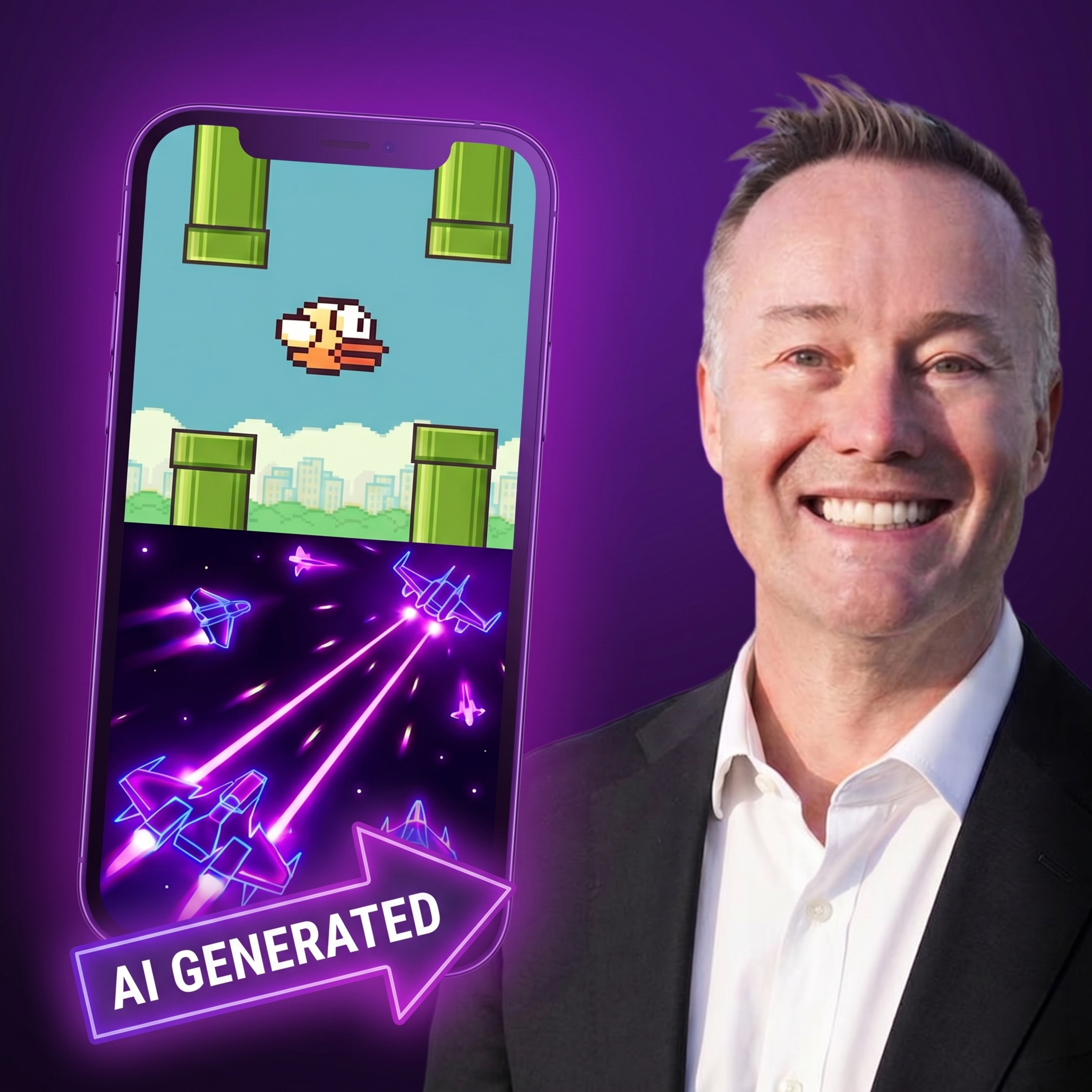
By launching 'Workle,' a spin on Wordle, 'The Assist' newsletter demonstrates that smaller media brands can adopt the successful interactive content strategies of giants like the New York Times. This tactic boosts brand affinity and daily engagement, proving that gamification is accessible beyond large corporations.
Granola's virality comes from its core utility. When a user shares high-quality, AI-generated notes moments after a call, recipients are impressed by the speed and quality, prompting them to ask, "How did you do that?" and try the product themselves.

Language-learning app Duolingo became a viral sensation by creating content focused on its brand values (disruption) and voice (chaotic mascot), not its product features. They trusted that entertaining content would build enough intrigue for viewers to bridge the gap and download the app.

An analysis of X's new 'Certified Bangers' feature reveals that the most viral posts are often not inherently insightful content. Instead, they act as 'viral seeds'—simple prompts like 'what's the lore of your profile pic?'—that generate massive engagement by encouraging widespread user-generated responses. The value is in the conversation it starts, not the original post itself.

The viral Amy website originated from a simple, powerful vision: visualizing a full day of product use with scrolling gradients. This core concept, established before any design or code, was the key to its success, proving that a strong narrative can be more impactful than micro-interactions.
To achieve viral validation on platforms like TikTok, an app must be extremely simple. It needs a core concept that can be explained in just a few words (e.g., "track your acne") and has a strong visual component that is compelling in short-form video content, making it easily shareable.

Contrary to popular belief, simple isn't always better. On Running's CPO argues that overly simple products give consumers fewer opportunities to explore, learn, and feel like an expert. A degree of complexity allows users to "give it its own life," which can be a more powerful driver of adoption than a streamlined experience.