Get your free personalized podcast brief
We scan new podcasts and send you the top 5 insights daily.
While powerful, OpenClaw's flexibility poses a significant financial risk. Without the guardrails of a fixed subscription like Claude's, users can easily and unintentionally run up large compute bills, leading to 'bill shock'.

Related Insights
Contrary to the belief that its huge user base is a key asset, ChatGPT's free tier is described as a massive liability. The cost of running millions of GPUs for non-paying users is enormous, and monetization attempts like ads risk driving users to competitors in a market with low switching costs.

Beyond features or community, the primary driver for adopting open-source AI tools like OpenClaw over proprietary ones is cost. The goal is to make powerful AI accessible to billions of internet users for free, not just those who can afford "luxury AI" subscriptions.

As AI's utility and computational cost rise, a flat-rate "unlimited" plan becomes nonsensical. OpenAI signals that future pricing must align with the variable, and often immense, value and cost that power users generate, much like an electricity bill.

Tools like Clawdbot offer unbridled power because they are open source, placing all liability for data leaks or misuse on the user. This is a deliberate risk model that large AI companies like Anthropic have avoided, as they are unwilling to accept the legal consequences of such a powerful, unrestricted tool.

Usage-based pricing for AI faces strong customer resistance. Unlike cloud storage where usage is directly controlled, AI credit consumption can be driven by new vendor-pushed features. This lack of control and predictability leads to bill shock, making customers prefer the stability of per-seat models.

Despite Anthropic's Claude matching its features, OpenClaw retains a loyal user base because it's open-source. This allows developers to use any model they choose—including free, self-hosted ones—rather than being locked into the Claude ecosystem.
Relying solely on premium models like Claude Opus can lead to unsustainable API costs ($1M/year projected). The solution is a hybrid approach: use powerful cloud models for complex tasks and cheaper, locally-hosted open-source models for routine operations.
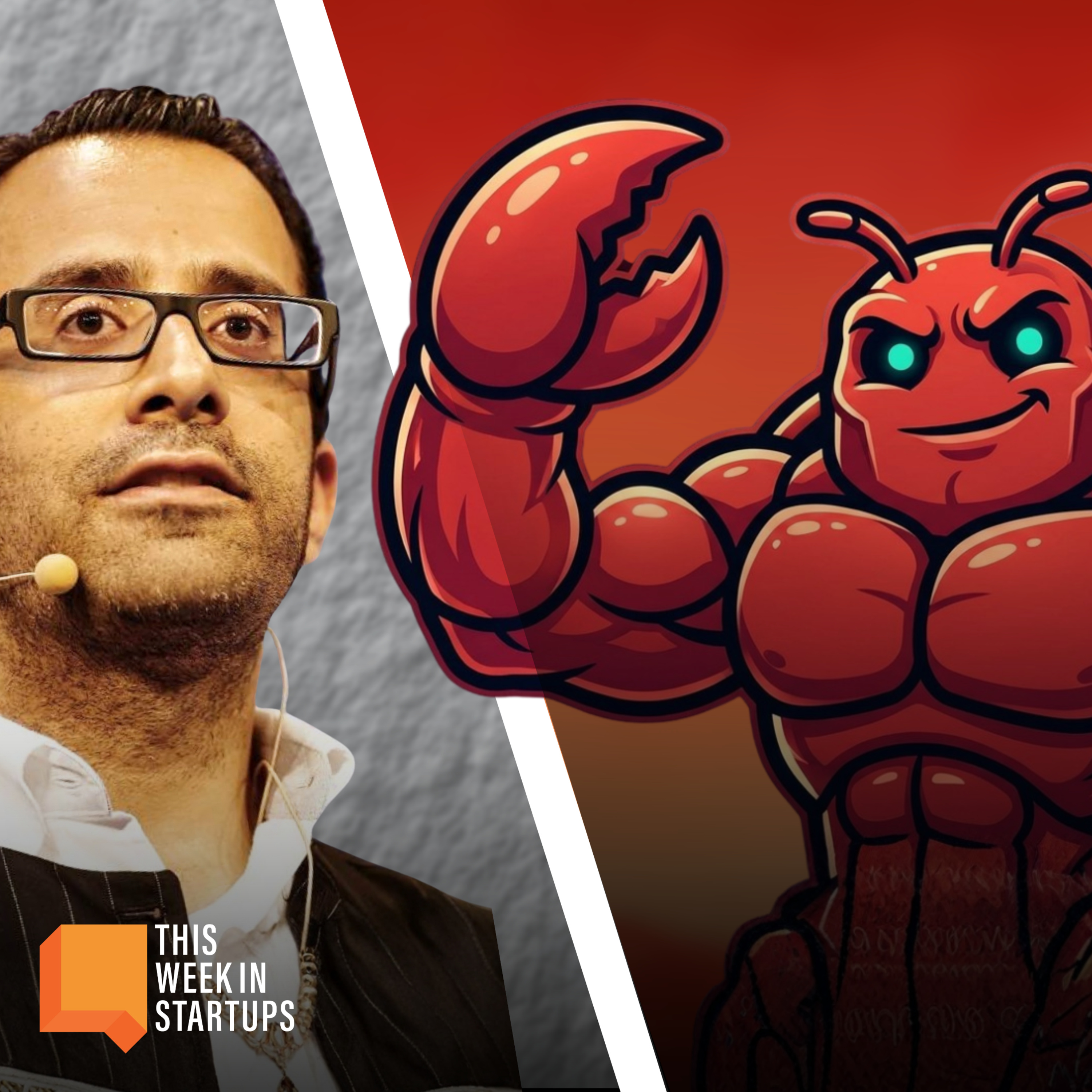
A side-by-side comparison of AI-driven A/B testing revealed a stark cost difference. The more customizable, self-hosted OpenClaw agent cost $16 in API fees for one task. The less powerful, subscription-based Claude Chrome plugin accomplished a similar goal for just pennies, highlighting a key trade-off for developers.

Beyond upfront pricing, sophisticated enterprise customers now demand cost certainty for consumption-based AI. They require vendors to provide transparent cost structures and protections for when usage inevitably scales, asking, 'What does the world look like when the flywheel actually spins?'
The host experienced Jevons paradox firsthand: after switching from a barely-used enterprise ChatGPT to the more efficient OpenClaw, usage exploded. Costs trended towards exceeding the company's payroll, highlighting how efficiency gains in AI can lead to unsustainable consumption increases.