Get your free personalized podcast brief
We scan new podcasts and send you the top 5 insights daily.
SemiAnalysis is evolving from a niche publication into a critical intelligence source for the AI industry, providing deep analysis and data models. It mirrors the rise of Moody's during the capital-intensive railroad era, serving as a ratings and research powerhouse for today's tech build-out.

Related Insights
The growth of AI is constrained not by chip design but by inputs like energy and High Bandwidth Memory (HBM). This shifts power to component suppliers and energy providers, allowing them to gain leverage, demand equity, and influence the entire AI ecosystem, much like a central bank controls money.
The AI infrastructure spending boom will continue robustly for at least two more years, creating a window where numerous chip startups can thrive in viable niches. While an eventual bubble pop and consolidation is guaranteed, the immediate future remains bright for even smaller players, challenging the winner-take-all narrative.

Current M&A activity related to AI isn't targeting AI model creators. Instead, capital is flowing into consolidating the 'picks and shovels' of the AI ecosystem. This includes derivative plays like data centers, semiconductors, software, and even power suppliers, which are seen as more tangible long-term assets.

The current AI moment is unique because demand outstrips supply so dramatically that even previous-generation chips and models remain valuable. They are perfectly suited for running smaller models for simpler, high-volume applications like voice transcription, creating a broad-based boom across the entire hardware and model stack.

Instead of betting on specific AI models like ChatGPT, a more robust strategy is to invest in the underlying infrastructure that all AI development requires. This 'onion' approach focuses on second-order essentials like semiconductors and data centers, which are poised to grow regardless of which consumer-facing application wins.

While AI models and coding agents scale to $100M+ revenues quickly, the truly exponential growth is in the hardware ecosystem. Companies in optical interconnects, cooling, and power are scaling from zero to billions in revenue in under two years, driven by massive demand from hyperscalers building AI infrastructure.

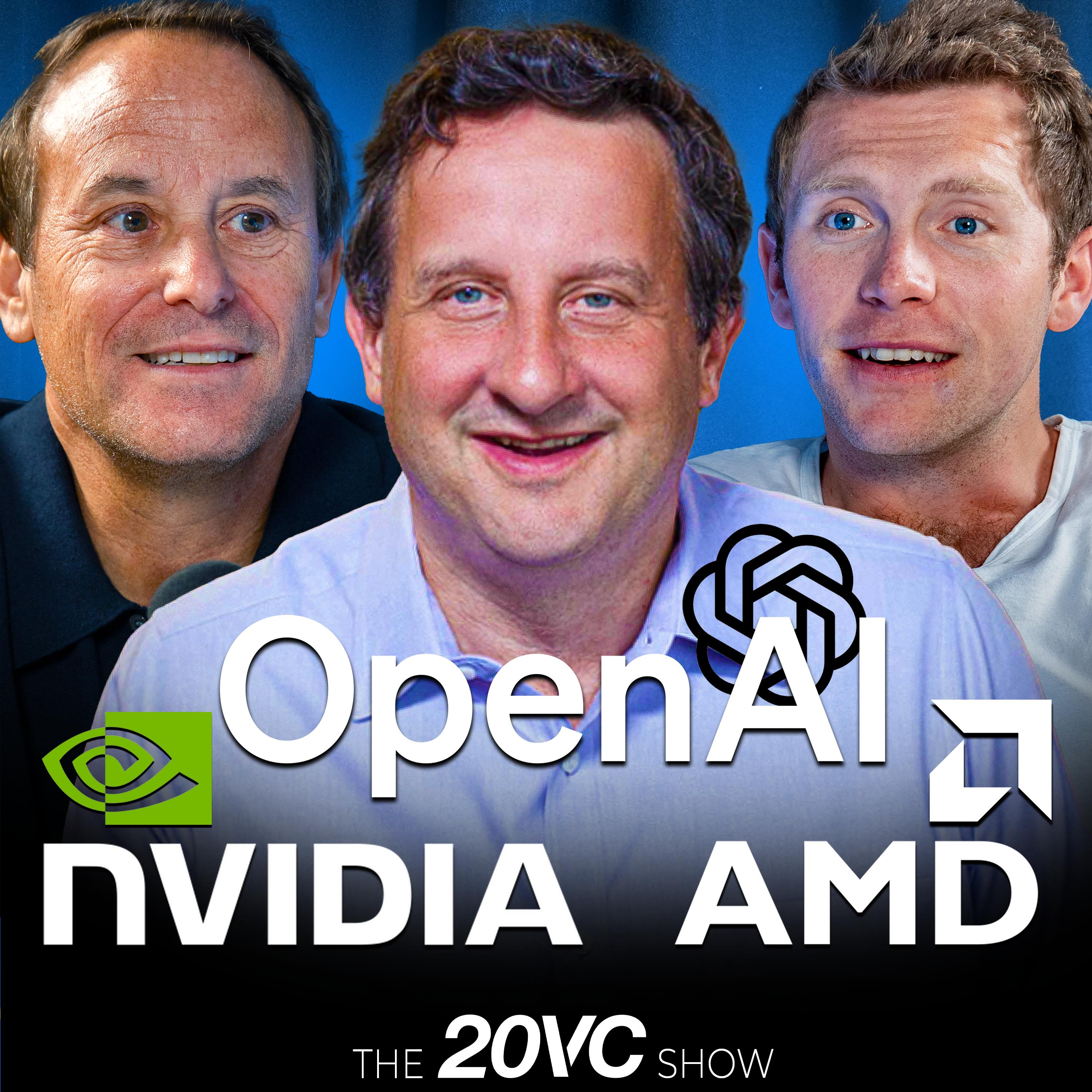
OpenAI's compute deal with Cerebras, alongside deals with AMD and Nvidia, shows that hyperscalers are aggressively diversifying their AI chip supply. This creates a massive opportunity for smaller, specialized silicon teams, heralding a new competitive era reminiscent of the PC wars.
Anthropic's choice to purchase Google's TPUs via Broadcom, rather than directly or by designing its own chips, indicates a new phase in the AI hardware market. It highlights the rise of specialized manufacturers as key suppliers, creating a more complex and diversified hardware ecosystem beyond just Nvidia and the major AI labs.

The current AI landscape mirrors the historic Windows-Intel duopoly. OpenAI is the new Microsoft, controlling the user-facing software layer, while NVIDIA acts as the new Intel, dominating essential chip infrastructure. This parallel suggests a long-term power concentration is forming.
The market's fear of AI disruption at Moody's is nuanced. The legally-mandated credit ratings business (60% of revenue) is highly protected. The actual threat is concentrated in the analytics segment (40% of revenue), where AI could empower clients to bring risk modeling in-house, eroding pricing power.
