Get your free personalized podcast brief
We scan new podcasts and send you the top 5 insights daily.
Breakthrough innovation often comes from entrepreneurs holding a non-consensus belief about the future. This vision can seem irrational, like the man live-streaming an inauguration on a laptop in 2009. This conviction in their "secret" knowledge, which others dismiss, is a key trait of visionary founders who can build what others cannot yet see.

Related Insights
True entrepreneurial success stems from a deep-seated, almost irrational belief that exists before the skills or evidence to support it. Daniel Ek and the founder of Sony both exemplify this, possessing a powerful conviction in their potential long before they achieved massive success.

The belief required to start a company that solves a massive, complex problem like communication isn't confidence, but a form of delusion. This mindset allows founders to persist through challenges that a more realistic person might abandon, especially when a problem seems fundamentally unsolvable.

Lara Banks highlights Founders Fund's strategy of backing ideas that feel almost crazy when first heard. This counter-intuitive approach defines visionary investing: seeing the future and building it before it becomes obvious to everyone else.

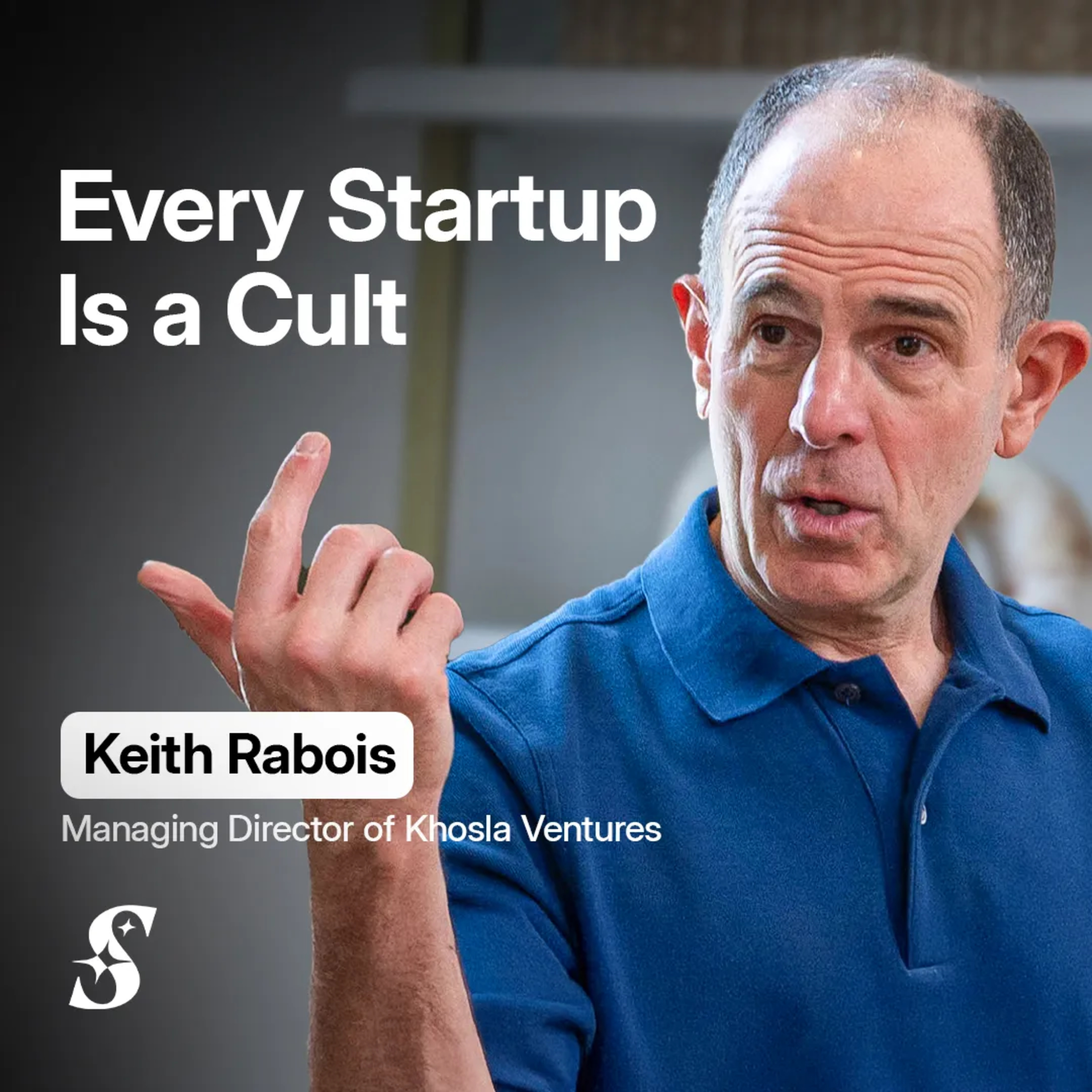
A startup's 'cult' is its unique set of beliefs about the world, its market, and its people. This shared, differentiated worldview is essential for unity and focus. However, to be a successful company rather than just a cult, this unique set of beliefs must be correct.
To avoid stagnation, a business needs a leader with enough ownership to push an opinionated, semi-scary vision. This person acts as a necessary counterbalance to the natural inertia of a scaling company. According to Jason VandeBoom, without this "crazy" innovator, a business will inevitably stall in a rapidly changing market.

Truly great business ideas like Airbnb or Uber initially sound absurd. If everyone in a room agrees your idea is good, it’s a red flag for being too conventional. Success lies in the fine line between genius (good crazy) and unworkable (bad crazy).

Founders should anticipate that truly new ideas are first dismissed as "crazy," then accepted as "novel," and finally deemed "obvious." Understanding this progression helps entrepreneurs endure the initial skepticism and see it as a sign they are on the right track.

True entrepreneurial opportunity exists where consensus is wrong. By the time a trend like AI or cloud computing is mainstream, it's too late to build a foundational company. Entrepreneurs must find ideas that are currently not well-liked or appreciated and see the gap between the popular view and the idea's actual potential.
Vinod Khosla differentiates skeptics, who only see failure, from true contrarians. Entrepreneurs are contrarian about the status quo but fundamentally optimistic about what technology can make possible, enabling them to build the future.

Dell argues that to take on giants like IBM, you need extreme self-belief and, crucially, naivete—not knowing enough to believe it's impossible. This combination allows founders to ignore conventional wisdom that paralyzes incumbents and invent entirely new approaches.
