Get your free personalized podcast brief
We scan new podcasts and send you the top 5 insights daily.
Instead of asking designers to create mockups from a verbal brief, PMs can use AI tools to generate multiple visual explorations themselves. This allows them to bring more concrete, refined ideas to the table, leading to a richer and more effective collaboration with the design team.
Related Insights
Vercel's Pranati Perry explains that tools like V0 occupy a new space between static design (Figma) and development. They enable designers and PMs to create interactive prototypes that better communicate intent, supplement PRDs, and explore dynamic states without requiring full engineering resources.

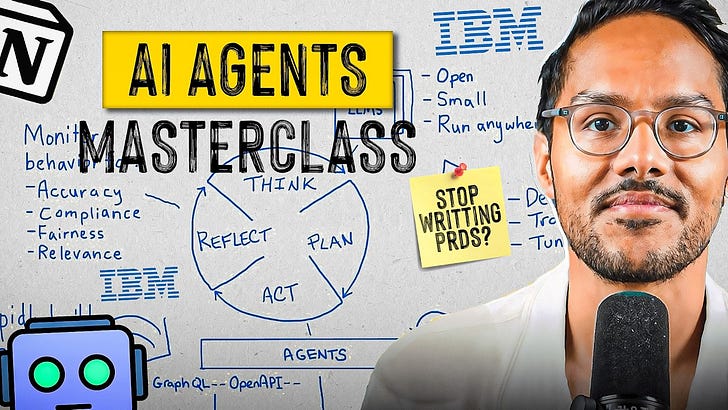
Traditional "writing-first" cultures create communication gaps and translation errors. With modern AI tools, product managers can now build working prototypes in hours. This "show, don't tell" approach gets ideas validated faster, secures project leadership, and overcomes language and team barriers.
AI tools are breaking down communication silos. Marketers no longer need to write lengthy briefs to describe their vision; they can use AI to generate functional prototypes and landing pages, visually demonstrating exactly what's in their head and revolutionizing cross-team collaboration.

At OpenAI, the development cycle is accelerated by a practice called "vibe coding." Designers and PMs build functional prototypes directly with AI tools like Codex. This visual, interactive method is often faster and more effective for communicating ideas than writing traditional product specifications.

Historically, resource-intensive prototyping (requiring designers and tools like Figma) was reserved for major features. AI tools reduce prototype creation time to minutes, allowing PMs to de-risk even minor features with user testing and solution discovery, improving the entire product's success rate.
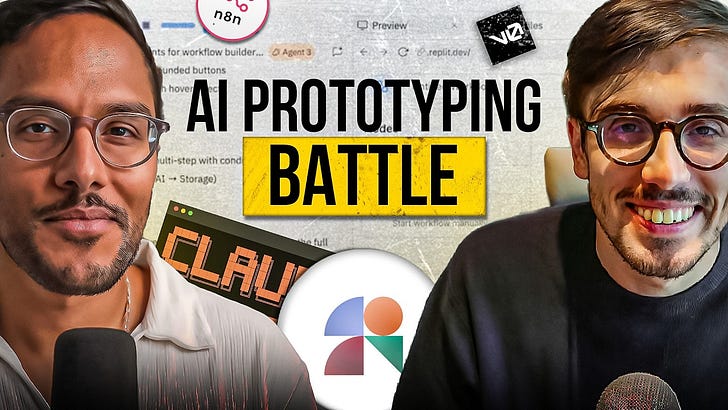
Instead of writing detailed specs, product teams at Google use AI Studio to build functional prototypes. They provide a screenshot of an existing UI and prompt the AI to clone it while adding new features, dramatically accelerating the product exploration and innovation cycle.
Product Requirement Documents (PRDs) are often written and then ignored. AI-generated prototypes change this dynamic by serving as powerful internal communication tools. Putting an interactive model in front of engineering and design teams sparks better, more tangible conversations and ideas than a flat document ever could.

AI tools that generate functional UIs from prompts are eliminating the 'language barrier' between marketing, design, and engineering teams. Marketers can now create visual prototypes of what they want instead of writing ambiguous text-based briefs, ensuring alignment and drastically reducing development cycles.
AI tools can drastically increase the volume of initial creative explorations, moving from 3 directions to 10 or more. The designer's role then shifts from pure creation to expert curation, using their taste to edit AI outputs into winning concepts.
When exploring UI solutions, use a tool like Magic Patterns and its "Inspiration Mode" to generate multiple, distinct design approaches from a single prompt. By asking the AI to "think expansively and make each option differentiated," product managers can quickly explore a wide solution space and avoid getting stuck on a single initial idea.