Get your free personalized podcast brief
We scan new podcasts and send you the top 5 insights daily.
Instead of overprovisioning their physical hardware for worst-case scenarios, Dropbox built a system to temporarily offload writes to S3 when capacity got tight. This "escape hatch" allowed them to operate their own infrastructure with much higher utilization, providing the benefits of on-prem cost savings with cloud-like elasticity.

Related Insights
Turbopuffer's design avoids a complex consensus layer (like Zookeeper) by relying on two recent cloud primitive upgrades: S3's strong consistency (post-2020) and a compare-and-swap feature for metadata updates. This creates a simpler, more robust, and stateless system.
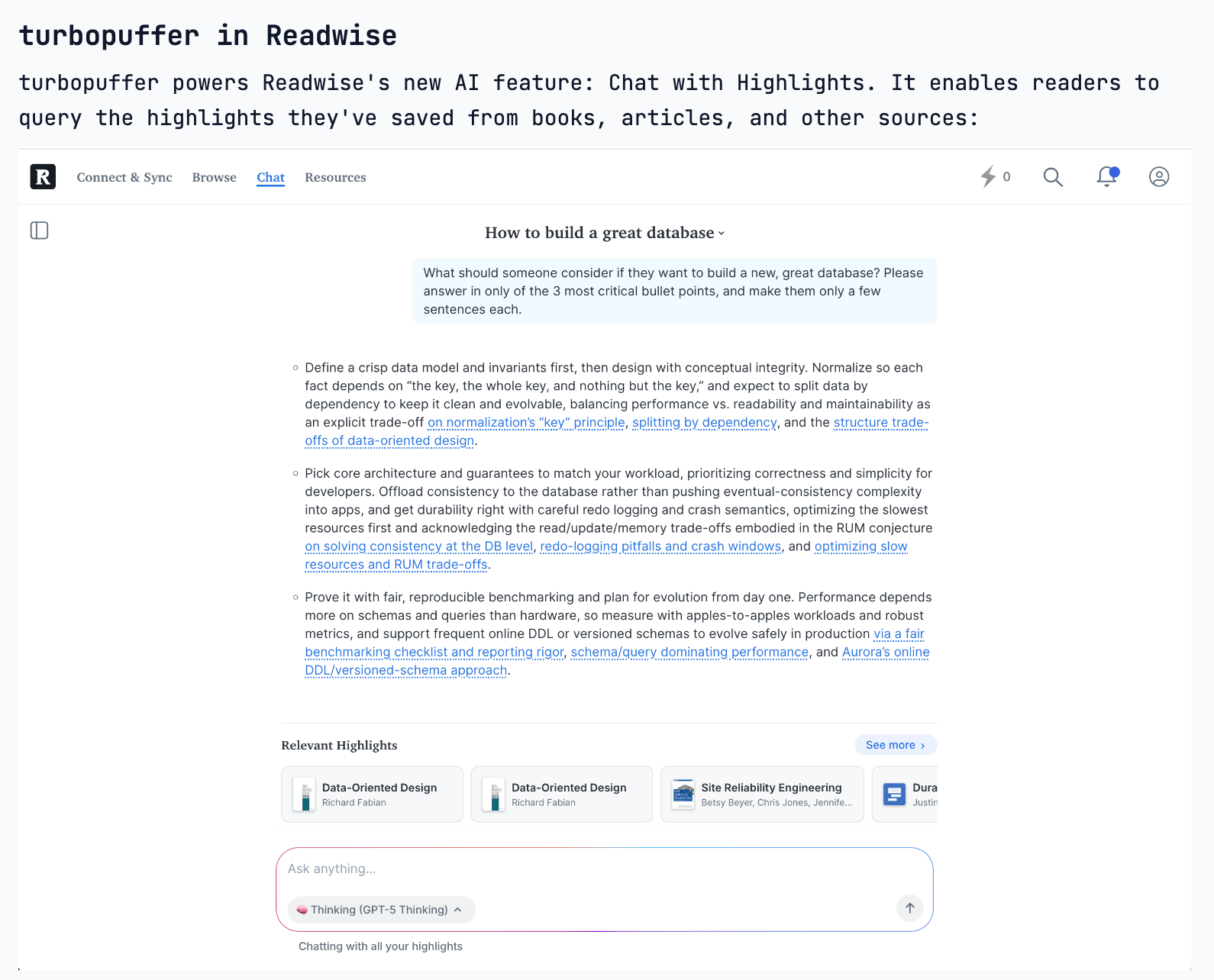
TurboPuffer achieved its massive cost savings by building on slow S3 storage. While this increased write latency by 1000x—unacceptable for transactional systems—it was a perfectly acceptable trade-off for search and AI workloads, which prioritize fast reads over fast writes.

Instead of bearing the full cost and risk of building new AI data centers, large cloud providers like Microsoft use CoreWeave for 'overflow' compute. This allows them to meet surges in customer demand without committing capital to assets that depreciate quickly and may become competitors' infrastructure in the long run.

By building their own data centers, Railway achieves a payback period of just three months on hardware costs versus renting from hyperscalers. This dramatic cost advantage is a strategic enabler for offering resource-intensive services, like parallel AI agent execution, at a viable price.

The intense computational demand and latency of AI models are compelling enterprises to use multiple cloud providers. Rather than vendor loyalty, companies now prioritize performance, switching between clouds like AWS and Azure to find the fastest available capacity for their AI workloads, reshaping the cloud market.

By externalizing internal tools like cloud compute (AWS) and logistics, Amazon creates a massive revenue stream. This new business becomes so profitable it effectively subsidizes Amazon's own usage, making a key expense free while building a competitive moat.

Inspired by Google, Cloudflare made an early decision to build its global network using inexpensive, commodity hardware instead of specialized equipment. This software-centric approach allows them to scale their infrastructure rapidly and cost-effectively, a key structural advantage over competitors.
![Cloudflare: Leading Cybersecurity - [Business Breakdowns, EP.241] thumbnail](https://megaphone.imgix.net/podcasts/cd4e36dc-0515-11f1-83d0-db915309e405/image/63f96f239cd7d53c5b87978bfd6c7f0e.jpg?ixlib=rails-4.3.1&max-w=3000&max-h=3000&fit=crop&auto=format,compress)
While the market rushed to pure-cloud solutions, Egnyte offered a hybrid model. This wasn't a compromise but a strategic advantage for enterprises where physics, like network latency on a construction site, made pure-cloud impractical. The control plane remained in the cloud, while the data plane could be local.

Railway's hybrid strategy uses public clouds like AWS and GCP as a safety valve for demand spikes. This allows them to maintain service availability during hypergrowth while systematically migrating workloads to their own more cost-efficient bare metal infrastructure as they build it out.
While generally not recommended, Dropbox successfully migrated off S3 by building a storage system tailored to its unique file access patterns. This hyper-specialization, combined with using cutting-edge hardware, allowed them to achieve cost efficiencies that a general-purpose service like S3 couldn't match.