Get your free personalized podcast brief
We scan new podcasts and send you the top 5 insights daily.
While combat applications dominate headlines, an expert suggests AI's most profound immediate impact on the military will be streamlining back-office functions. Optimizing payroll, logistics, and acquisition paperwork offers massive efficiency gains for the notoriously complex Pentagon bureaucracy.

Related Insights
The Pentagon's new AI strategy explicitly states that military exercises and experiments failing to adequately integrate AI will be targeted for budget cuts. This threat of financial penalty creates a powerful, top-down incentive for reluctant bureaucratic elements to adopt new technologies.

An oncology leader views AI's most powerful near-term application as handling tedious logistical and bureaucratic tasks, not discovering novel molecules. By automating paperwork and trial planning, AI can liberate scientists to spend more time on deep, creative thinking that drives breakthroughs.

The most significant societal and economic impact of AI won't be from chatbots. Instead, it will emerge from the integration of AI with physical robotics in sectors like manufacturing, logistics (Amazon), and autonomous vehicles (Waymo), which are currently under-hyped.

Contrary to sci-fi tropes, AI's most impactful military use is as a bureaucratic technology. It excels at tedious but vital tasks like report generation, sanitizing intelligence for allies, and processing data, freeing up human operators rather than replacing them in combat.

Leading AI companies, facing high operational costs and a lack of profitability, are turning to lucrative government and military contracts. This provides a stable revenue stream and de-risks their portfolios with government subsidies, despite previous ethical stances against military use.
Silicon Valley is biased towards open-ended knowledge work like software engineering. However, a larger, often ignored opportunity for AI lies in automating the repeatable, deterministic business processes that power most of the non-tech economy, from customer support to operations.

Defense tech firm Smack Technologies clarifies the objective is not to remove humans entirely. Instead, AI should handle low-value tasks to free up personnel for critical, high-value decisions. This framework, 'intelligent autonomy,' orchestrates manned and unmanned systems while keeping humans in the loop.

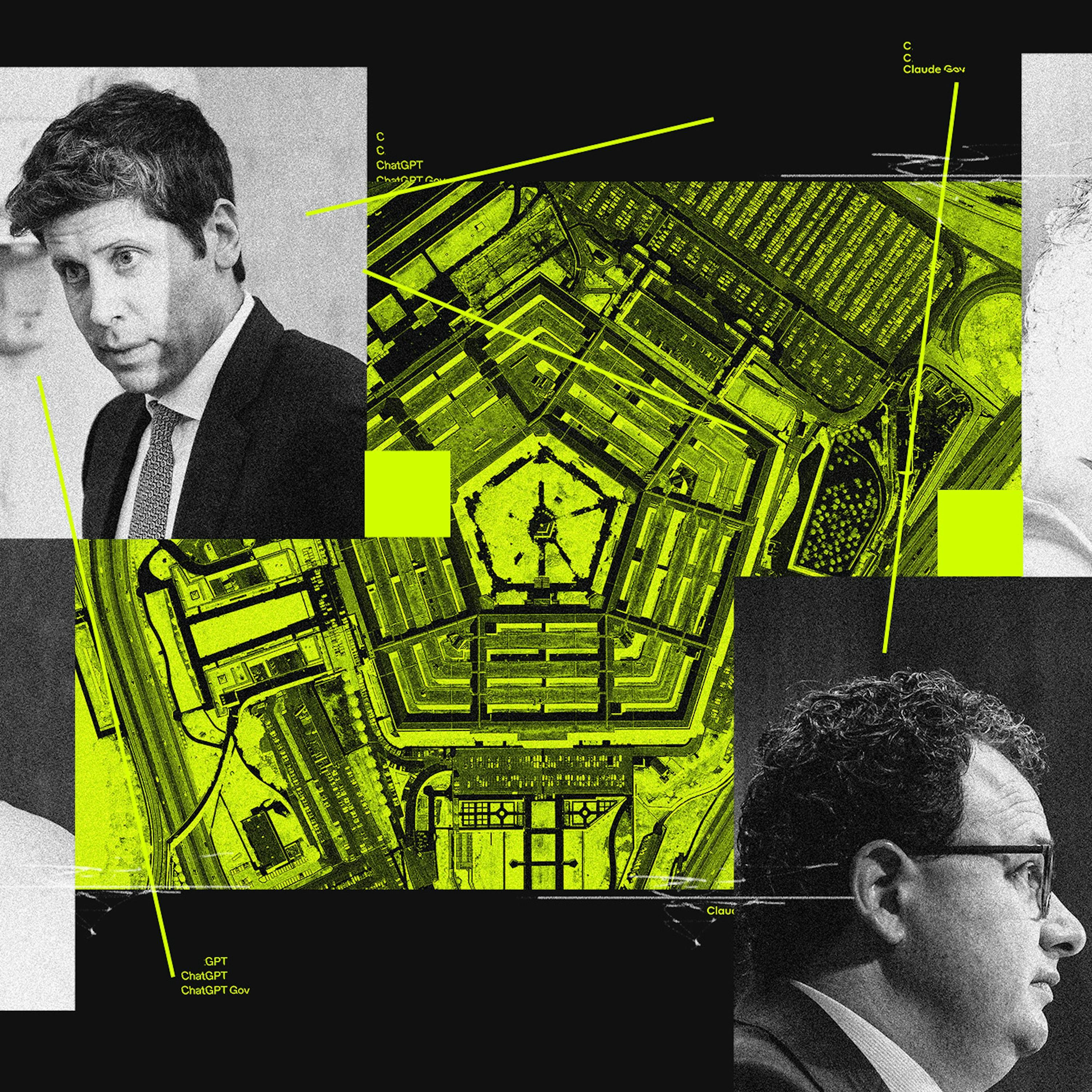
Contrary to the perception of AI in warfare as a future concept, Anthropic's Claude AI is already integral to U.S. military operations. It was actively used for intelligence assessment, target identification, and battle simulations in the recent Middle East air strikes.
The most significant value from AI is not in automating existing tasks, but in performing work that was previously too costly or complex for an organization to attempt. This creates entirely new capabilities, like analyzing every single purchase order for hidden patterns, thereby unlocking new enterprise value.

The most profound near-term shift from AI won't be a single killer app, but rather constant, low-level cognitive support running in the background. Having an AI provide a 'second opinion for everything,' from reviewing contracts to planning social events, will allow people to move faster and with more confidence.