Get your free personalized podcast brief
We scan new podcasts and send you the top 5 insights daily.
Counterintuitively, beginners should avoid AI tools for content. The primary challenge is building the discipline of consistent creation. AI becomes a powerful scaler only after you've established a working process; otherwise, it's a shiny distraction that masks a lack of fundamental habits.

Related Insights
While AI tools once gave creators an edge, they now risk producing democratized, undifferentiated output. IBM's AI VP, who grew to 200k followers, now uses AI less. The new edge is spending more time on unique human thinking and using AI only for initial ideation, not final writing.
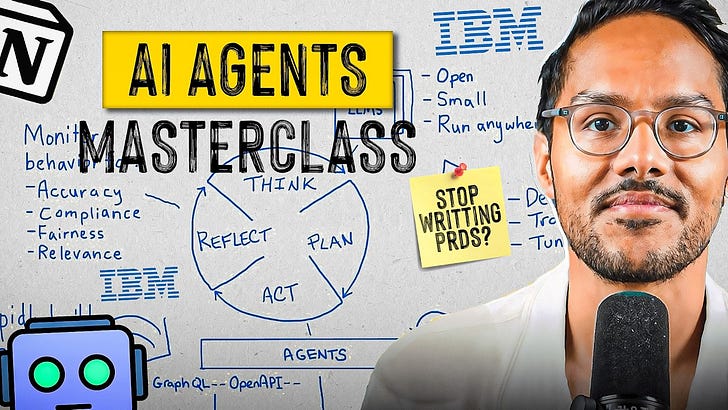
Don't wait for perfection. Hone short-form video skills by creating a random account and posting content daily, even if it's terrible. This consistent practice, despite poor performance or bad comments, is the key to developing a high-value content creation skillset.

When starting out, resist the pressure to immediately master algorithms and conversion tactics. Instead, follow your intuition and create content that is genuinely you for several months. This builds a sustainable brand and audience connection, which can then be optimized later.

Building a complex AI workflow is a significant upfront investment. Teams should first manually validate that a marketing channel, like webinars, is effective before dedicating resources to automating its repeatable components. Automation scales success, it doesn't create it.

The fastest path to creating high-quality work is through prolific creation, not perfectionism. Like a ceramics class graded on volume, producing more content provides the necessary practice and feedback to rapidly improve your skills.

Aspiring creators often try to emulate the high-frequency output of established figures, leading to burnout. A more sustainable approach is to assess your personal capacity and build a realistic content cadence. This prioritizes longevity and quality over sheer volume, which yields better long-term results and avoids quitting on day one.

AI's power is not in creating successful strategies from scratch, but in scaling your existing best practices. An AI agent cannot make a broken process work. First, identify what messaging and campaigns are effective, then use AI to execute them at a near-infinite scale, 24/7.

Most AI tools focus on automation, which often produces more average, noisy content. The superior approach is augmentation—designing AI to enhance a marketer's abilities and produce exceptional, not average, work. This shifts the goal from creating "more" to creating "better."

AI should not be the starting point for creation, as that leads to generic, spam-like output. Instead, begin with a distinct human point of view and strategy. Then, leverage AI to scale that unique perspective, personalize it with data, and amplify its distribution.

To build an effective AI product, founders should first perform the service manually. This direct interaction reveals nuanced user needs, providing an essential blueprint for designing AI that successfully replaces the human process and avoids building a tool that misses the mark.
