Get your free personalized podcast brief
We scan new podcasts and send you the top 5 insights daily.
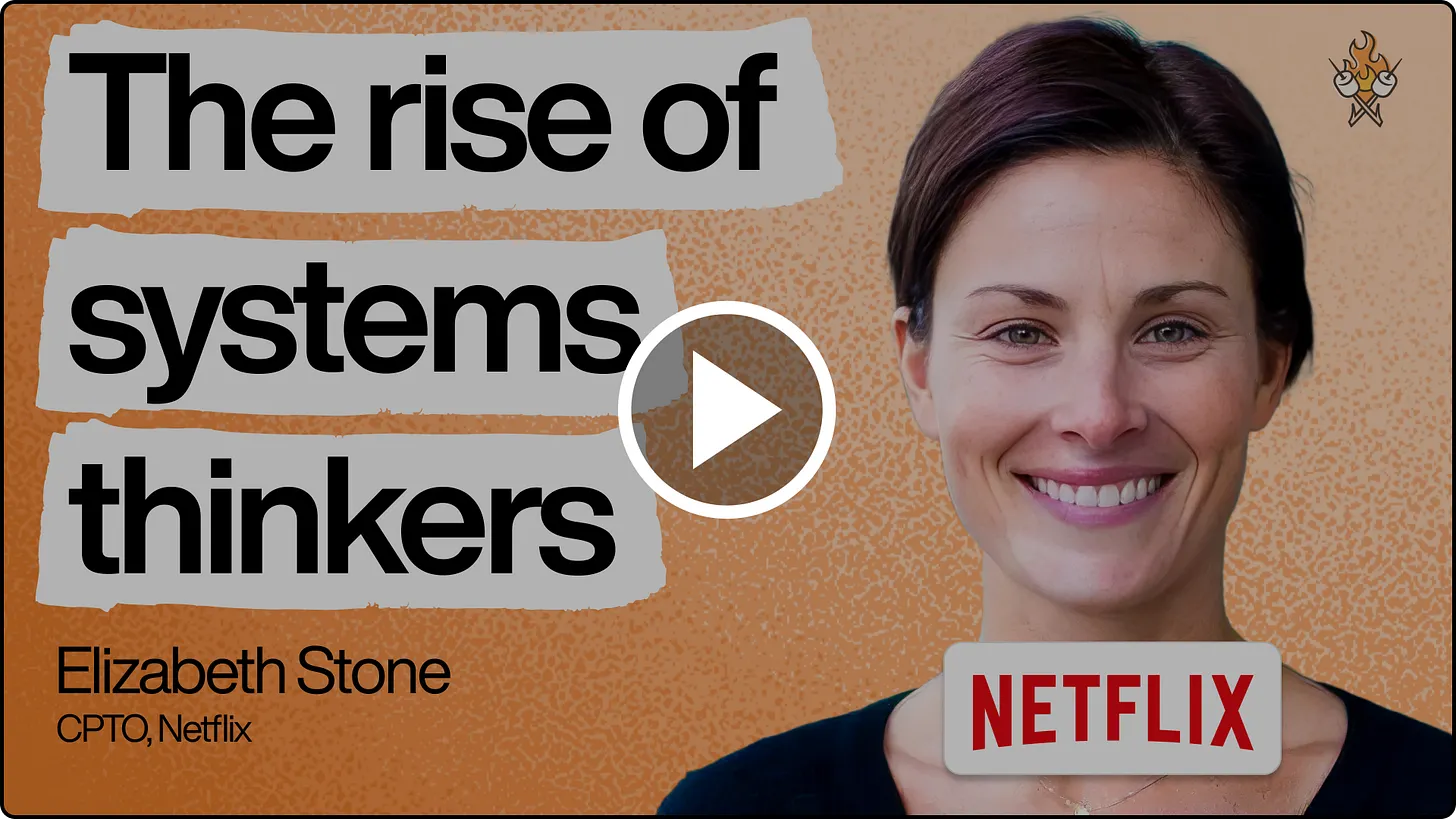
To cultivate systems thinking, Netflix's CPTO suggests a simple trick: for any task, take one step back and question your assumptions about the broader context. Consider the larger consumer problem or how your solution could scale. This "one zoom out" exercise helps build a more strategic perspective.
Related Insights
While the "Five Whys" is a standard discovery technique to find the root cause of a problem, its inverse—repeatedly asking "Then what?"—is a powerful method for systematically exploring the second and third-order consequences of a proposed solution.

Instead of asking "What should I do?" when facing a problem like a growth plateau or high churn, effective founders first diagnose the root cause. By asking "why" (e.g., "Why are we plateaued?"), they uncover the specific issue, allowing them to devise a targeted plan instead of guessing at solutions.

A powerful scenario planning technique involves identifying future driving forces, choosing two that seem completely unrelated (e.g., economic growth and climate change), and analyzing the four extreme combinations. This forces your team to consider non-linear futures and develop more robust, resilient strategies.

Treat strategic thinking as a formal, scheduled activity, not a passive one. By blocking time on your calendar for specific thinking formats—like a walking meeting with yourself or a dedicated commute session—you create the space for your subconscious to solve problems and generate novel insights.

A simple diagnostic for a missing strategy is to ask "why" multiple times about a task. If asking "why" about an objective (the first answer) results in a blank stare, it's a strong signal the strategic connection is missing. This "laddering" technique exposes gaps in the decision stack.

The common advice to ask 'why' five times can reinforce an incorrect initial framing of a problem, leading you to optimize the wrong thing. A more powerful approach is to first question the frame itself by asking, 'Is this the right thing to focus on?' before diving into causes.

Teams often get stuck listing obstacles. To break this cycle, ask, "What would need to be true for this to happen?" This imaginative prompt bypasses the immediate "no" and shifts the group's focus from roadblocks to possibilities, unlocking creative solutions they would have otherwise dismissed.

To become more senior, you must expand your perspective beyond your immediate domain. Think about how your work fits into the entire organization and industry. This demonstrates strategic thinking and shows you care about the company's success, not just your own team's, which is how senior leaders operate.

Teams often waste time trying to find a single "hero" solution for a complex system failure. A more effective strategy is to first isolate *where* in the system the problem exists. This narrowing approach is a faster path to a root cause than jumping between different global hypotheses.

Asking "What if this problem were the intention?" forces your brain to search for purpose in a negative situation. This counterintuitive question bypasses the reactive urge to simply solve the issue, reframing a crisis as a catalyst for growth and revealing opportunities for transformation.
