Get your free personalized podcast brief
We scan new podcasts and send you the top 5 insights daily.
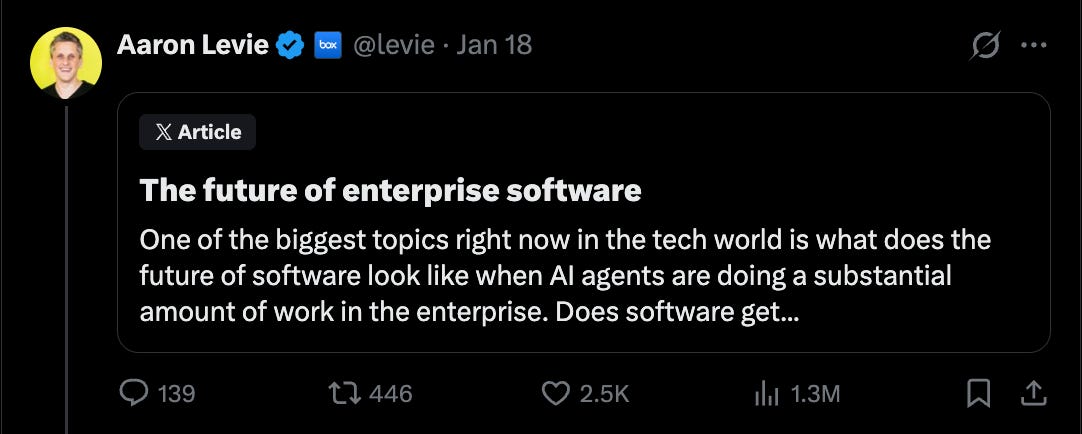
As enterprises deploy agents for critical tasks like RFP generation or invoice processing, they will require dedicated evaluation frameworks and teams. This will create a massive new market for agent observability and eval tools, moving them beyond AI-native companies to the broader enterprise.
Related Insights
The new generation of AI automates workflows, acting as "teammates" for employees. This creates entirely new, greenfield markets focused on productivity gains for every individual, representing a TAM potentially 10x larger than the previous SaaS era, which focused on replacing existing systems of record.

As AI agents become reliable for complex, multi-step tasks, the critical human role will shift from execution to verification. New jobs will emerge focused on overseeing agent processes, analyzing their chain-of-thought, and validating their outputs for accuracy and quality.
As AI evolves from single-task tools to autonomous agents, the human role transforms. Instead of simply using AI, professionals will need to manage and oversee multiple AI agents, ensuring their actions are safe, ethical, and aligned with business goals, acting as a critical control layer.

Standardized benchmarks for AI models are largely irrelevant for business applications. Companies need to create their own evaluation systems tailored to their specific industry, workflows, and use cases to accurately assess which new model provides a tangible benefit and ROI.
AI evaluation shouldn't be confined to engineering silos. Subject matter experts (SMEs) and business users hold the critical domain knowledge to assess what's "good." Providing them with GUI-based tools, like an "eval studio," is crucial for continuous improvement and building trustworthy enterprise AI.
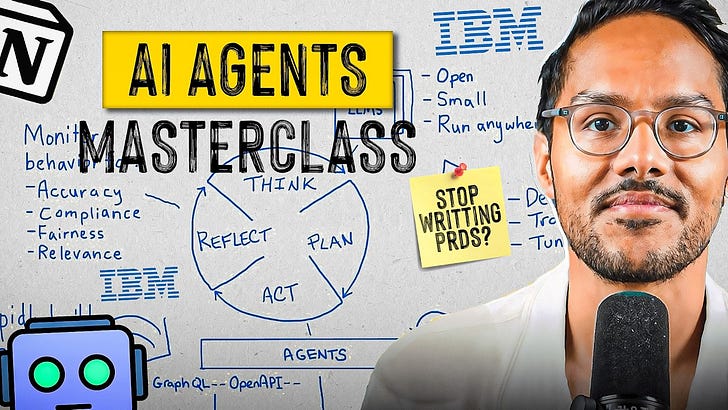
As businesses deploy multiple AI agents across various platforms, a new operations role will become necessary. This "Agent Manager" will be responsible for ensuring the AI workforce functions correctly—preventing hallucinations, validating data sources, and maintaining agent performance and integration.

The race in enterprise AI isn't just about agent capabilities, but about owning the central dashboard where employees direct agents across all applications (Salesforce, Jira, etc.). Companies like OpenAI and Microsoft are vying to become this primary interface, controlling the customer relationship and relegating other apps to the background.

The durable investment opportunities in agentic AI tooling fall into three categories that will persist across model generations. These are: 1) connecting agents to data for better context, 2) orchestrating and coordinating parallel agents, and 3) providing observability and monitoring to debug inevitable failures.

The rapid improvement of AI models is maxing out industry-standard benchmarks for tasks like software engineering. To truly understand AI's impact and capability, companies must develop their own evaluation systems tailored to their specific workflows, rather than waiting for external studies.

The transition to agent-centric workflows is not a simple software deployment; it's a complex re-engineering of business processes. This creates a huge opportunity for a new generation of consulting firms that specialize in getting organizations "agent-ready."