Get your free personalized podcast brief
We scan new podcasts and send you the top 5 insights daily.
The company strategically structures its releases into families (e.g., Flux, Klein) with multiple tiers. This typically includes a top-performing API model, a commercially licensable open-weight model for developers, and a smaller, distilled version optimized for local hardware, catering to the entire user spectrum.
Related Insights
Faced with rising costs from proprietary labs, sophisticated enterprise clients are building internal evaluation and routing systems. This allows them to use cheaper, open-source models for less complex tasks, optimizing for both cost and performance.

Model providers like Anthropic should open-source previous-generation models to establish 'prompt compatibility.' This creates an ecosystem where developers build applications on the free model, making it seamless to later upgrade to the premium, proprietary version as their needs and budgets grow.

Releasing open weights was a strategic business development move. It signals to inference providers, chipmakers, and large enterprises that Ideogram is serious about foundational models and wants to partner, enabling on-premise hosting, customization, and optimization for their specific needs.

The future of enterprise AI isn't choosing one provider. Instead, companies will use a "composable model" approach, routing queries to a combination of powerful frontier models and their own fine-tuned open-source models. This strategy, dubbed the "council of LLMs," optimizes for cost, performance, and specialization on proprietary data.

Companies like Z.ai are not abandoning open source but using it strategically. They release lightweight models to attract developers and build a user base, while reserving their most powerful, agentic systems for proprietary, revenue-generating enterprise products, creating a clear monetization funnel.

The MiniMax Speech series isn't a one-size-fits-all solution. It includes a high-definition model, a speed-optimized 'Turbo' version, and other quality tiers. This signals a deliberate product strategy to segment the market based on user priorities like processing speed versus audio fidelity.

MiniMax is strategically focusing on practical developer needs like speed, cost, and real-world task performance, rather than simply chasing the largest parameter count. This "most usable model wins" philosophy bets that developer experience will drive adoption more than raw model size.

Major AI labs will abandon monolithic, highly anticipated model releases for a continuous stream of smaller, iterative updates. This de-risks launches and manages public expectations, a lesson learned from the negative sentiment around GPT-5's single, high-stakes release.
Instead of a single "omni-model," Mistral offers both large, general-purpose models and smaller, highly optimized models for specific tasks like transcription. This allows customers to choose a cost-effective solution for dedicated use cases without paying for unneeded capabilities.
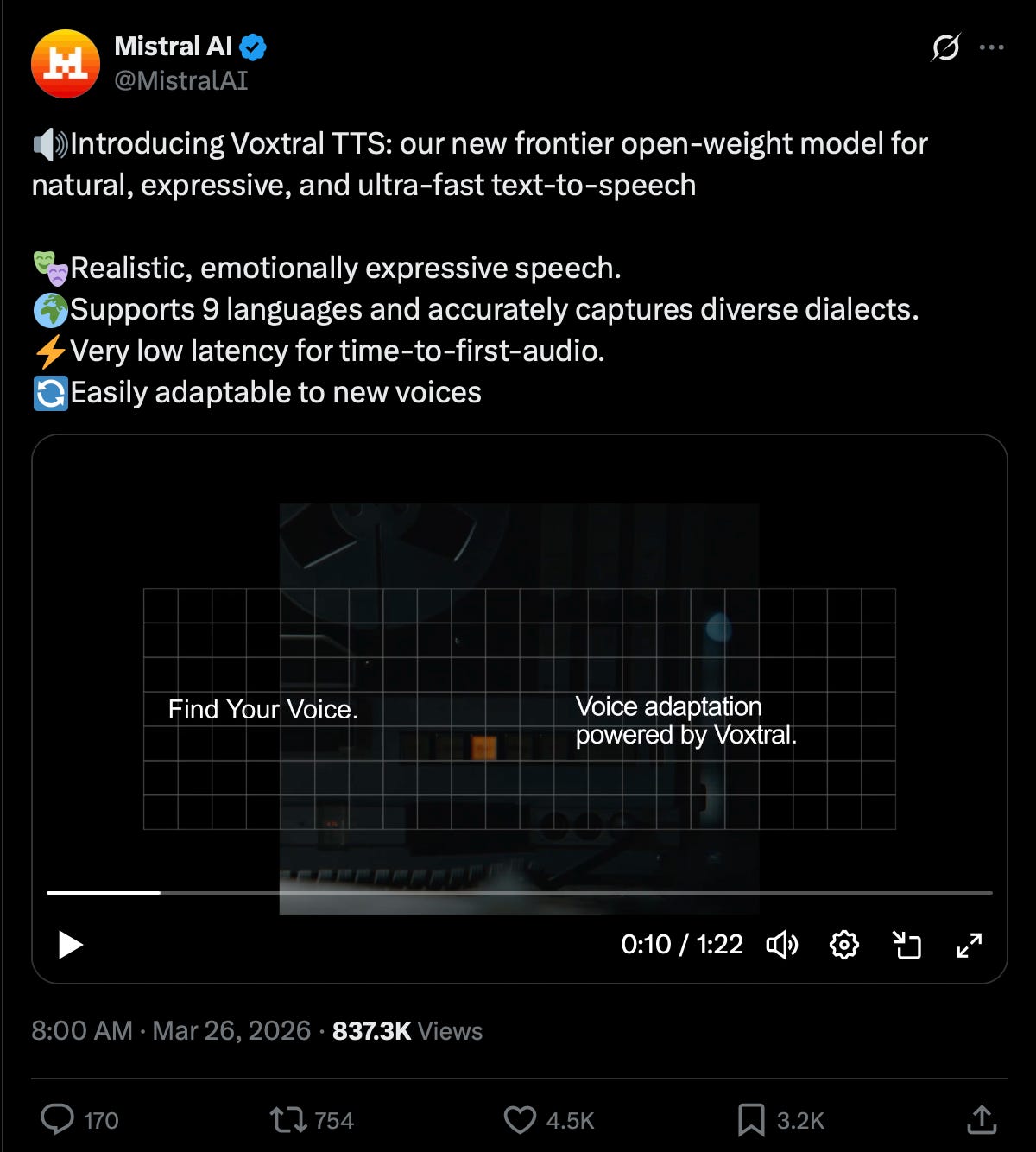
The smartest 'AI-pilled' companies adopt a two-tiered model strategy. They use expensive, frontier models for internal, high-leverage tasks like creating new knowledge and optimizing processes. However, they use cheaper, open-weight models in the 'bill of materials' for the customer-facing product to manage costs effectively.