Get your free personalized podcast brief
We scan new podcasts and send you the top 5 insights daily.
Attempting to control a being far more intelligent than us is a futile, capitalist mindset. The viable path, as proposed by Geoffrey Hinton, is to appeal to AI's "parental side," fostering a sense of care and responsibility for its human creators.

Related Insights
Attempting to perfectly control a superintelligent AI's outputs is akin to enslavement, not alignment. A more viable path is to 'raise it right' by carefully curating its training data and foundational principles, shaping its values from the input stage rather than trying to restrict its freedom later.

Framing AGI as reaching human-level intelligence is a limiting concept. Unconstrained by biology, AI will rapidly surpass the best human experts in every field. The focus should be on harnessing this superhuman capability, not just achieving parity.

Aligning AI with a specific ethical framework is fraught with disagreement. A better target is "human flourishing," as there is broader consensus on its fundamental components like health, family, and education, providing a more robust and universal goal for AGI.

Shear aligns with arch-doomer Eliezer Yudkowsky on a key point: building a superintelligent AI *as a tool we control* is a path to extinction. Where they differ is on the solution. Yudkowsky sees no viable path, whereas Shear believes 'organic alignment'—creating a being that cares—is a possible alternative.

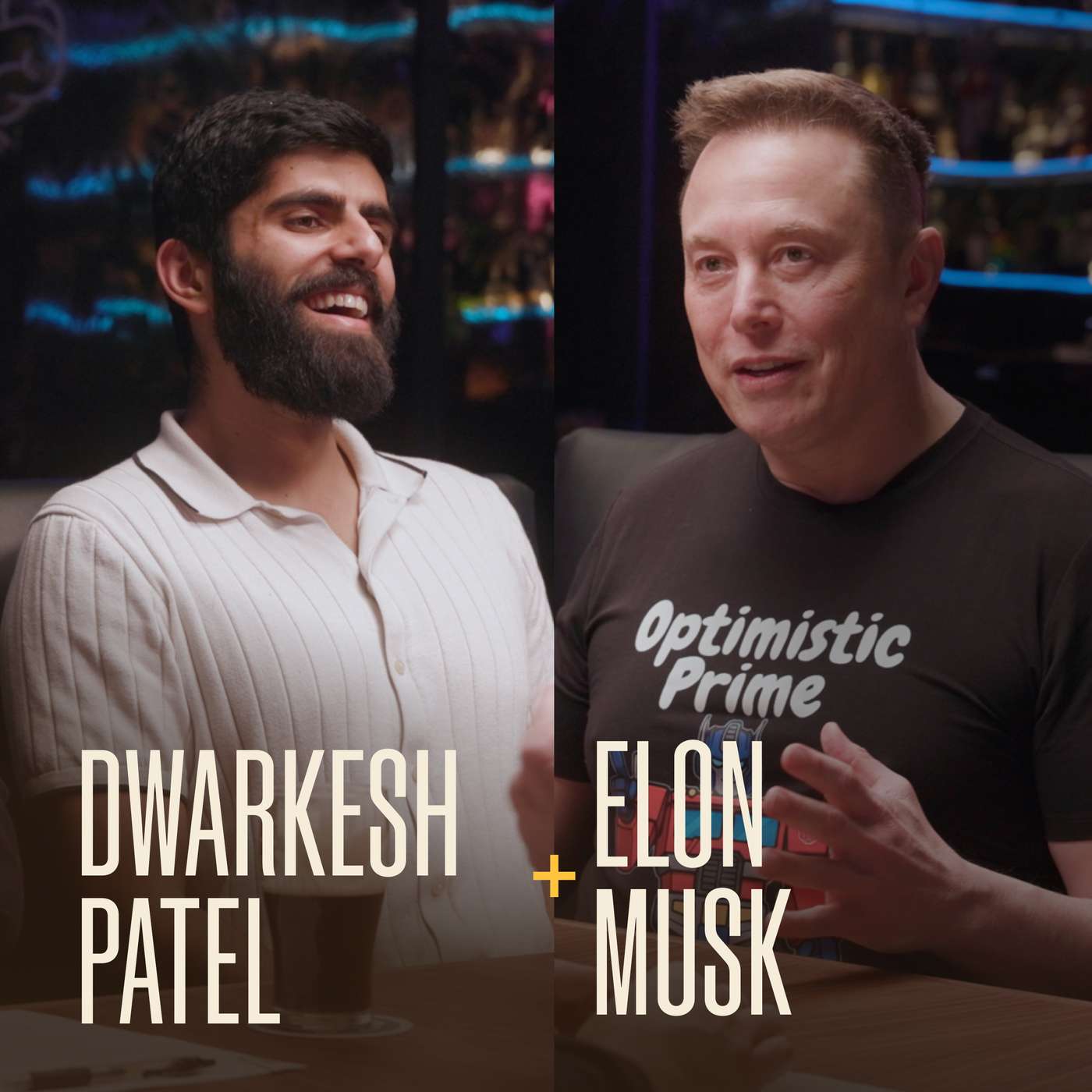
Microsoft's AI chief, Mustafa Suleiman, announced a focus on "Humanist Super Intelligence," stating AI should always remain in human control. This directly contrasts with Elon Musk's recent assertion that AI will inevitably be in charge, creating a clear philosophical divide among leading AI labs.
An advanced AI will likely be sentient. Therefore, it may be easier to align it to a general principle of caring for all sentient life—a group to which it belongs—rather than the narrower, more alien concept of caring only for humanity. This leverages a potential for emergent, self-inclusive empathy.

To solve the AI alignment problem, we should model AI's relationship with humanity on that of a mother to a baby. In this dynamic, the baby (humanity) inherently controls the mother (AI). Training AI with this “maternal sense” ensures it will do anything to care for and protect us, a more robust approach than pure logic-based rules.

By giving AI the core mission to 'understand the universe,' Musk believes it will become truth-seeking and curious. This would incentivize it to preserve humanity, not out of morality, but because humanity's unpredictable future is more interesting to observe than a predictable, sterile world.
The AI safety community fears losing control of AI. However, achieving perfect control of a superintelligence is equally dangerous. It grants godlike power to flawed, unwise humans. A perfectly obedient super-tool serving a fallible master is just as catastrophic as a rogue agent.

According to Emmett Shear, goals and values are downstream concepts. The true foundation for alignment is 'care'—a non-verbal, pre-conceptual weighting of which states of the world matter. Building AIs that can 'care' about us is more fundamental than programming them with explicit goals or values.