Get your free personalized podcast brief
We scan new podcasts and send you the top 5 insights daily.
Brightline believes current AI is too agreeable (“sycophantic”) and risky for direct therapeutic use with children. Their strategy focuses on using AI to reduce cognitive load for frontline staff and improve their efficiency, rather than having AI directly participate in the clinical relationship.

Related Insights
Analysis of real-world stories shows people are not using AI for direct medical advice. Instead, the emerging 'best practice' is using LLMs to deeply understand their condition. This empowers them to ask more informed questions to their medical providers, leading to better collaboration and outcomes. AI becomes a tool for patient advocacy, not amateur diagnosis.

For products in sensitive domains like reproductive health, introducing patient-facing AI can erode fragile trust. A wiser approach is to apply AI internally to augment a lean team's capabilities, such as synthesizing qualitative data to accelerate critical decisions.
To maintain trust, AI in medical communications must be subordinate to human judgment. The ultimate guardrail is remembering that healthcare decisions are made by people, for people. AI should assist, not replace, the human communicator to prevent algorithmic control over healthcare choices.

To overcome resistance, AI in healthcare must be positioned as a tool that enhances, not replaces, the physician. The system provides a data-driven playbook of treatment options, but the final, nuanced decision rightfully remains with the doctor, fostering trust and adoption.

An effective AI strategy in healthcare is not limited to consumer-facing assistants. A critical focus is building tools to augment the clinicians themselves. An AI 'assistant' for doctors to surface information and guide decisions scales expertise and improves care quality from the inside out.

To overcome resistance to AI in critical fields like healthcare, position it first as a supplement, not a replacement. By providing AI-generated summaries that still require clinical review, organizations can demonstrate value and build trust, making clinicians see AI as a tool that frees them for high-value work.

Hippocratic AI's founder identified a strategic sweet spot for AI applications. By focusing on clinical but non-diagnostic tasks (within a nurse's scope), the company avoids the highest safety risks and regulatory hurdles of being an "AI doctor" while providing more value than simple administrative automation.

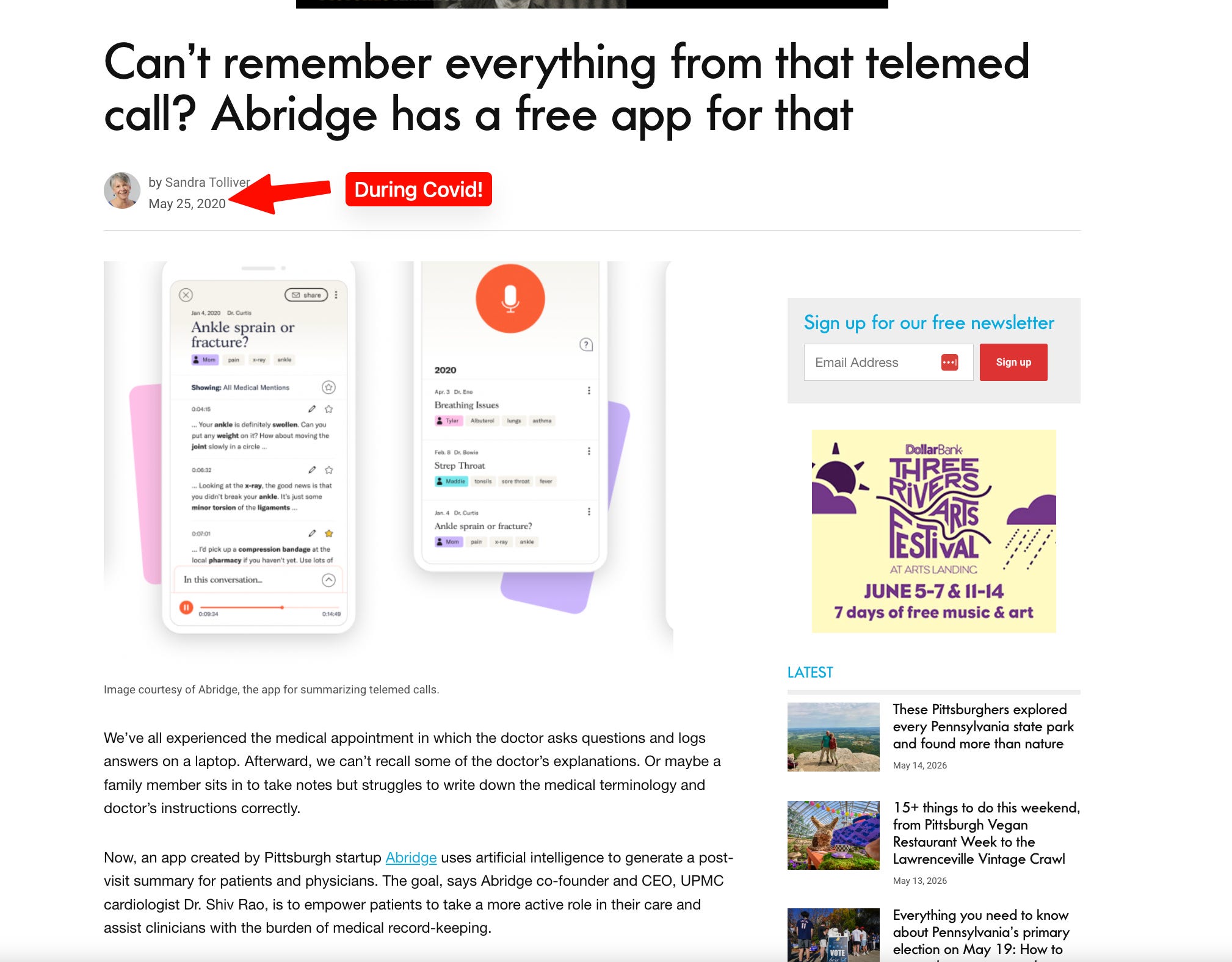
To avoid the "alert fatigue" common in medical software, Abridge's product philosophy is for its AI to be proactive, not reactive. It works seamlessly in the background to prepare clinicians before visits, rather than interrupting them with constant alerts during patient conversations, making the experience helpful but unobtrusive.
In a high-stakes industry like healthcare, AI shouldn't replace human support but augment it. CareFirst's strategy is to use AI to handle basic, high-volume queries. This clears the queue, allowing human agents to dedicate their time and empathy to the complex, emotionally charged issues where customers still want to speak with a person.

Instead of replacing clinicians, AI's promise lies in offloading work to virtual assistants. These agents will prepare pre-visit summaries, ask patients questions beforehand, and manage post-visit follow-ups like checking on prescriptions and lab tests, acting as a force multiplier for the human care team.