Get your free personalized podcast brief
We scan new podcasts and send you the top 5 insights daily.
Whether for investing, hiring, or procurement, the ability to recognize value before it becomes consensus is the ultimate competitive advantage. This 'non-consensus and right' skill is the core driver of success, but there's no system to track or reward it beyond financial investment.

Related Insights
With information now ubiquitous, the primary source of market inefficiency is no longer informational but behavioral. The most durable edge is "time arbitrage"—exploiting the market's obsession with short-term results by focusing on a business's normalized potential over a two-to-four-year horizon.

As AI handles the analytical heavy lifting, the most valuable skill for investment professionals becomes gathering proprietary data. This means spending time in the field, speaking to experts, and building unique relationship graphs to feed their models with exclusive inputs not available to others.
![Gabe Stengel - Building Investing Superintelligence - [Invest Like the Best, EP.492] thumbnail](https://megaphone.imgix.net/podcasts/ef669774-cccd-11ed-889b-c36caad6646f/image/158efdddfb983d2678b3530d484e8aa2.jpg?ixlib=rails-4.3.1&max-w=3000&max-h=3000&fit=crop&auto=format,compress)
After a career spanning public markets, private equity, and operating, the ultimate investment lesson is simple: bet on exceptional people in big markets. Great founders will always figure out execution and pivots, making the person a more valuable signal than the initial idea or short-term traction.
Marks argues the key to outperforming the market is "second-level thinking"—having a correct perception that differs from the consensus. He believes this insight is an innate talent, similar to height in basketball, which cannot be taught, only identified and appreciated in those who possess it.

To effectively spot founders with an extreme, outlier strength, an investor needs to have a similar "spiky" profile. The ability to recognize genuine, world-class expertise comes from having achieved it yourself in a domain—a "game recognizes game" phenomenon.

Young VCs should first identify their unique analytical strength—be it in evaluating people, product, or markets. The crucial next step is to join a firm where that specific skill is highly valued. A mismatch, like a quantitative expert at a gut-driven seed fund, will neutralize their talent.

Most good investors succeed by recognizing patterns (e.g., "SaaS for X"). However, the truly exceptional investors analyze businesses from first principles, understanding their deep, fundamental merits. This allows them to spot outlier opportunities that don't fit any existing mold, which is where the greatest returns are found.
![Luca Ferrari - Building Bending Spoons - [Invest Like the Best, EP.446] thumbnail](https://megaphone.imgix.net/podcasts/b29cbd80-b93a-11f0-a1b7-2b977c9469a2/image/39f7864ea628f71a81b94662bd4a86df.jpg?ixlib=rails-4.3.1&max-w=3000&max-h=3000&fit=crop&auto=format,compress)
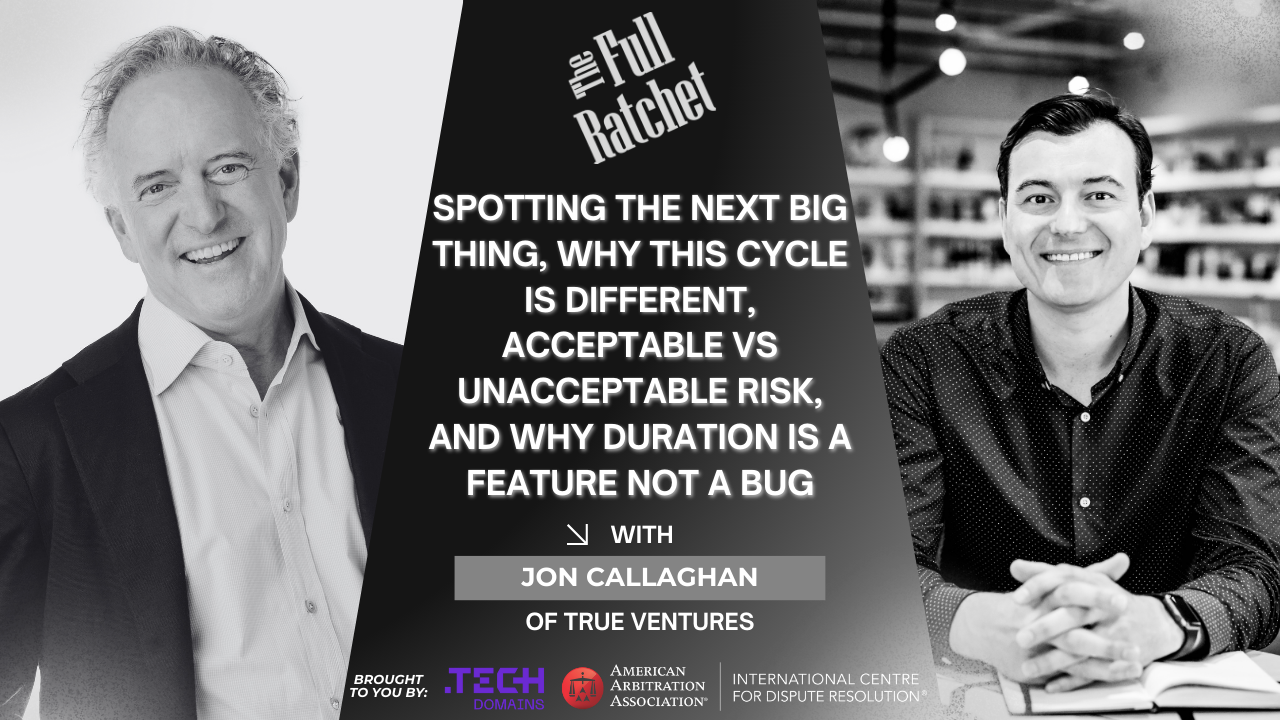
In VC, where being wrong is the norm (80%+ of the time), the most critical trait is not righteousness but deep curiosity. This learning-first mindset is what uncovers non-obvious opportunities and allows investors to see future market shifts before they become mainstream, according to True Ventures' Jon Callaghan.
While process is necessary, any repeatable, process-driven advantage that generates significant alpha will quickly be arbitraged away in competitive markets. A firm's true, lasting edge comes from its ability to recruit and retain exceptional people within a culture that fosters truth-seeking.

The ability that comes most naturally to you—the one you assume everyone has—is often your greatest and most marketable asset. Because it's "normal" to you, you can't see its unique value, but it's the thing you should lean into and monetize.
