Get your free personalized podcast brief
We scan new podcasts and send you the top 5 insights daily.
Anthropic clarified that OAuth tokens from its consumer plans (Free, Pro, Max) are exclusively for its own website. Using these keys in any other product, even Anthropic's own Agent SDK, is a violation of terms. This move walls off its consumer ecosystem from developers seeking unofficial API access.
Related Insights
The complicated setup for Claude bot—requiring terminal commands and API keys—acts as a filter, ensuring the initial user base is technical enough to understand the risks and provide valuable feedback. This mirrors the early, complex sandbox version of GPT-3, which targeted developers long before the consumer-friendly ChatGPT was released.
OpenAI has quietly launched "skills" for its models, following the same open standard as Anthropic's Claude. This suggests a future where AI agent capabilities are reusable and interoperable across different platforms, making them significantly more powerful and easier to develop for.

The usefulness of AI agents is severely hampered because most web services lack robust, accessible APIs. This forces agents to rely on unstable methods like web scraping, which are easily blocked, limiting their reliability and potential integration into complex workflows.

Anthropic employs a bifurcated product strategy. Claude Cowork is designed for simplicity to appeal to a broad, non-technical audience. In contrast, Claude Code is built with extensive customizability (skills, hooks, permissions) to satisfy expert engineers who love to "hack their tools."
Claude Cowork is not a separate technology but a user-friendly interface built directly on the existing Claude Code agent and SDK. This strategy makes a powerful, technical tool accessible to a broader, non-technical audience, effectively expanding its total addressable market.
Anthropic is preventing users from leveraging its cheap consumer subscription for heavy, API-like usage. This move highlights the unsustainable economics of flat-rate pricing for a variable, high-cost resource like AI compute. The market is maturing from a growth-focused to a unit-economics-focused phase.

While Apple's public-facing AI strategy involves Google, its internal product development and tooling are heavily powered by Anthropic's Claude. Apple runs custom versions of the model on its own servers, indicating a deep, non-public integration with a key AI player.

While OpenAI battles Google for consumer attention, Anthropic is capturing the lucrative enterprise market. Its strategy focuses on API spend and developer-centric tools, which are more reliable and scalable revenue generators than consumer chatbot subscriptions facing increasing free competition.

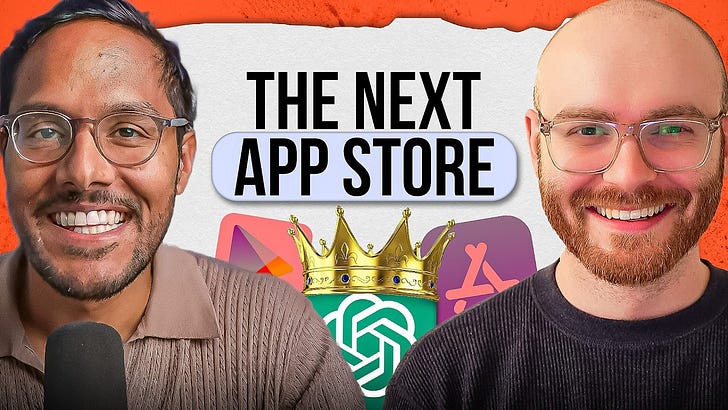
ChatGPT Apps are built on the Model Context Protocol (MCP), invented by Anthropic. This means tools built for ChatGPT can theoretically run on other MCP-supporting models like Claude. This creates an opportunity for cross-platform distribution, as you aren't just building for OpenAI's ecosystem but for a growing open standard.
Anthropic has released Claude CoWork, an agentic tool that automates office tasks by directly interacting with local computer files. It's effectively a "no-code" version of their developer tool, signaling the imminent arrival of AI agents in mainstream workflows, though Anthropic explicitly warns users about potential security risks.