Get your free personalized podcast brief
We scan new podcasts and send you the top 5 insights daily.
The complicated setup for Claude bot—requiring terminal commands and API keys—acts as a filter, ensuring the initial user base is technical enough to understand the risks and provide valuable feedback. This mirrors the early, complex sandbox version of GPT-3, which targeted developers long before the consumer-friendly ChatGPT was released.

Related Insights
The adoption of advanced AI tools like Claude Code is hindered by a calibration gap. Technical users perceive them as easy, while non-technical individuals face significant friction with fundamental concepts like using the terminal, understanding local vs. cloud environments, and interpreting permission requests.

By creating a "thin wrapper" UI over a technical tool like Claude Code, new products can fall into a trap. They may be too restrictive for power users who prefer the terminal, yet still too complex or unguided for mainstream users, failing to effectively serve either audience without significant optimization for one.

While ChatGPT and Gemini chase mass adoption, Claude focuses on a "hyper-technical" user base. Features like Artifacts and Skills, while too complex for casual consumers, create a deep moat with engineers and prosumers who are willing to invest time in building complex workflows.

Anthropic employs a bifurcated product strategy. Claude Cowork is designed for simplicity to appeal to a broad, non-technical audience. In contrast, Claude Code is built with extensive customizability (skills, hooks, permissions) to satisfy expert engineers who love to "hack their tools."

Tools like Claude bot show the powerful tech for universal AI assistants exists. However, like Napster in 1999, they are technically complex and lack the polished business models and safety features of future mainstream versions, which will take years to develop, analogous to how iTunes or Netflix followed piracy.
The core technology behind ChatGPT was available to developers for two years via the GPT-3 API. Its explosive adoption wasn't due to a sudden technical leap but to a simple, accessible UI, proving that distribution and user experience can be as disruptive as the underlying invention.
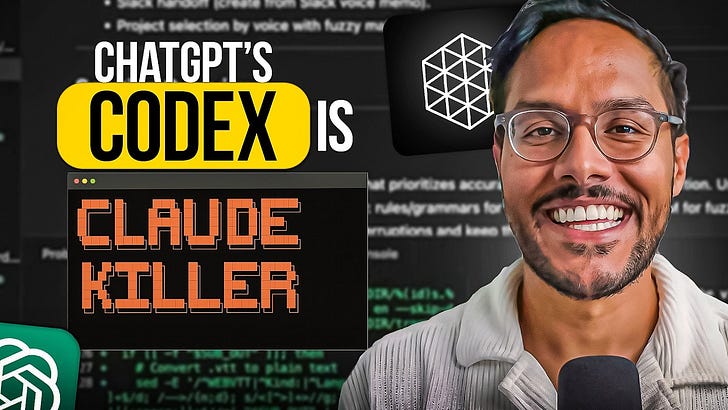
Codex exposes every command and step, giving engineers granular control. Claude Code abstracts away complexity with a simpler UI, guessing user intent more often. This reflects a fundamental design difference: precision for technical users versus ease-of-use for non-technical ones.
The terminal-first interface of Claude Code wasn't a deliberate design choice. It emerged organically from prototyping an API client in the terminal, which unexpectedly revealed the power of giving an AI model direct access to the same tools (like bash) that a developer uses.

AI chat interfaces are often mistaken for simple, accessible tools. In reality, they are power-user interfaces that expose the raw capabilities of the underlying model. Achieving great results requires skill and virtuosity, much like mastering a complex tool.
While generating significant online buzz, Claude Bot's installation requires comfort with terminals and API keys, creating a high barrier for the average consumer. Its current product-market fit is limited to developers and technical users, not the mass market.
