Get your free personalized podcast brief
We scan new podcasts and send you the top 5 insights daily.
Constantly shifting tools in response to marginal benchmark improvements causes severe organizational thrash. Engineering leaders must commit to specific decisions and model integrations rather than continuously chasing marginal frontier advances that do not fundamentally alter core day-to-day developer workflows.

Related Insights
The rapid pace of AI advancement requires designing systems with the assumption of frequent, fundamental change. This means avoiding attachment to current workflows, even recently successful ones, and being culturally ready to reimagine everything from first principles on a regular basis.

AI tools have the "half-life of a flea." Instead of chasing the latest platform, product managers should focus on mastering fundamental techniques—like context engineering or problem-solving—which are transferable and will outlast any single tool.

Instead of committing to a single AI tool, manage them like a team. Maintain a spreadsheet of the best-performing models for specific tasks (coding, images, etc.) and update it monthly. This approach, where 'AI takes the job of the previous AI,' ensures you're always using the best tool on the market.

The 'move fast and break things' mantra is counterproductive for complex AI development. Tools and philosophies prioritizing correctness and thoughtful architecture over raw speed are better suited for building meaningful, non-trivial AI features that don't become overwhelming to manage.

Because AI allows anyone to rapidly prototype and generate code, it introduces chaotic proliferation. Lopitaux notes that organizations must implement stricter discipline rather than total autonomy. Without strong architectural guardrails, gatekeeping on what enters production, and active pruning of legacy features, rapid code generation will build an unmanageable product that risks killing the company.

A model's native power does not automatically translate to effective organizational capability. Migration costs and ecosystem fit are paramount. Factors like existing developer tools (OpenAI vs. Claude APIs), identity controls, and data residency should weigh as heavily as raw performance benchmarks when selecting a flagship model.
The constant leapfrogging between AI labs and shifting architectural paradigms makes enterprise teams hesitant. They fear backing the wrong technology and getting locked into a strategy that will soon be deprecated, leading to inaction.
When choosing an AI tech stack, prioritize your team's existing skills over the allure of cutting-edge tools. Adopting complex new technologies without relevant expertise can create significant productivity bottlenecks, negating any potential feature advantages and stalling innovation.
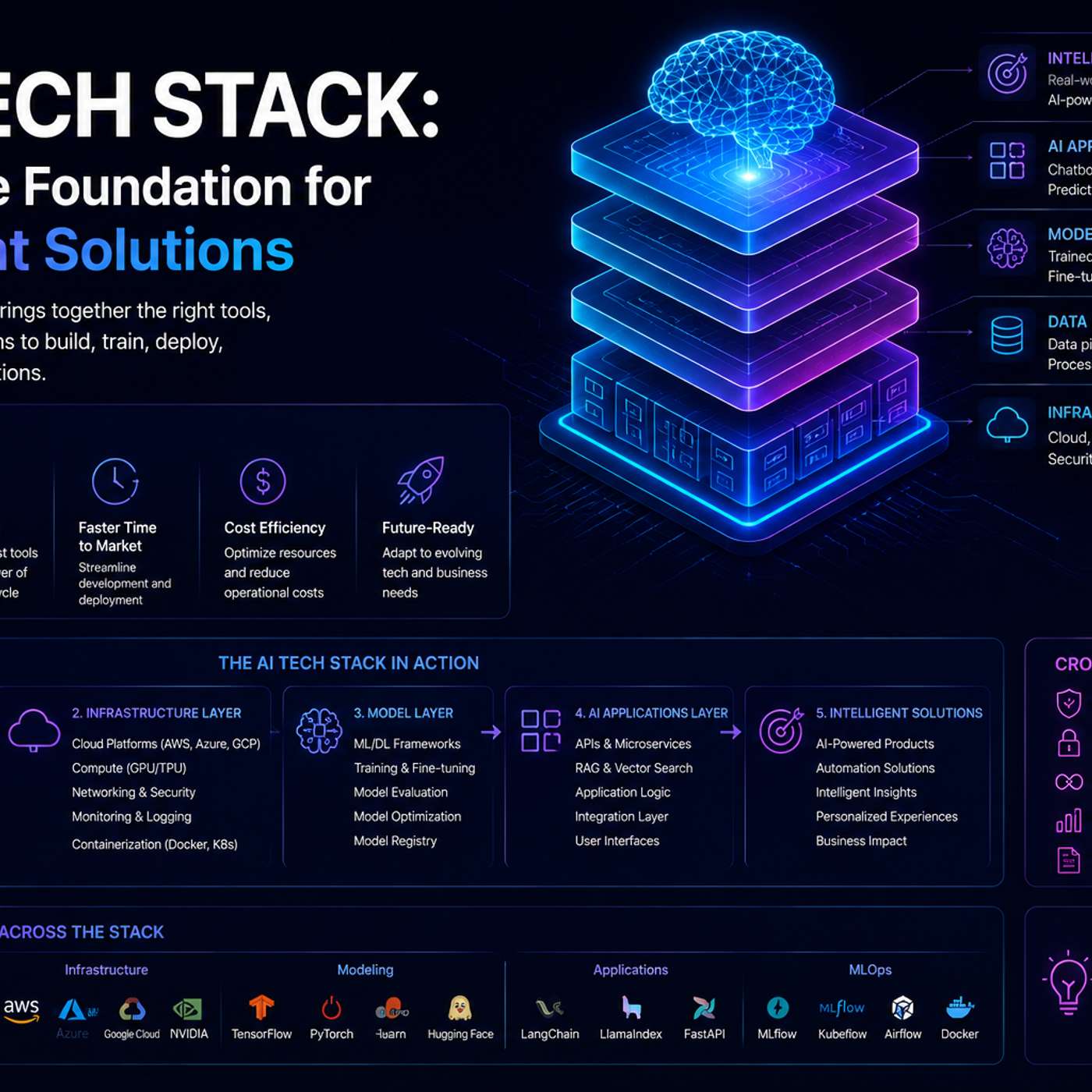
The rapid pace of model releases is a distraction. A sustainable enterprise strategy focuses on a robust AI architecture that allows models to be swapped based on cost, performance, or geopolitical factors. This ensures long-term stability and control, preventing vendor lock-in and constant rebuilding.

To fully leverage rapidly improving AI models, companies cannot just plug in new APIs. Notion's co-founder reveals they completely rebuild their AI system architecture every six months, designing it around the specific capabilities of the latest models to avoid being stuck with suboptimal implementations.