Get your free personalized podcast brief
We scan new podcasts and send you the top 5 insights daily.
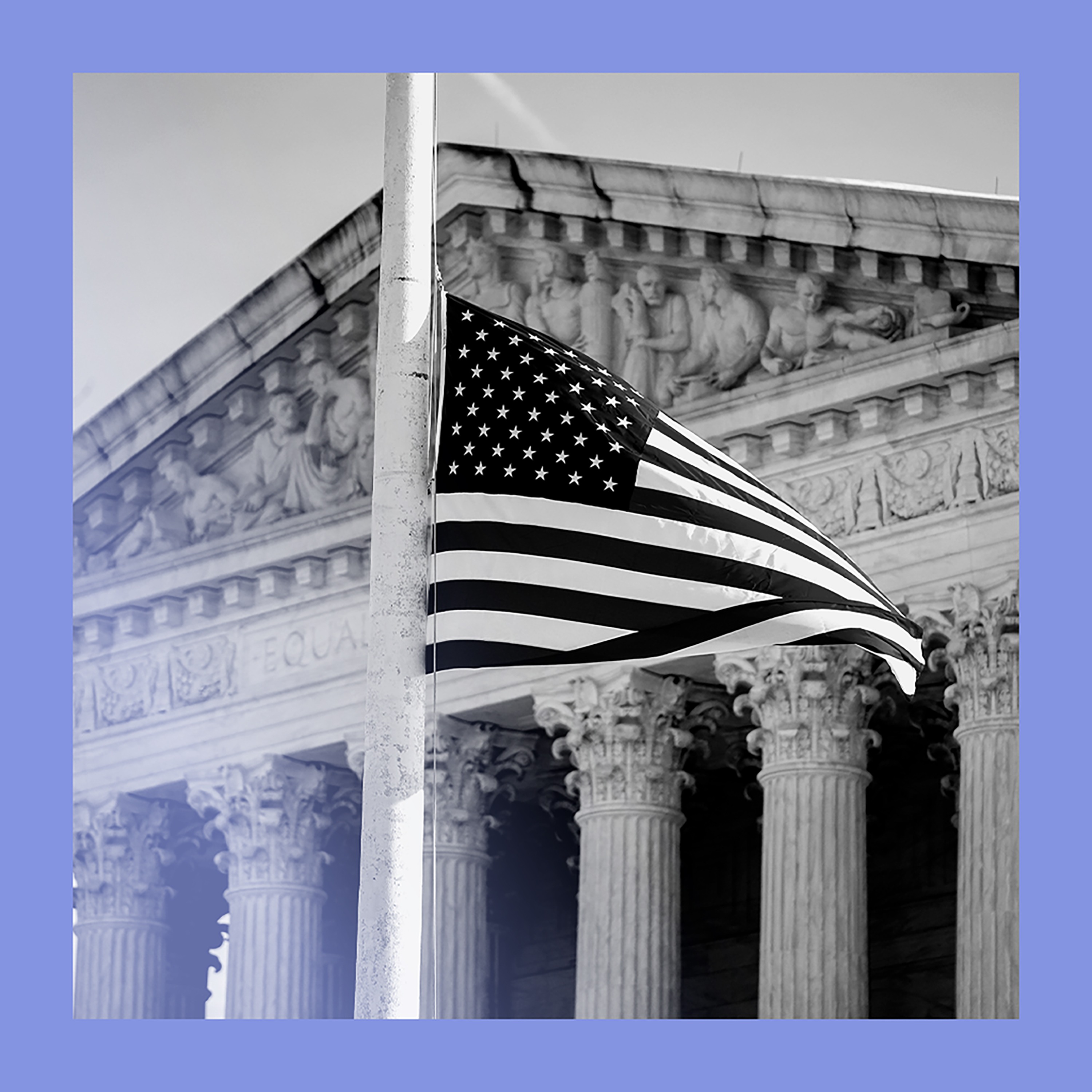
In a move described as intellectually inconsistent, the US Supreme Court has carved out a special exception for the Federal Reserve, maintaining its independence while emasculating nearly all other federal institutions. This makes the Fed the sole independent body, a decision based on political pragmatism rather than rigorous legal argument.

Related Insights
The Court's "Hamilton exception" is based on a flawed premise. Hamilton advocated for a private, investor-owned commercial bank, not a government regulatory body. Therefore, the historical analogy used to protect the Fed from presidential power is fundamentally incorrect.

Although the decision protecting the Fed was 5-4, only two justices (Roberts and Kavanaugh) actually support the underlying legal logic. The three liberal justices joined to save the outcome while dissenting on the principle, making the Fed's special status highly unstable.
Central bank independence is a relatively new concept from the 1990s. Historically, central banks operated as junior partners to the government, executing industrial policy. The move to subordinate the Fed to the Treasury is a return to a long-standing historical model.

Despite its perceived importance, the Federal Reserve Act offered weaker legal protection against presidential removal than other independent agencies. Its independence was upheld more by norms and tradition than by explicit statutory language.
The "history and tradition" test, originally developed for Second Amendment cases like U.S. v. Rahimi, was unexpectedly applied to create a special exception for the Federal Reserve's independence, while simultaneously dismantling it for other agencies.
The Supreme Court is systematically dismantling laws that protect heads of independent agencies (like the CFPB and FTC) from being fired at will. This aligns with the "unitary executive theory," concentrating power in the presidency and eroding the apolitical nature of regulatory bodies.

The arguments to allow presidential firing of FTC commissioners create a slippery slope that threatens other independent, multi-member bodies. This logic could extend to the Federal Reserve's Board of Governors, potentially politicizing U.S. monetary policy—an outcome so significant that even the court's conservative justices appear wary of its implications.
Unlike past presidents who merely expressed opinions on policy, the current administration has used lawsuits and subpoenas against sitting Fed officials. This aggressive legal strategy represents a significant escalation and a direct assault on the institution's operational independence, going far beyond typical political pressure.

The Federal Reserve Board funds itself by levying assessments on the regional Federal Reserve Banks, which can create money. This unique power insulates it entirely from the congressional appropriations process, giving it a degree of financial independence unmatched by other agencies.
Despite talk of independence, the Fed is constrained by massive US debt. Any chair, regardless of ideology, will be forced to intervene to prevent a Treasury market collapse, as there isn't enough private balance sheet to finance deficits without the Fed's help.
