Get your free personalized podcast brief
We scan new podcasts and send you the top 5 insights daily.
While events like the pandemic, the Ukraine war, and the Iran conflict are individually unique, their rapid succession conditions the public to expect continuous price shocks. This transforms transitory inflation into a deep-rooted psychological problem for central banks, as people stop seeing these events as isolated.

Related Insights
Since leaving the gold standard in 1971, the default government response to any financial crisis has been to expand the money supply. This creates a persistent, long-term inflationary pressure that investors must factor into their strategies, particularly for fixed-income assets.
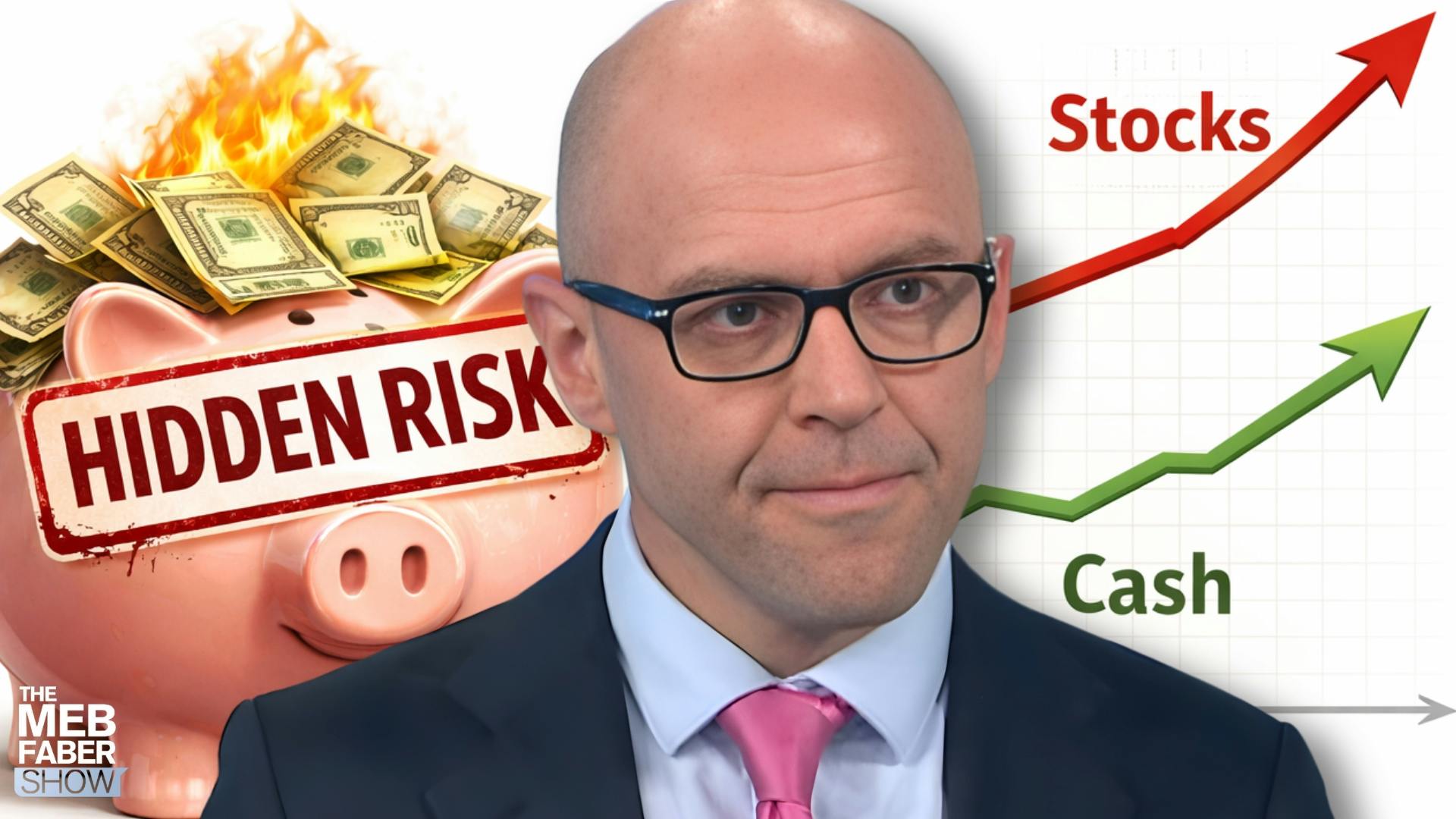
The Fed's concern isn't just the current high inflation rate, but the risk that prolonged high inflation changes public psychology. If businesses and consumers begin to expect continued price hikes, they may become less price-sensitive, creating a self-reinforcing 'snowball' effect that makes inflation much harder to control.

The current inflationary period is analogous to the 1970s, structured as a three-act play. We have passed Act 1 (initial shock) and Act 2 (premature all-clear), and the Iran conflict is the catalyst for Act 3 (inflation's resurgence), similar to how the 1973 Yom Kippur War triggered a new wave.

While the direct impact of tariffs may be temporary, the elongated process risks making consumers and businesses comfortable with higher inflation. Combined with questions about the Federal Reserve's political independence, this could unmoor expectations and make inflation persistent.

History suggests that if inflation remains high for too long, it can alter public psychology. Businesses may become less hesitant to raise prices, and consumers may grow more accepting of them. This shift can create a self-perpetuating feedback loop, or 'snowball' effect, making inflation much harder for the central bank to control.

Official inflation metrics may be low, but public perception remains negative because wages haven't kept pace with the *cumulative* price increases since the pandemic. Consumers feel a "permanent price increase" on essential goods like groceries, making them feel poorer even if the rate of new inflation has slowed.
The knee-jerk reaction to a geopolitical shock is often a bond market rally (flight to safety). However, if the shock impacts supply (e.g., oil), the market can quickly reverse. It pivots from pricing geopolitical risk to pricing the risk of persistent inflation, forcing yields higher in anticipation of rate hikes.
While a single tariff hike is a one-time price shock, a policy of constantly changing tariffs can become a persistent inflationary force. The unpredictability de-anchors inflation expectations, as businesses and consumers begin to anticipate a continuous series of price jumps, leading them to adjust wages and prices upwards in a self-reinforcing cycle.
The narrative of "well-anchored" inflation expectations is being tested by the oil shock. The 5-year breakeven inflation rate, a key market indicator, has risen 20 basis points from 2.4% to 2.6%. This indicates investors are beginning to price in higher inflation for longer, not simply looking through the shock.
The longevity of above-target inflation is a primary concern for the Fed because it can fundamentally alter consumer and business behavior. Historical models based on low-inflation periods become less reliable. Businesses report being surprised that consumers are still accepting price increases, suggesting pricing power and inflation expectations may be stickier than anticipated.
