Get your free personalized podcast brief
We scan new podcasts and send you the top 5 insights daily.
The 'government cover-up' around UFOs may not be about aliens, but about hiding top-secret military projects like stealth aircraft. Allowing UFO narratives to flourish is an effective counter-intelligence strategy, as it provides a fantastical explanation for sightings and discredits credible witnesses.

Related Insights
Loeb warns against the scientific heuristic that 'if it looks like a duck, it's a duck.' He argues that an advanced technological object could mimic natural phenomena, like a car creating a dust cloud similar to an animal. Relying on superficial resemblance could cause us to miss signs of intelligence.

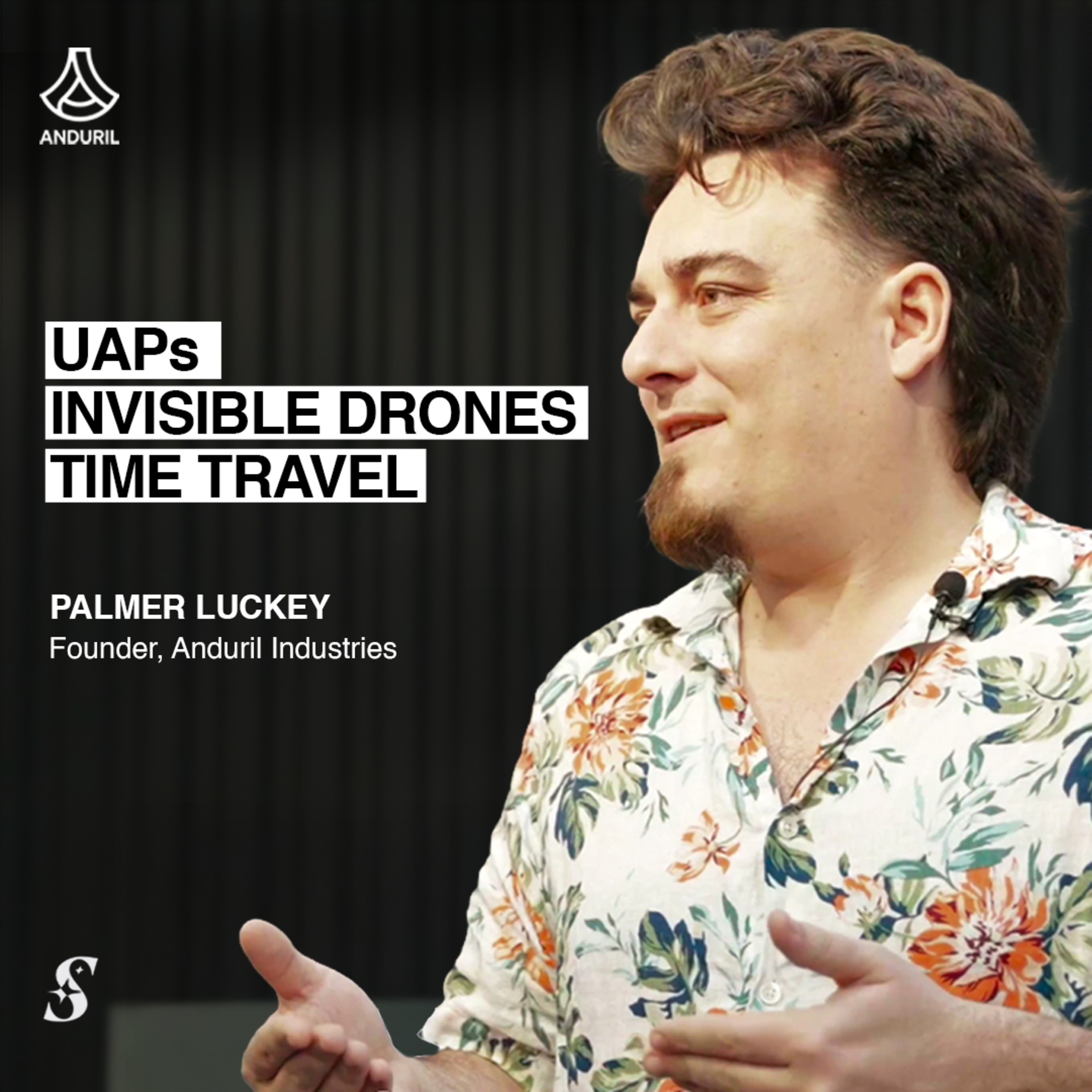
Palmer Luckey states that if UAP technology is real and can be understood, it will obsolete all current defense systems. Therefore, until that breakthrough occurs, military development must proceed on a completely independent track, treating the UAP phenomenon as a separate universe that cannot influence current strategy.
The level of sophistication in publicly accessible technology, such as AI, significantly lags behind what intelligence agencies possess. As an example, the CIA had a mechanical, camera-equipped dragonfly for surveillance in 1967. This suggests that what we see as cutting-edge consumer tech is likely a decade-old version of classified systems.

A former CIA operative suggests that government secrecy is frequently a tool to hide administrative incompetence, premature announcements, or procedural errors, rather than to cover up nefarious, large-scale conspiracies. This perspective reframes public distrust from calculated malice to bureaucratic failure.

The AI systems used for mass censorship were not created for social media. They began as military and intelligence projects (DARPA, CIA, NSA) to track terrorists and foreign threats, then were pivoted to target domestic political narratives after the 2016 election.

During military operations, all sides release conflicting stories. The official government version, the enemy's counter-narrative, and online conspiracies are all weapons in an information war, requiring extreme skepticism to discern any semblance of truth.

Contrary to the exploratory narrative of many space programs, China's space strategy is explicitly viewed as a geopolitical tool. Military experts within China articulate a clear goal: leveraging space capabilities to achieve strategic dominance on Earth, treating space as a crucial military and power domain.

The human brain resists ambiguity and seeks closure. When a significant, factual event occurs but is followed by a lack of official information (often for legitimate investigative reasons), this creates an "open loop." People will naturally invent narratives to fill that void, giving rise to conspiracy theories.
Instead of subscribing to Hollywood's vision of aliens, Avi Loeb’s Galileo Project takes a data-driven approach. It uses AI to first catalog familiar objects (birds, planes, satellites) to create a baseline, then systematically searches for outliers in appearance, speed, or acceleration that defy known physics.
According to Kiriakou, a former CIA director coined the term 'conspiracy theory' as a deliberate strategy to marginalize and dismiss individuals who were accurately exposing secret and unethical agency operations like MKUltra, making them sound irrational.