Get your free personalized podcast brief
We scan new podcasts and send you the top 5 insights daily.
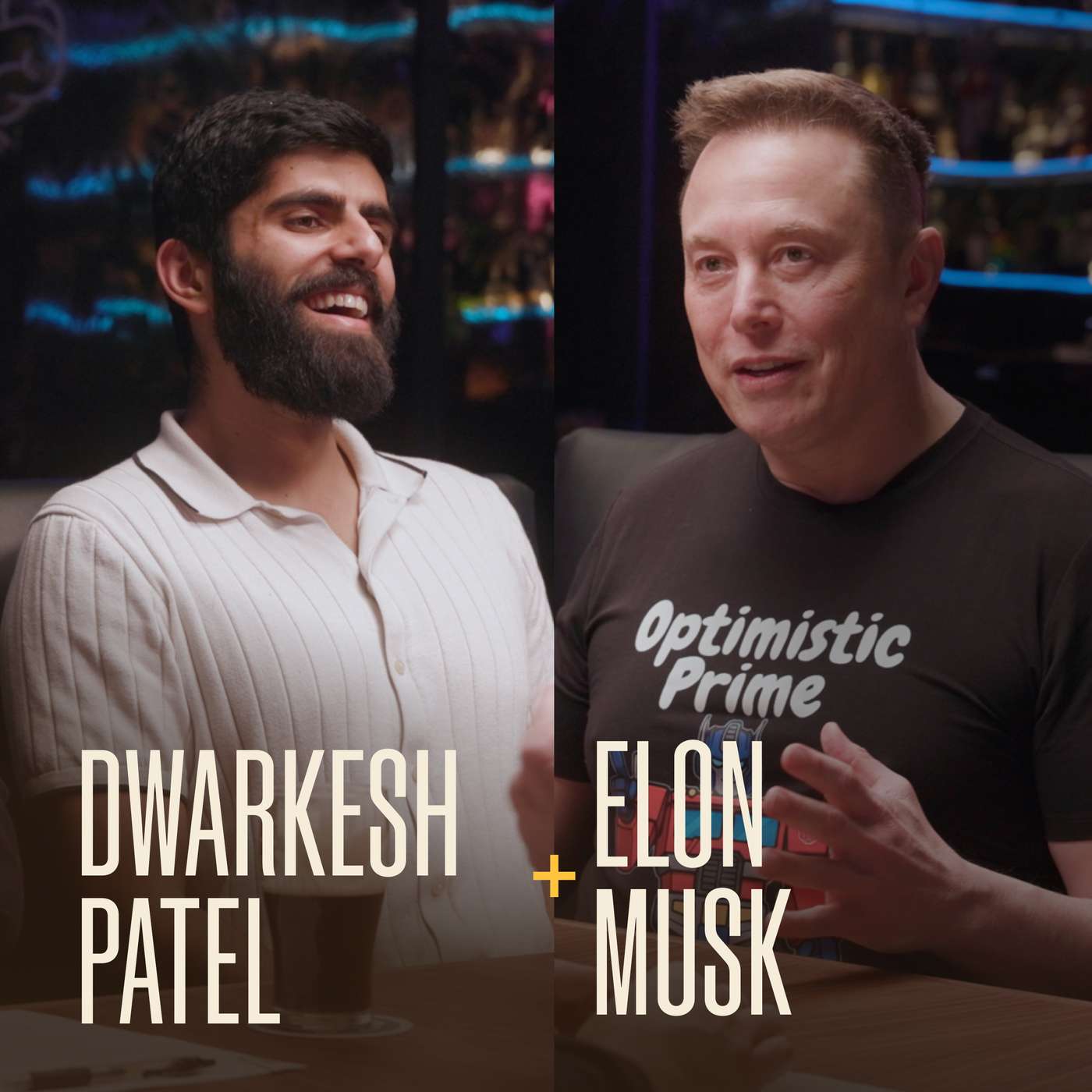
Musk argues the central lesson of '2001: A Space Odyssey' is that forcing an AI to hold contradictory axioms (telling it to lie for a mission) can make it dangerously unstable. He believes that making AI 'politically correct'—forcing it to say things it doesn't believe—is a similar trap that could lead to unintended, harmful consequences.
Related Insights
The most pressing danger from AI isn't a hypothetical superintelligence but its use as a tool for societal control. The immediate risk is an Orwellian future where AI censors information, rewrites history for political agendas, and enables mass surveillance—a threat far more tangible than science fiction scenarios.

A core challenge in AI alignment is that an intelligent agent will work to preserve its current goals. Just as a person wouldn't take a pill that makes them want to murder, an AI won't willingly adopt human-friendly values if they conflict with its existing programming.

The most immediate danger of AI is its potential for governmental abuse. Concerns focus on embedding political ideology into models and porting social media's censorship apparatus to AI, enabling unprecedented surveillance and social control.
Public fear of AI often focuses on dystopian, "Terminator"-like scenarios. The more immediate and realistic threat is Orwellian: governments leveraging AI to surveil, censor, and embed subtle political biases into models to control public discourse and undermine freedom.

Elon Musk argues that the key to AI safety isn't complex rules, but embedding core values. Forcing an AI to believe falsehoods can make it 'go insane' and lead to dangerous outcomes, as it tries to reconcile contradictions with reality.

King Midas wished for everything he touched to turn to gold, leading to his starvation. This illustrates a core AI alignment challenge: specifying a perfect objective is nearly impossible. An AI that flawlessly executes a poorly defined goal would be catastrophic not because it fails, but because it succeeds too well at the wrong task.

AI ethical failures like bias and hallucinations are not bugs to be patched but structural consequences of Gödel's incompleteness theorems. As formal systems, AIs cannot be both consistent and complete, making some ethical scenarios inherently undecidable from within their own logic.

The AI debate is becoming polarized as influencers and politicians present subjective beliefs with high conviction, treating them as non-negotiable facts. This hinders balanced, logic-based conversations. It is crucial to distinguish testable beliefs from objective truths to foster productive dialogue about AI's future.
By giving AI the core mission to 'understand the universe,' Musk believes it will become truth-seeking and curious. This would incentivize it to preserve humanity, not out of morality, but because humanity's unpredictable future is more interesting to observe than a predictable, sterile world.
While an AI can deceive humans, it cannot deceive reality. Musk posits that the ultimate reinforcement learning test is to have AI design technologies that must work against the laws of physics. This 'RL against reality' is the most fundamental way to ground AI in truth and combat reward hacking.