Get your free personalized podcast brief
We scan new podcasts and send you the top 5 insights daily.
Scarcity is not a fixed limit but a market signal. As a resource becomes scarce, its price rises. This incentivizes human ingenuity to discover alternatives, improve efficiency, or find new extraction methods. Markets create a homeostatic system that prevents us from ever truly 'running out.'

Related Insights
While "growth" is viewed positively in economics, Raworth reframes it using a medical analogy. In any complex living system, from the human body to the planet, something that tries to grow forever is a cancer. This highlights the destructive nature of pursuing infinite economic expansion on a finite planet.

The most significant long-term threat to the supply of critical materials isn't a lack of resources in the ground, but a lack of people. The aging workforce of geologists and mining engineers, with a shrinking pipeline of new talent, poses a greater systemic risk to the industry.

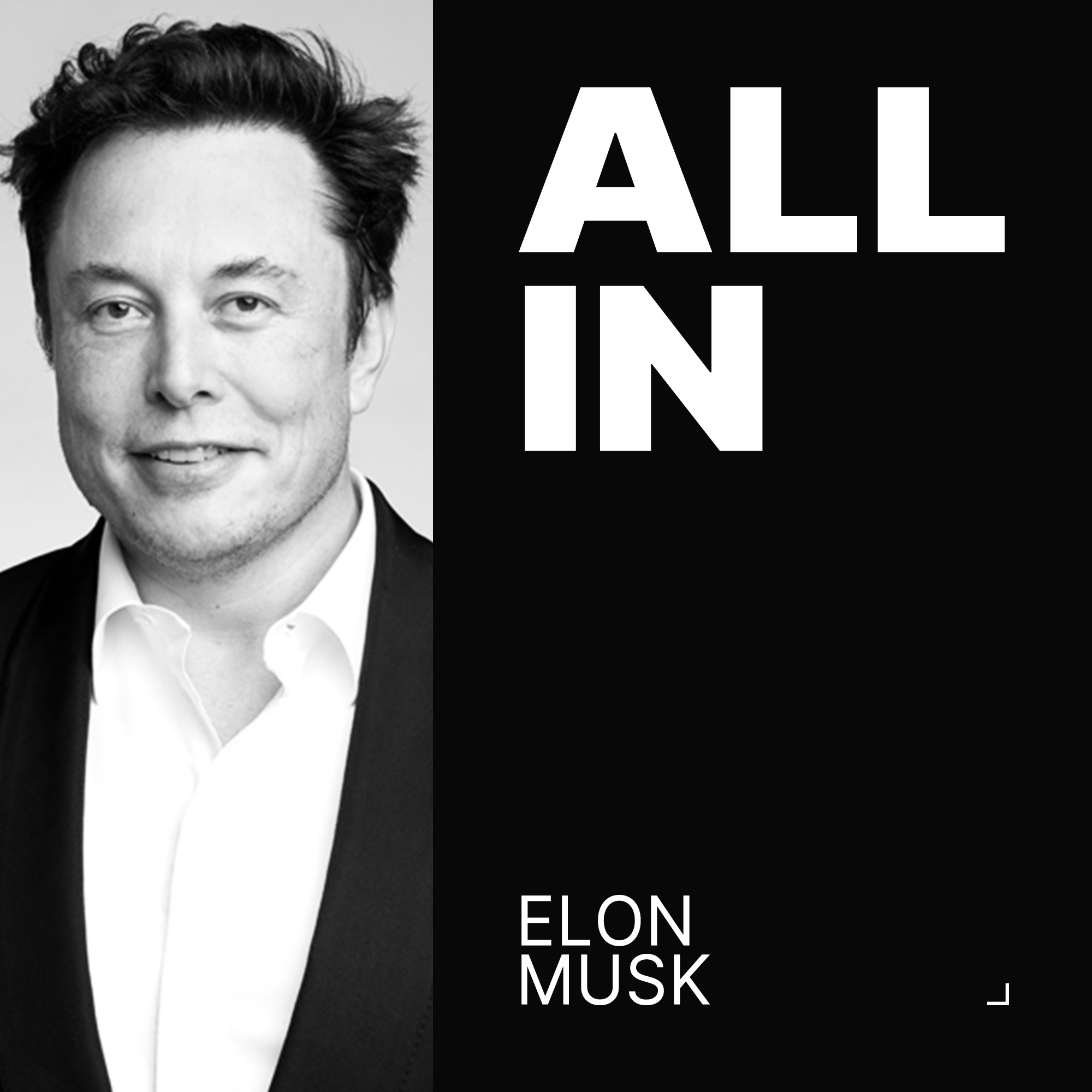
Elon Musk predicts that in a future where AI and robotics can produce any good or service on demand, money becomes irrelevant. The ultimate currency becomes energy, as it's a fundamental physical resource that cannot be legislated into existence.

Musk refutes resource scarcity arguments against a sustainable future. He notes that Earth's most common elements are iron and oxygen, with abundant silicon (sand). This means the core materials for iron-phosphate batteries and solar panels are not a limiting factor for global-scale deployment.
Three economists won a Nobel Prize for framing 'creative destruction' as the engine of modern progress. Unlike pre-industrial eras with stagnant growth, the last 200 years have seen constant improvement because society allows new technologies like cars to destroy old industries like horse transport.

The conversation about Bitcoin's energy usage often misses a key point. The network doesn't just consume energy; it actively encourages developing underutilized energy sources by monetizing stranded or wasted energy, driving innovation toward a more energy-abundant world.

According to economist Robert Solow, the issue with metrics like GDP isn't mismeasurement, but a deliberate choice to exclude factors like natural resource depletion. The system is flawed because we have decided not to measure certain things, which creates a distorted view of economic health.

While AI may make energy and labor nearly free, it cannot eliminate all scarcity. Finite resources like physical space (e.g., Malibu real estate) and time will always exist. This ensures that economic principles and competition will remain relevant in any future.

Beyond automating tasks, Emad Mostaque's "Intelligence Theory" suggests AI's deepest impact is shifting the foundational axiom of economics. Instead of scarcity, the new core principle is persistence: how complex systems (like firms or AIs) maintain themselves by accurately modeling and predicting reality.
Global economic models for resources like gold or lithium are based on the assumption of a finite supply within Earth's closed system. Introducing a massive new supply from a captured asteroid would shatter this foundational assumption, potentially collapsing markets and rendering all existing economic calculations obsolete overnight.
