Get your free personalized podcast brief
We scan new podcasts and send you the top 5 insights daily.
Knowing his podcast audience was audio-only, Steve Levitt intentionally avoided asking guest BJ Miller about the accident that caused his amputations. This forced a conversation about Miller's work, not his trauma. When the story was finally told late in the interview, it emerged with more authentic emotion than in typical settings.

Related Insights
The speaker is abandoning a high-effort interview podcast for a low-production daily show. He believes the rawness and authenticity, including background noise, create a more intimate and sustainable connection with listeners, which is often lost in overly polished formats.

To prevent guests from adopting a rehearsed, "idealized" persona, the podcast host starts recording as soon as they sit down. By eliminating formal cues like "Are you ready?", the conversation feels natural and unplanned, leading to more honest and unguarded responses that reflect the guest's true personality.

To get past historian Yuval Noah Harari's guarded media persona, Levitt asked why his book *Sapiens* succeeded despite violating a key storytelling rule (lacking characters). This specific, insightful challenge demonstrated deep preparation and prompted a novel, open conversation, breaking through Harari's standard talking points.
Gladwell observes that audio is inherently better at conveying emotion than detailed analysis, which often gets edited out of his podcasts. He suggests this cultural shift from written to oral mediums changes how stories are told and understood, favoring feeling over complex facts.

Originating from research with terminally ill children, the 'spill question' (e.g., 'Tell me about X') is a powerful, open-ended prompt. It allows people to reveal their primary concern organically, bypassing the researcher's assumptions about what is important.

Citing Oprah Winfrey, Rubenstein argues the key to great interviewing is not having the best questions but being a great listener. True listening allows the interviewer to pivot and follow up on unexpected answers, turning a rigid Q&A into a genuine conversation that uncovers far deeper insights than a prepared script ever could.

Andy Richter's technique for better interviews is to start recording the moment a guest arrives. This captures unguarded conversation before the formal "commercial vessel" of the show begins. Avoiding a stilted intro maintains a framework of real human interaction, leading to more authentic content.

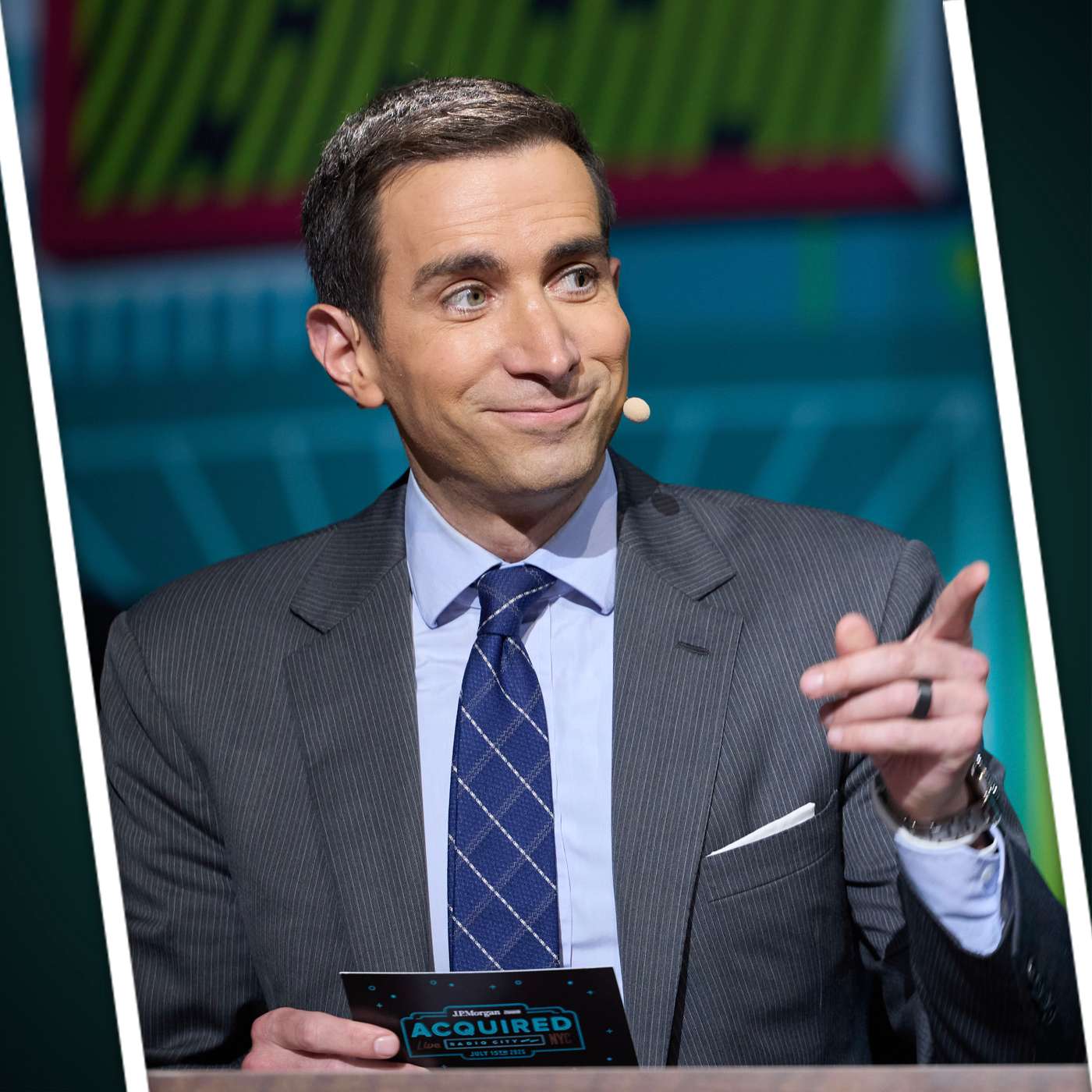
To broach a sensitive topic, Andrew Ross Sorkin reads a critical quote from another source. This technique shifts the focus from a personal attack ("I think you...") to a public concern ("Others are saying..."). It forces the interviewee to grapple with an issue they have likely already considered, leading to a more thoughtful response.
To elicit candid answers from fund managers, the most effective technique is not the question itself but the silence that follows. Resisting the psychological urge to fill the space forces the manager to sit with the question, often leading to less rehearsed and more truthful responses.
![[REPLAY] Matt Bank - "GEMs" of Risk, Asset Allocation, and Manager Selection (EP.419) thumbnail](https://static.libsyn.com/p/assets/f/b/7/6/fb76e1c8bfb69e8dd959afa2a1bf1c87/CA_Square_logo_light_background_6.26.24.jpg)
Acquired's hosts intentionally stopped sharing research to create authentic on-air reactions. This improvisational element adds emotional depth and surprise, signaling to the audience what's important and making complex topics more engaging than a scripted delivery ever could.