Get your free personalized podcast brief
We scan new podcasts and send you the top 5 insights daily.
The next step for agentic AI is a 'cyborg' model. Instead of juggling numerous pre-defined tools, the LLM will have one primary tool: a code execution environment. It will write code against a company's SDK to perform tasks, which is more flexible, faster, and context-efficient than traditional tool calling.

Related Insights
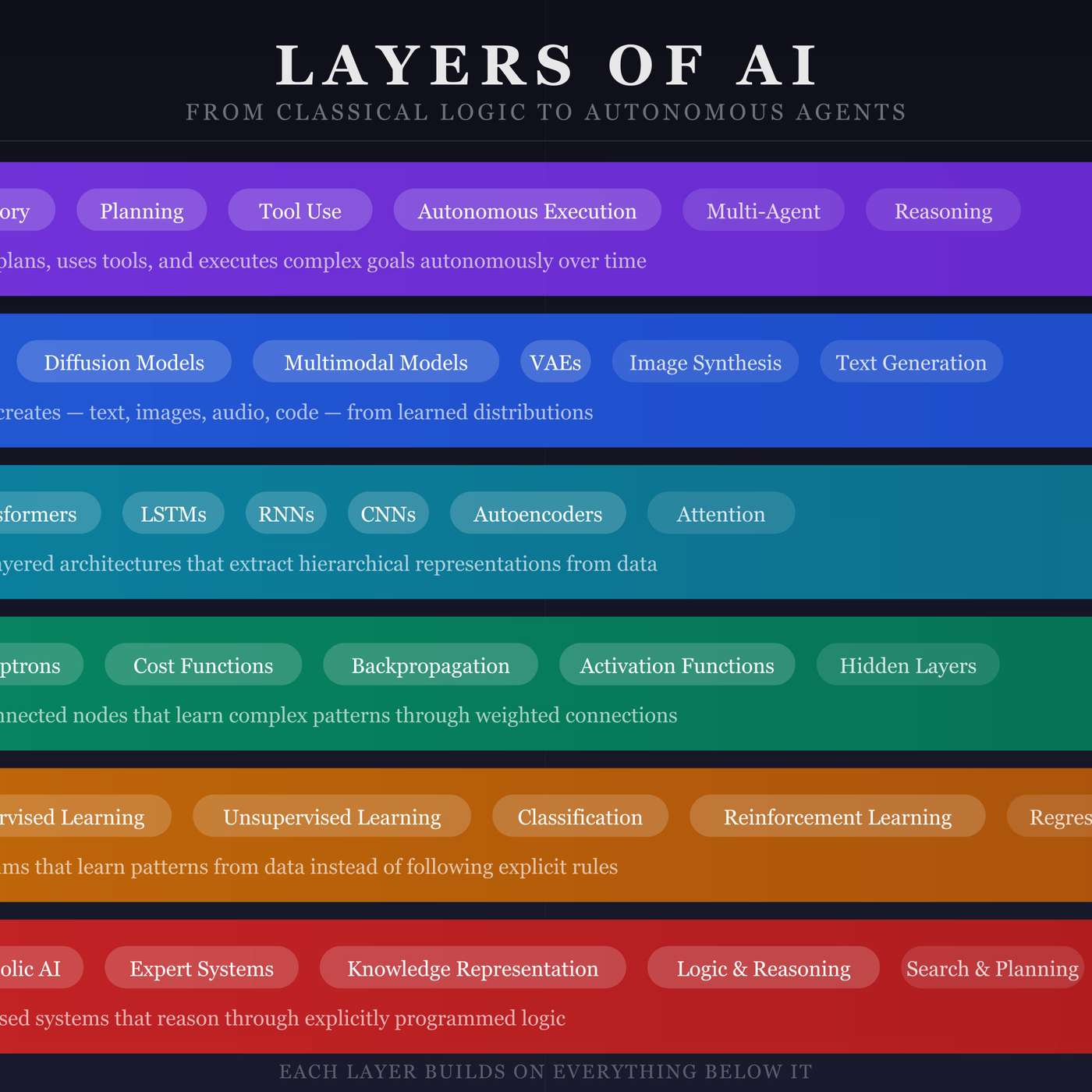
The current pinnacle of the AI stack, 'Agentic AI,' moves beyond simply generating answers to performing autonomous actions. By combining generative models with planning, memory, and tool use (like APIs or code interpreters), these systems can execute complex, multi-step tasks, defining the next wave of product development.
Agentic coding tools like Claude Code represent a new, distinct modality of AI interaction, as significant as the advent of image generation or chatbots. This shift is creating a new category of power users who integrate AI into their daily workflows not just for queries, but for proactive, complex task execution.
The industry was surprised to learn that the tool-calling and problem-solving DNA of coding agents provides the necessary foundation for general-purpose agents. This was not the anticipated route to AGI, which labs hadn't explicitly trained for, yet it has become the dominant and most promising approach.

Unlike generative AI (like ChatGPT) which only provides text output, agentic AI can perform actions on your behalf. It can log into accounts, click buttons, and complete multi-step tasks, shifting AI from a smart consultant to an autonomous digital assistant.

Instead of giving an LLM hundreds of specific tools, a more scalable "cyborg" approach is to provide one tool: a sandboxed code execution environment. The LLM writes code against a company's SDK, which is more context-efficient, faster, and more flexible than multiple API round-trips.

Once a universal code execution environment becomes the standard 'super tool' for AI agents, creating new capabilities will no longer require custom code. Instead, 'building a tool' will mean writing a detailed prompt that instructs the LLM on how to sequence actions using an already-exposed, comprehensive API SDK.
Current Generative AI acts as a passive co-pilot, responding to prompts for single tasks. The emerging 'Agentic AI' is an active autopilot, capable of planning and executing multi-step workflows across different tools, fundamentally changing how complex work is accomplished.

The 'call and response' nature of large language models (LLMs) is not truly revolutionary for workflows. The significant shift comes from agentic AI, which can connect to various systems and execute multi-step tasks. This moves AI from a content generator to a powerful workflow automation tool.

Tools like Claude Code offer superior capabilities beyond standard chatbots. They can access local file systems, enabling them to read and write files, maintain persistent memory, and execute complex, multi-step "recipes" autonomously, acting as a true virtual assistant rather than a simple text generator.

The next wave of AI is 'agentic,' meaning it can control a computer to execute commands and complete tasks, not just generate responses to prompts. This profound shift automates workflows like coding and administrative tasks, freeing humans for high-level creative and strategic work.
