Get your free personalized podcast brief
We scan new podcasts and send you the top 5 insights daily.
By owning both the launch capability (SpaceX) and the network (Starlink), Musk could exert ultimate control over internet infrastructure. This creates a scenario where he could deny network access to rivals, like OpenAI, representing a powerful and unprecedented form of vertical integration.

Related Insights
The core conflict isn't just about AI philosophy. Both Musk and Altman possess the rare skill of brokering multi-billion dollar capital flows from finance into deep tech. They are direct competitors for controlling this crucial 'trade route' of capital, which is the true source of their animosity.
OpenAI embraces the 'platform paradox' by selling API access to startups that compete directly with its own apps like ChatGPT. The strategy is to foster a broad ecosystem, believing that enabling competitors is necessary to avoid losing the platform race entirely.

Tech giants like Google and Meta are positioned to offer their premium AI models for free, leveraging their massive ad-based business models. This strategy aims to cut off OpenAI's primary revenue stream from $20/month subscriptions. For incumbents, subsidizing AI is a strategic play to acquire users and boost market capitalization.
The next wave of space companies is moving away from the vertically integrated "SpaceX model" where everything is built in-house. Instead, a new ecosystem is emerging where companies specialize in specific parts of the stack, such as satellite buses or ground stations. This unbundling creates efficiency and lowers barriers to entry for new players.
SpaceX's dominant position can be framed for an IPO not as a player in terrestrial industries, but as the owner of 90% of the entire universe's launch capabilities. This narrative positions it as controlling the infrastructure for all future off-planet economies, from connectivity to defense, dwarfing Earth-bound tech giants.

Google's strategy may be to offer its powerful AI models for free or at a significant loss. As a trillion-dollar company, it can sustain these losses indefinitely, forcing smaller competitors like OpenAI into an "endless sea of red ink" until they collapse, thereby securing a market monopoly.

Musk's decisions—choosing cameras over LiDAR for Tesla and acquiring X (Twitter)—are part of a unified strategy to own the largest data sets of real-world patterns (driving and human behavior). This allows him to train and perfect AI, making his companies data juggernauts.

Google can dedicate nearly all its resources to AI product development because its core business handles infrastructure and funding. In contrast, OpenAI must constantly focus on fundraising and infrastructure build-out. This mirrors the dynamic where a focused Facebook outmaneuvered a distracted MySpace, highlighting a critical incumbent advantage.
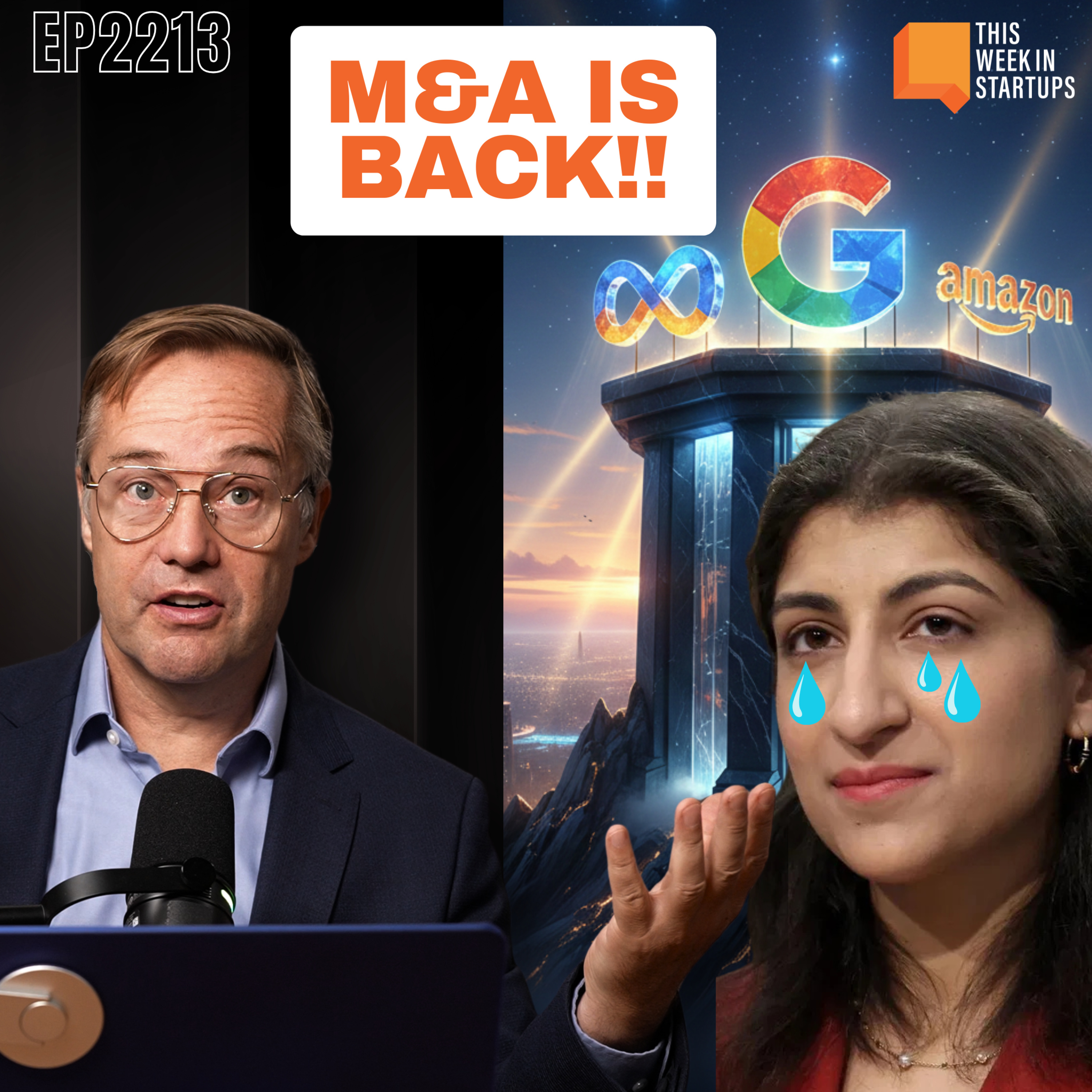
Despite its massive user base, OpenAI's position is precarious. It lacks true network effects, strong feature lock-in, and control over its cost base since it relies on Microsoft's infrastructure. Its long-term defensibility depends on rapidly building product ecosystems and its own infrastructure advantages.

The extreme 65x revenue multiple for SpaceX's IPO isn't based on traditional aerospace. Investors are pricing in its potential to build the next generation of AI infrastructure, leveraging the fact that lasers transmit data fastest through the vacuum of space, making it the ultimate frontier for data centers.
