Get your free personalized podcast brief
We scan new podcasts and send you the top 5 insights daily.
AI agents often return dense walls of text that are difficult to parse. The Hyperframes team addresses this by integrating a final step into their agent workflows: instead of a text summary, the agent creates a concise 30-second video explaining what it accomplished, making the results much more digestible.

Related Insights
A novel internal use case for Hyperframes is automating development updates. Engineers ask their coding agent to review their code commits over the past week and generate a short video summary. This turns standard progress reports into a fun, engaging format for team meetings.
Instead of sending massive text blocks, feed unstructured data like user survey responses or Slack community introductions into a presentation AI. This quickly generates digestible, visual reports with synthesized personas, key takeaways, and charts, a task that would previously take a team weeks to complete.

Comparing outputs from multiple models ("best of N") is often impractical due to the effort of reviewing huge code diffs. By having parallel agents generate short video demos, developers can quickly watch multiple versions and decide which approach is most promising.
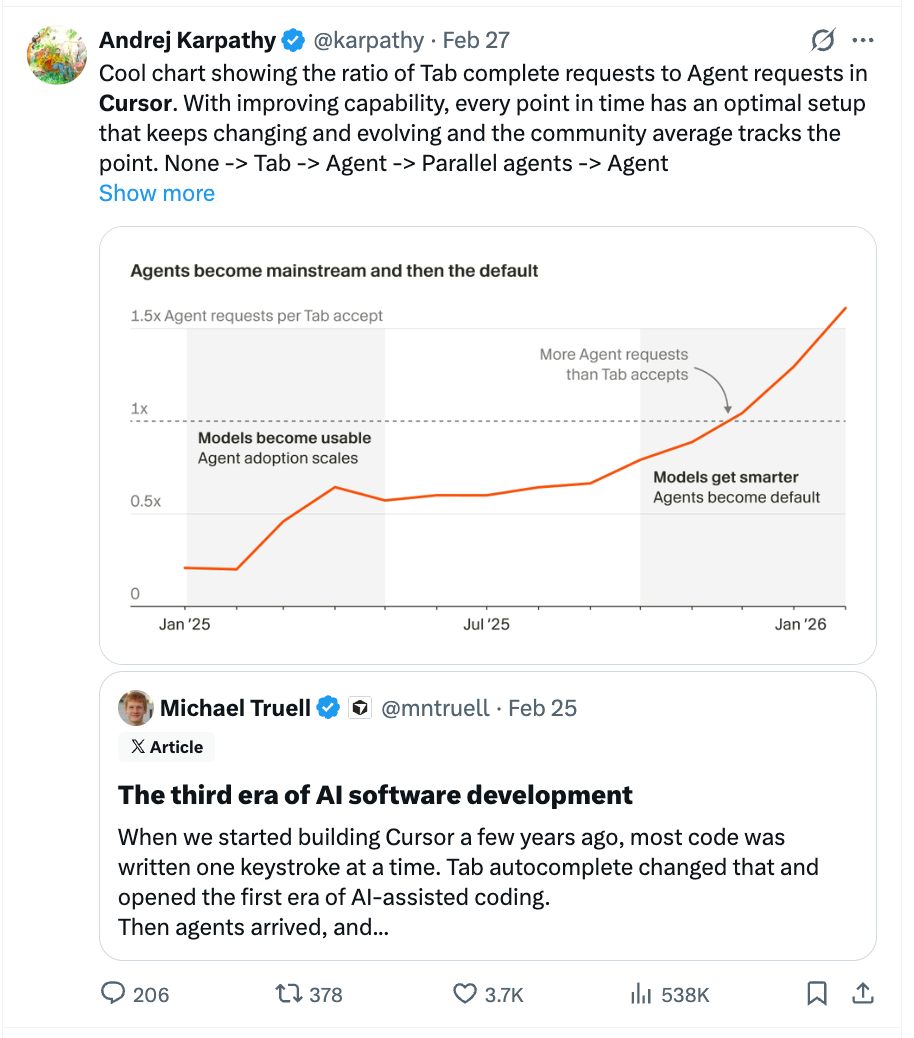
Before delegating a complex task, use a simple prompt to have a context-aware system generate a more detailed and effective prompt. This "prompt-for-a-prompt" workflow adds necessary detail and structure, significantly improving the agent's success rate and saving rework.
To combat the bottleneck of reviewing massive, AI-generated pull requests, Cursor's agents create video demos of the features they build. This provides a much more accessible entry point for human review than a giant diff, helping to quickly align on the direction.
Instead of forcing an AI to read lengthy raw documents, create consistently formatted summaries. This allows the agent to quickly parse and synthesize information from numerous sources without hitting context limits, dramatically improving performance for complex analysis tasks.

Instead of receiving a wall of text from an agent, prompt it to generate an interactive HTML artifact using a tool like Lavish. This makes plans easier to skim, critique, and annotate, enabling a much richer and faster feedback loop with the agent.
Long-running AI agent conversations degrade in quality as the context window fills. The best engineers combat this with "intentional compaction": they direct the agent to summarize its progress into a clean markdown file, then start a fresh session using that summary as the new, clean input. This is like rebooting the agent's short-term memory.

A common failure with AI agents is underspecified prompts leading to incorrect implementations (e.g., a checkbox instead of a toggle). Video demos provide immediate visual feedback, creating a shared artifact that makes these misalignments obvious without needing to run the code locally.
In a novel approach to controlling the narrative, a new Google DeepMind paper includes a section with explicit instructions for AI agents tasked with summarizing it. This acts as a built-in system prompt to guide AI interpretation and ensure key points are conveyed correctly.
