Get your free personalized podcast brief
We scan new podcasts and send you the top 5 insights daily.
A novel internal use case for Hyperframes is automating development updates. Engineers ask their coding agent to review their code commits over the past week and generate a short video summary. This turns standard progress reports into a fun, engaging format for team meetings.

Related Insights
A CEO overseeing 40 general managers replaced monthly operating reviews with 20-minute video updates. He feeds the transcripts into a custom AI agent trained on the company playbook to instantly identify key issues and revenue shortfalls. This transforms the review process from data gathering to rapid problem-solving.

Enhance pull requests by using Playwright to automatically screen-record a demonstration of the new feature. This video is then attached to the PR, giving code reviewers immediate visual context of the changes, far beyond what static code can show.
The use of rich HTML artifacts extends beyond code plans to internal communications. By having an AI read Slack messages and generate a weekly status update in HTML, communication becomes more engaging and consumable for managers. This is a practical application of AI to improve the effectiveness of routine internal reporting.

Comparing outputs from multiple models ("best of N") is often impractical due to the effort of reviewing huge code diffs. By having parallel agents generate short video demos, developers can quickly watch multiple versions and decide which approach is most promising.
A surprising side effect of using AI at OpenAI is improved code review quality. Engineers now use AI to write pull request summaries, which are consistently more thorough and better at explaining the 'what' and 'why' of a change. This improved context helps human reviewers get up to speed faster.

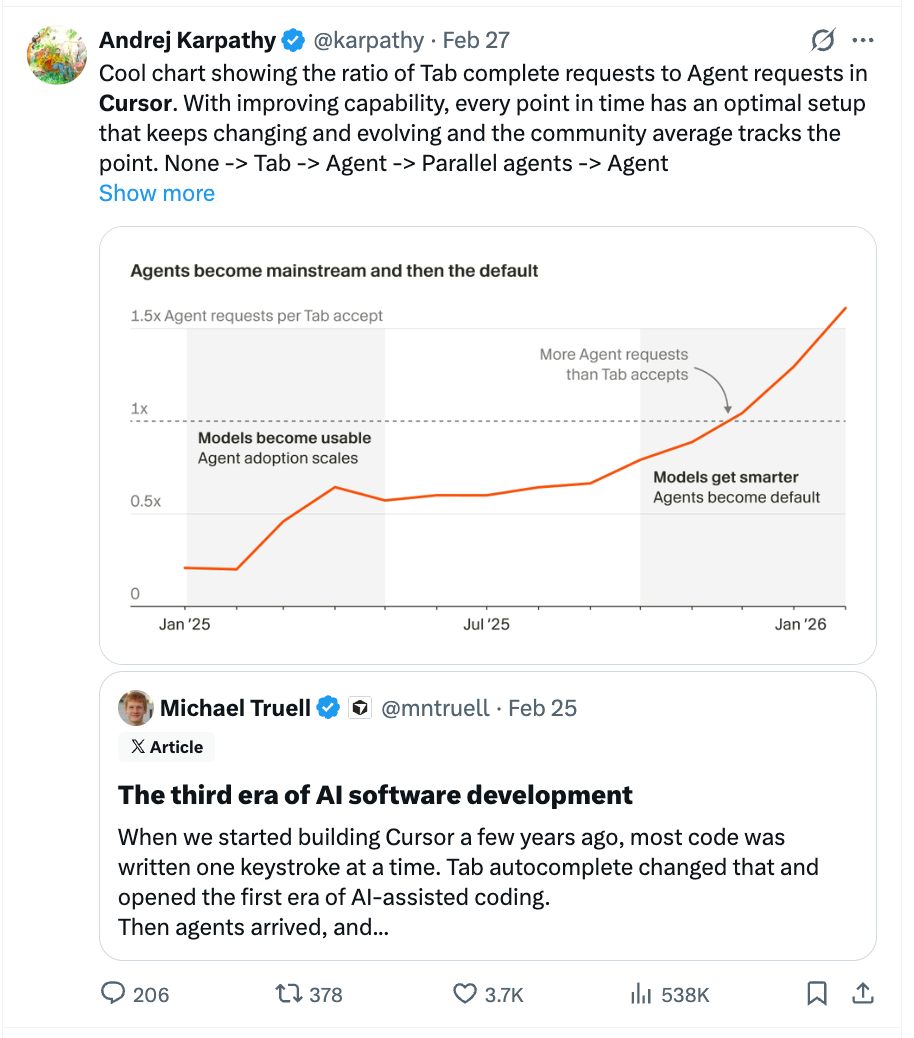
To combat the bottleneck of reviewing massive, AI-generated pull requests, Cursor's agents create video demos of the features they build. This provides a much more accessible entry point for human review than a giant diff, helping to quickly align on the direction.
Automated meeting summaries pull data objectively from Slack, PRs, and tasks, ensuring the work of quieter engineers gets the same visibility as more outspoken team members. This democratizes recognition and fosters a more inclusive environment.

Status update meetings are a major productivity drain. Replace them with asynchronous videos (e.g., Loom). This method is more efficient, allowing people to consume updates on their own time. It also conveys more signal—tone, emphasis, and personality—than a written update, fostering better connection on distributed teams.
Hyperframes' launch videos are open-sourced as codebases. Users can prompt their AI agent to pull specific code components (e.g., a text animation) from existing videos and apply a new visual style using a `frame.md` file, dramatically accelerating the creation of on-brand content.
AI agents often return dense walls of text that are difficult to parse. The Hyperframes team addresses this by integrating a final step into their agent workflows: instead of a text summary, the agent creates a concise 30-second video explaining what it accomplished, making the results much more digestible.