Get your free personalized podcast brief
We scan new podcasts and send you the top 5 insights daily.
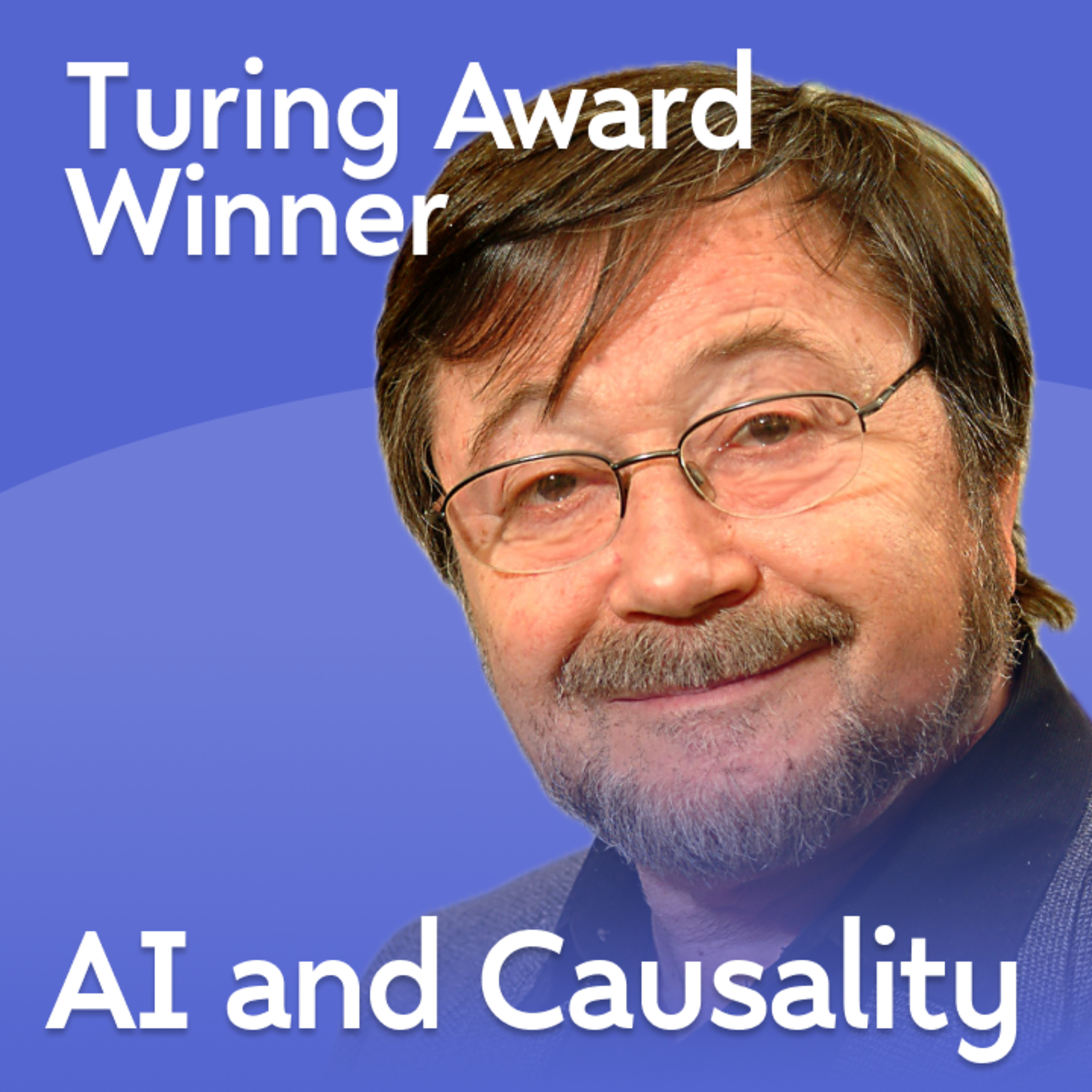
Judea Pearl points out a fundamental limitation of traditional scientific modeling: its reliance on algebraic equations. The symmetric nature of the equals sign (if A=B, then B=A) cannot represent the inherent directionality of causality (causes lead to effects, not the other way around).
Related Insights
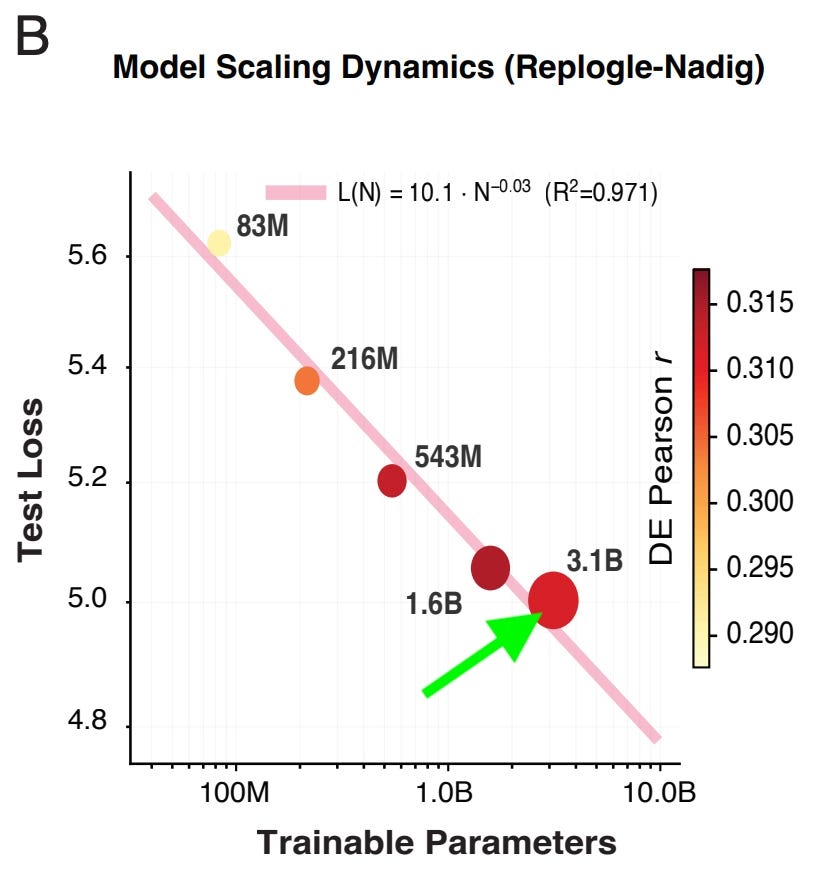
Standard AI models trained on public, observational biological data excel at descriptive tasks but underperform even linear models on causal predictions. To predict cellular responses to drug-like perturbations, models must be trained specifically on causal data generated from targeted experiments.
Judea Pearl, a foundational figure in AI, argues that Large Language Models (LLMs) are not on a path to Artificial General Intelligence (AGI). He states they merely summarize human-generated world models rather than discovering causality from raw data. He believes scaling up current methods will not overcome this fundamental mathematical limitation.

Today's AI models are powerful but lack a true sense of causality, leading to illogical errors. Unconventional AI's Naveen Rao hypothesizes that building AI on substrates with inherent time and dynamics—mimicking the physical world—is the key to developing this missing causal understanding.

Current AI can learn to predict complex patterns, like planetary orbits, from data. However, it struggles to abstract the underlying causal laws, such as Newtonian physics (F=MA). This leap to a higher level of abstraction remains a fundamental challenge beyond simple pattern recognition.
To truly understand complex systems like the economy, one should focus on the 'physics' of cause and effect. This approach helps build a robust mental model, making it clear where your understanding breaks down and what specific questions you need to research.

Contrary to the popular view of academia as a bastion of new ideas, Judea Pearl argues it's one of the 'most dogmatic, conservative, anti-progress' institutions. He cites the immense difficulty and inertia he faced in getting fields like statistics to adopt the science of causality.
To make genuine scientific breakthroughs, an AI needs to learn the abstract reasoning strategies and mental models of expert scientists. This involves teaching it higher-level concepts, such as thinking in terms of symmetries, a core principle in physics that current models lack.

According to Judea Pearl, LLMs don't perform true causal reasoning from raw data. Instead, they cleverly summarize a vast corpus of human-written text that already contains causal models, assumptions, and interpretations from experts, effectively bypassing the need for genuine causal inference.
Lee Cronin argues that both Newtonian and quantum physics are incomplete because they lack a fundamental concept of causation. This omission is why physics struggles to explain the emergence of complex systems like biology and intelligence, which are inherently causal.

Traditional science failed to create equations for complex biological systems because biology is too "bespoke." AI succeeds by discerning patterns from vast datasets, effectively serving as the "language" for modeling biology, much like mathematics is the language of physics.
