Get your free personalized podcast brief
We scan new podcasts and send you the top 5 insights daily.
Despite CEO Evan Spiegel's claim of being "laser-focused" on Spectacles, the hardware initiative distracts from the profitable core business. A better strategy would be to spin out Specs, allowing it to have dedicated investors and leadership, while Snap perfects its main social media and advertising engine.

Related Insights
The same AR glasses technology would earn a startup a billion-dollar valuation. For Snap, which has already spent $3.5B on R&D, the product is viewed negatively by the market because it's judged against the performance of its core ads business, not as a standalone innovation.

Snapchat intentionally separates friend-based social interactions from publisher-driven media consumption. Spiegel says combining them creates a perverse incentive to push users to add more friends simply to generate feed content, which ultimately pollutes the core social experience with close connections.
Snap's AR Spectacles are priced in a difficult middle ground. At $2,200, they are too expensive for the mass market where Meta's cheaper Ray-Bans succeed as a lifestyle product. Yet, they lack the dedicated enthusiast ecosystem that allows Apple to sell premium hardware like the Vision Pro, leaving them without a clear target customer.

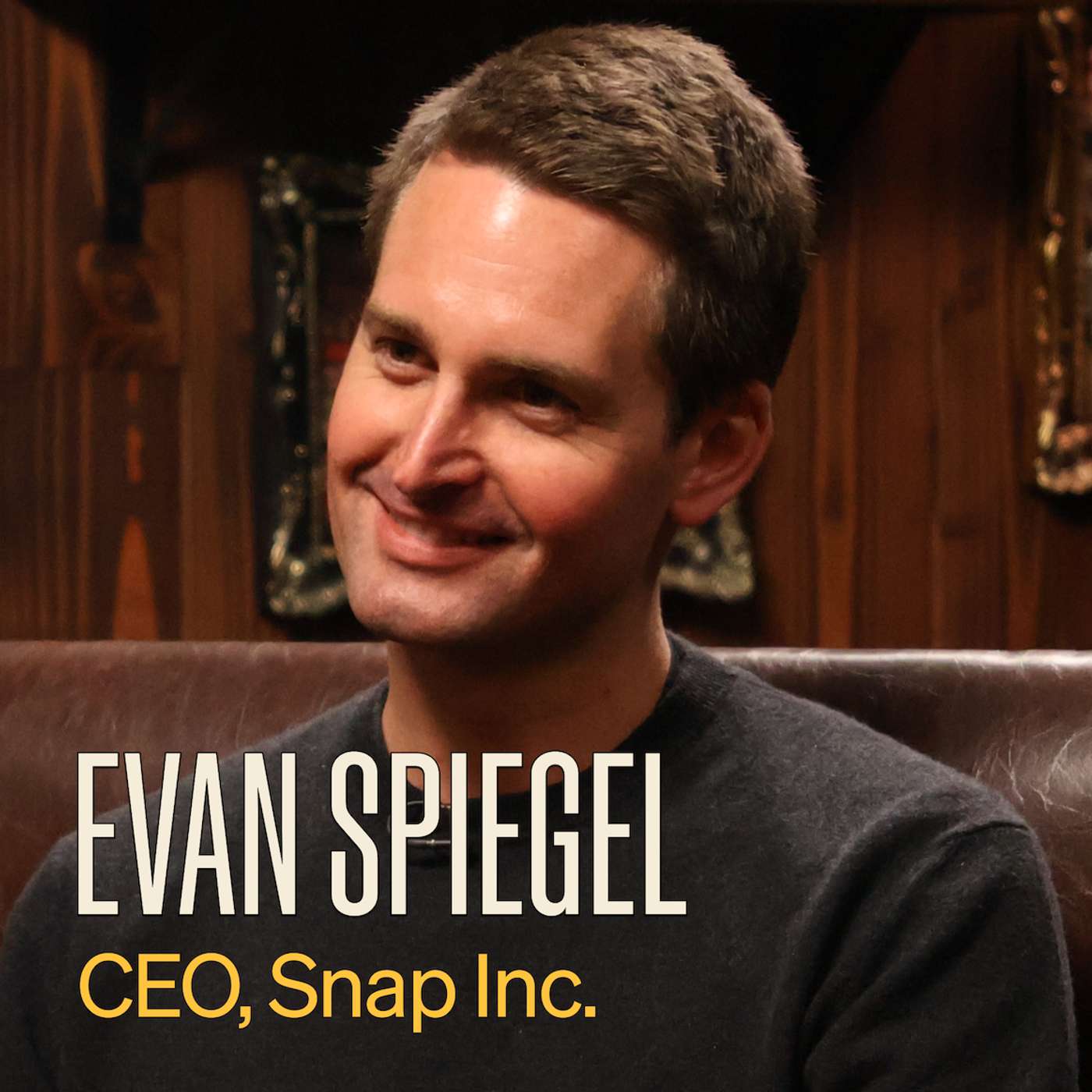
Snap CEO Evan Spiegel's claim of being "laser-focused" on Specs, a non-core hardware product, is problematic as it distracts from the profitable main business. The hosts suggest true focus would mean spinning the project off into a separate company, aligning investors and employees around a single, clear mission.
Snap spins off ventures like Specs (AR) to protect their startup-like nature. A mature, billion-user platform requires different operational thinking and investment strategies than a net-new product. This separation allows each entity to operate with the appropriate model for its stage.

By creating a separate company, Spex Inc., for its AR glasses, Snap can attract external, high-risk capital specifically for that venture. This financial structure, also used by Alphabet for Waymo, allows a public company to fund ambitious projects without diluting the core business.

Evan Spiegel predicts AR glasses won't immediately replace smartphones. Instead, their first major use case will be displacing large screens. He argues that having a huge, private, portable screen for work or entertainment is a more compelling initial value proposition than full smartphone replacement.
Spiegel articulates a strong philosophical stance against Virtual Reality, arguing it isolates people from the real world. Snap's strategy is to invest exclusively in Augmented Reality technologies like Spectacles that aim to enhance in-person human connection rather than replace it with a virtual one.

Snap's core social media business remains a valuable, scaled asset with nearly half a billion daily users. However, it's burdened by money-losing hardware ventures like Spex. This makes the company a perfect target for an activist investor who could force a spin-off or shutdown of the hardware division to unlock the core business's value.

Snap CEO Evan Spiegel sees the winning AR form factor occupying a 'sweet spot': the wearability of normal glasses combined with the spatial computing power of a device like the Vision Pro. This positions Spectacles between today's simplistic 'AI glasses' and fully immersive, but isolating, VR headsets.