Get your free personalized podcast brief
We scan new podcasts and send you the top 5 insights daily.
Intercom noticed AI-generated pull request descriptions were poor. Instead of a wiki, they built a mandatory "Create PR" skill that enforces high-quality, intent-focused descriptions, turning a cultural standard into an automated process.

Related Insights
AI lowers the barrier to coding, allowing non-technical people to submit pull requests. Instead of rejecting imperfect code, view these contributions as high-fidelity prompts that clearly articulate the desired feature or fix, which can then be refined by a senior developer.

Instead of relying on engineers to remember documented procedures (e.g., pre-commit checklists), encode these processes into custom AI skills. This turns static best-practice documents into automated, executable tools that enforce standards and reduce toil.
Manage collective team context—docs, queries, research—in a version-controlled repository. Everyone, including non-technical members like ops and strategy, contributes via pull requests, creating a single, evolving source of truth for AI agents and humans.

A surprising side effect of using AI at OpenAI is improved code review quality. Engineers now use AI to write pull request summaries, which are consistently more thorough and better at explaining the 'what' and 'why' of a change. This improved context helps human reviewers get up to speed faster.

Instead of building AI skills from scratch, use a 'meta-skill' designed for skill creation. This approach consolidates best practices from thousands of existing skills (e.g., from GitHub), ensuring your new skills are concise, effective, and architected correctly for any platform.

"Skills" are markdown files that provide an AI agent with an expert-level instruction manual for a specific task. By encoding best practices, do's/don'ts, and references into a skill, you create a persistent, reusable asset that elevates the AI's performance almost instantly.
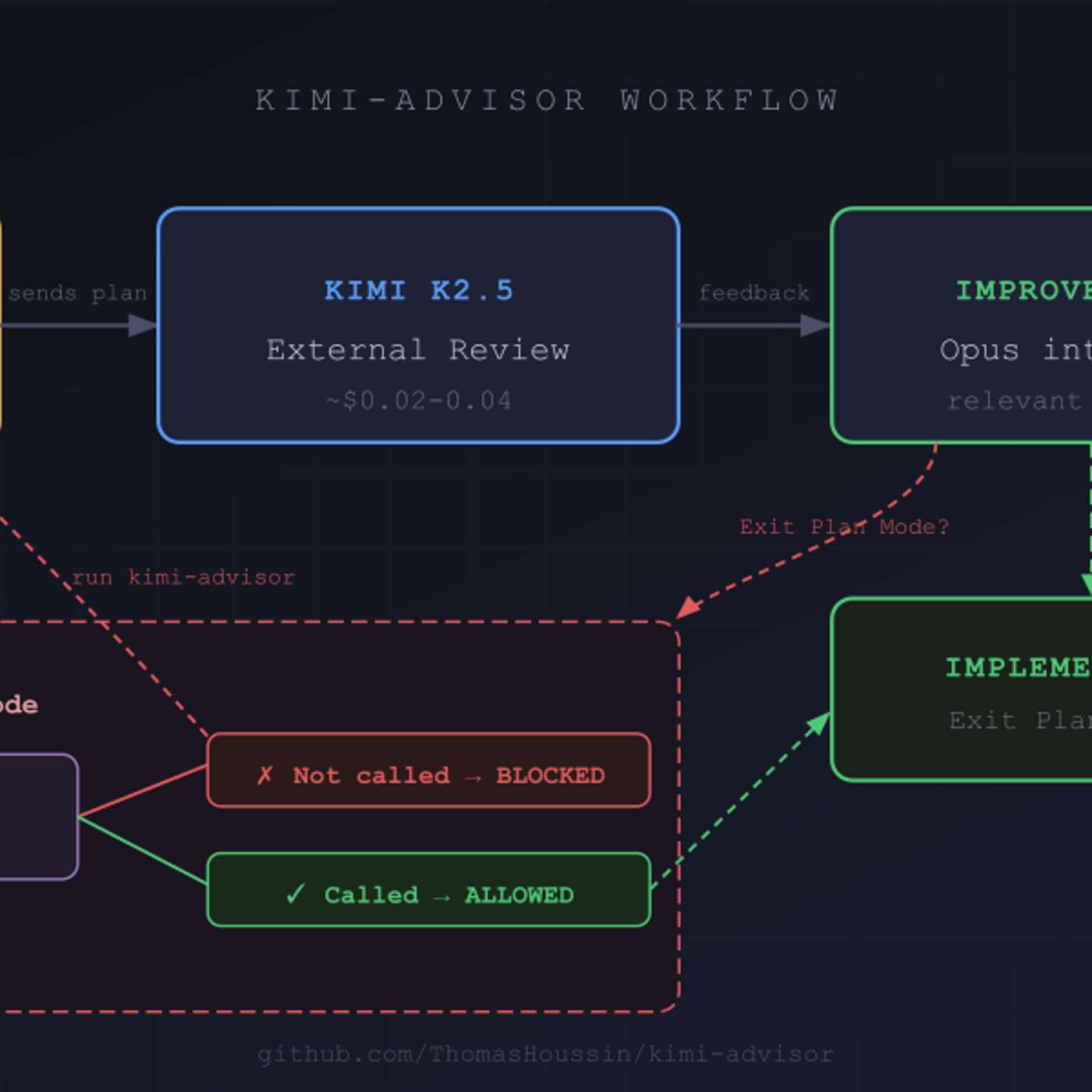
Developers often skip optional quality checks. To ensure consistent AI-powered plan reviews, implement a mandatory hook—a script that blocks the development process (e.g., exiting plan mode) until the external AI review has been verifiably completed. This engineers compliance into the workflow, guaranteeing a quality check every time.
Treat AI 'skills' as Standard Operating Procedures (SOPs) for your agent. By packaging a multi-step process, like creating a custom proposal, into a '.skill' file, you can simply invoke its name in the future. This lets the agent execute the entire workflow without needing repeated instructions.

By creating an AI 'skill' that synthesizes key company documents like product principles, value propositions, and frameworks, a product team can ensure that all generated outputs (e.g., PRDs) consistently reflect the company's specific language, strategic thinking, and established culture.
An Intercom AI skill for fixing flaky tests goes beyond a simple script. It updates its own internal checklist when it encounters a new type of fix and then proactively searches the codebase for similar problems, creating a 100x impact.