Get your free personalized podcast brief
We scan new podcasts and send you the top 5 insights daily.
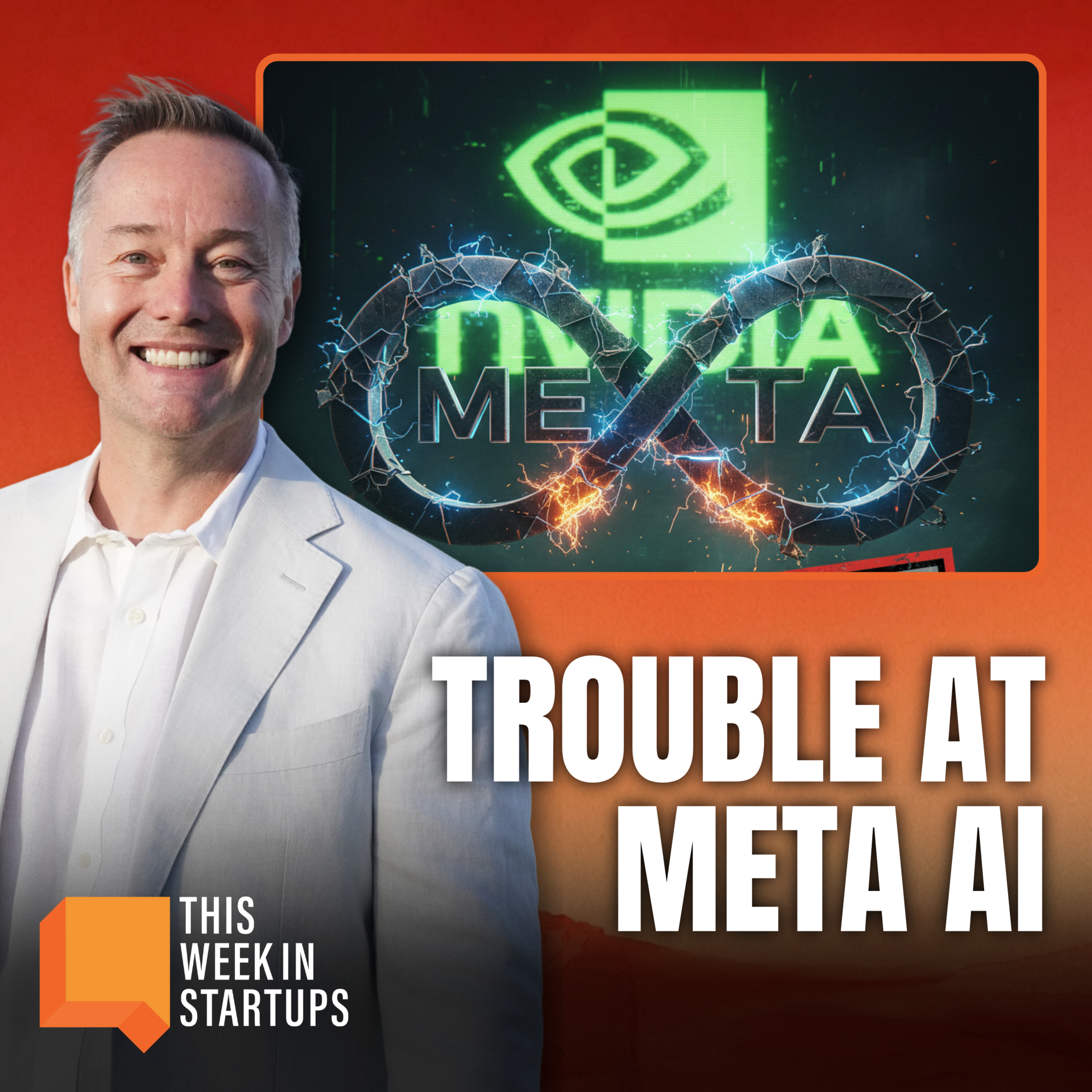
Meta's decision to have 65-year-old AI research legend Jan LeCun report to 27-year-old Scale AI CEO Alexander Wang was a deliberate strategic move. This "disrespectful" power play likely aimed to either force LeCun to ship product faster or push him out, signaling a shift from pure research to practical application.
Related Insights
Meta's decision to cut 600 jobs, including tenured researchers, from its Fundamental AI Research (FAIR) lab reflects a strategic pivot. The stated goal to "clean up organizational bloat" and "develop AI products more rapidly" shows that big tech is prioritizing immediate product development over long-term, foundational research.

An influx of Meta alumni, now 20% of staff, is causing internal friction. A 'move fast' focus on user growth metrics is clashing with the original research-oriented culture that prioritized product quality over pure engagement, as exemplified by former CTO Mira Murati's reported reaction to growth-focused memos.
A strategic conflict is emerging at Meta: new AI leader Alexander Wang wants to build a frontier model to rival OpenAI, while longtime executives want his team to apply AI to immediately improve Facebook's core ad business. This creates a classic R&D vs. monetization dilemma at the highest levels.

To balance AI hype with reality, leaders should create two distinct teams. One focuses on generating measurable ROI this quarter using current AI capabilities. A separate "tiger team" incubates high-risk, experimental projects that operate at startup speed to prevent long-term disruption.
A strategic rift has emerged at Meta. Long-time executives like Chris Cox want the new AI team to leverage Instagram and Facebook data to improve core ads and feeds. However, new AI leader Alexander Wang is pushing to prioritize building a frontier model to compete with OpenAI and Google first.

Meta has physically and organizationally separated its new, high-paid AI researchers in 'TBD Labs' from its existing AI teams. By issuing separate access badges, Meta has created an internal caste system that prevents collaboration and is likely to cause significant morale problems and knowledge silos within its most critical division.

The new, siloed AI team at Meta is clashing with established leadership. The research team wants to pursue pure AGI, while existing business units want to apply AI to improve core products. This conflict between disruptive research and incremental improvement is a classic innovator's dilemma.
Meta's chief AI scientist, Yann LeCun, is reportedly leaving to start a company focused on "world models"—AI that learns from video and spatial data to understand cause-and-effect. He argues the industry's focus on LLMs is a dead end and that his alternative approach will become dominant within five years.

Meta's multi-billion dollar super intelligence lab is struggling, with its open-source strategy deemed a failure due to high costs. The company's success now hinges on integrating "good enough" AI into products like smart glasses, rather than competing to build the absolute best model.
Turing Award winner Jan LeCun's departure from Meta and public criticism of its 'LLM-pilled' strategy is more than corporate drama. It represents a vital, oppositional viewpoint arguing for 'world models' over scaling LLMs. This intellectual friction is crucial for preventing stagnation and advancing the entire field of AI.
