Get your free personalized podcast brief
We scan new podcasts and send you the top 5 insights daily.
A strategic conflict is emerging at Meta: new AI leader Alexander Wang wants to build a frontier model to rival OpenAI, while longtime executives want his team to apply AI to immediately improve Facebook's core ad business. This creates a classic R&D vs. monetization dilemma at the highest levels.

Related Insights
Tech giants like Google and Meta are positioned to offer their premium AI models for free, leveraging their massive ad-based business models. This strategy aims to cut off OpenAI's primary revenue stream from $20/month subscriptions. For incumbents, subsidizing AI is a strategic play to acquire users and boost market capitalization.

To balance AI hype with reality, leaders should create two distinct teams. One focuses on generating measurable ROI this quarter using current AI capabilities. A separate "tiger team" incubates high-risk, experimental projects that operate at startup speed to prevent long-term disruption.
OpenAI has a strategic conflict: its public narrative aligns with Apple's model of selling a high-value tool directly to users. However, its internal metrics and push for engagement suggest a pivot towards Meta's attention-based model to justify its massive valuation and compute costs.

A fundamental tension within OpenAI's board was the catch-22 of safety. While some advocated for slowing down, others argued that being too cautious would allow a less scrupulous competitor to achieve AGI first, creating an even greater safety risk for humanity. This paradox fueled internal conflict and justified a rapid development pace.

As competitors like Google's Gemini close the quality gap with ChatGPT, OpenAI loses its unique product advantage. This commoditization will force them to adopt advertising sooner than planned to sustain their massive operational costs and offer a competitive free product, despite claims of pausing such efforts.
Meta's chief AI scientist, Yann LeCun, is reportedly leaving to start a company focused on "world models"—AI that learns from video and spatial data to understand cause-and-effect. He argues the industry's focus on LLMs is a dead end and that his alternative approach will become dominant within five years.

Google can dedicate nearly all its resources to AI product development because its core business handles infrastructure and funding. In contrast, OpenAI must constantly focus on fundraising and infrastructure build-out. This mirrors the dynamic where a focused Facebook outmaneuvered a distracted MySpace, highlighting a critical incumbent advantage.

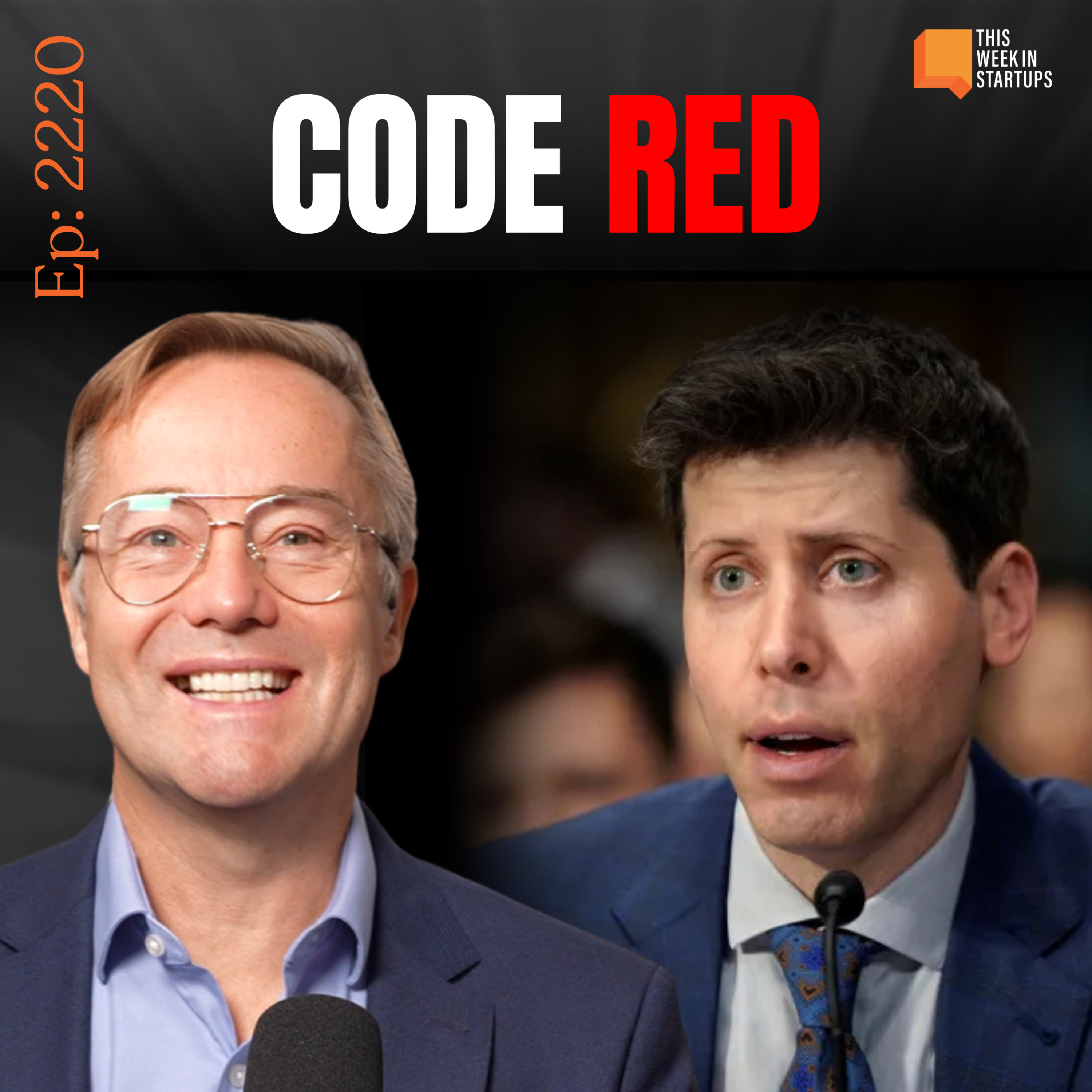
Despite its early dominance, OpenAI's internal "Code Red" in response to competitors like Google's Gemini and Anthropic demonstrates a critical business lesson. An early market lead is not a guarantee of long-term success, especially in a rapidly evolving field like artificial intelligence.

Meta's ad recommendations excel because Apple's privacy changes created a do-or-die situation. This necessity forced them to pioneer GPU-based AI for ad targeting, a move competitors without the same pressure failed to make, despite having similar data and talent.

The race to integrate AI and social interaction has two distinct strategies. OpenAI is adding group chats to its AI utility ("putting people in the AI"). Conversely, Meta is adding AI agents into its established messaging apps ("putting AI in the chat"). This framing highlights the different starting points and strategic challenges for each company.