Get your free personalized podcast brief
We scan new podcasts and send you the top 5 insights daily.
An earlier Union victory likely would have still resulted in emancipation, as slavery was collapsing where Union armies advanced. However, the crucial 14th (civil rights) and 15th (voting rights) Amendments were highly contingent on President Andrew Johnson's political blunders, which unexpectedly empowered Radical Republicans.

Related Insights
Manufacturers of plantation goods weren't entirely opposed to the Civil War, partly because they fantasized that 4 million freed Black people would become a massive, liberated consumer market. This reveals a profound and self-serving ignorance of the violent economic oppression that would define the Reconstruction era.
The proclamation was not just a moral act but a calculated strategy. By making the war explicitly about ending slavery, Lincoln made it politically impossible for abolitionist nations like Great Britain to support the Confederacy, cutting off their resources.

Klan terrorism was a calculated political strategy. By creating persistent violence and chaos, white Southern Democrats aimed to exhaust the North's will to enforce Reconstruction. They correctly gambled that Northerners would eventually tire of the costly project and withdraw federal power.

The infamous Supreme Court decision, which denied Black people citizenship, was more than a legal precedent; it was a political accelerant. The ruling galvanized Northern anger against slavery's expansion, directly fueling the rise of the new Republican party and Abraham Lincoln, setting the stage for the Civil War.

The "Prize Cases" reveal the legality of Lincoln's naval blockade of the South was a precarious constitutional question. Because blockades are an act of war between nations, his authority was challenged. A 5-4 Supreme Court decision validated his actions, retroactively saving the entire Union war effort from being declared unconstitutional.
The KKK's campaign of terror had a quantifiable and devastating impact on elections. In some Georgia counties with Black majorities, the Republican vote for Ulysses S. Grant was reduced from over a thousand to single digits, or even zero. This demonstrates that paramilitary violence was a brutally effective tool for achieving political outcomes.
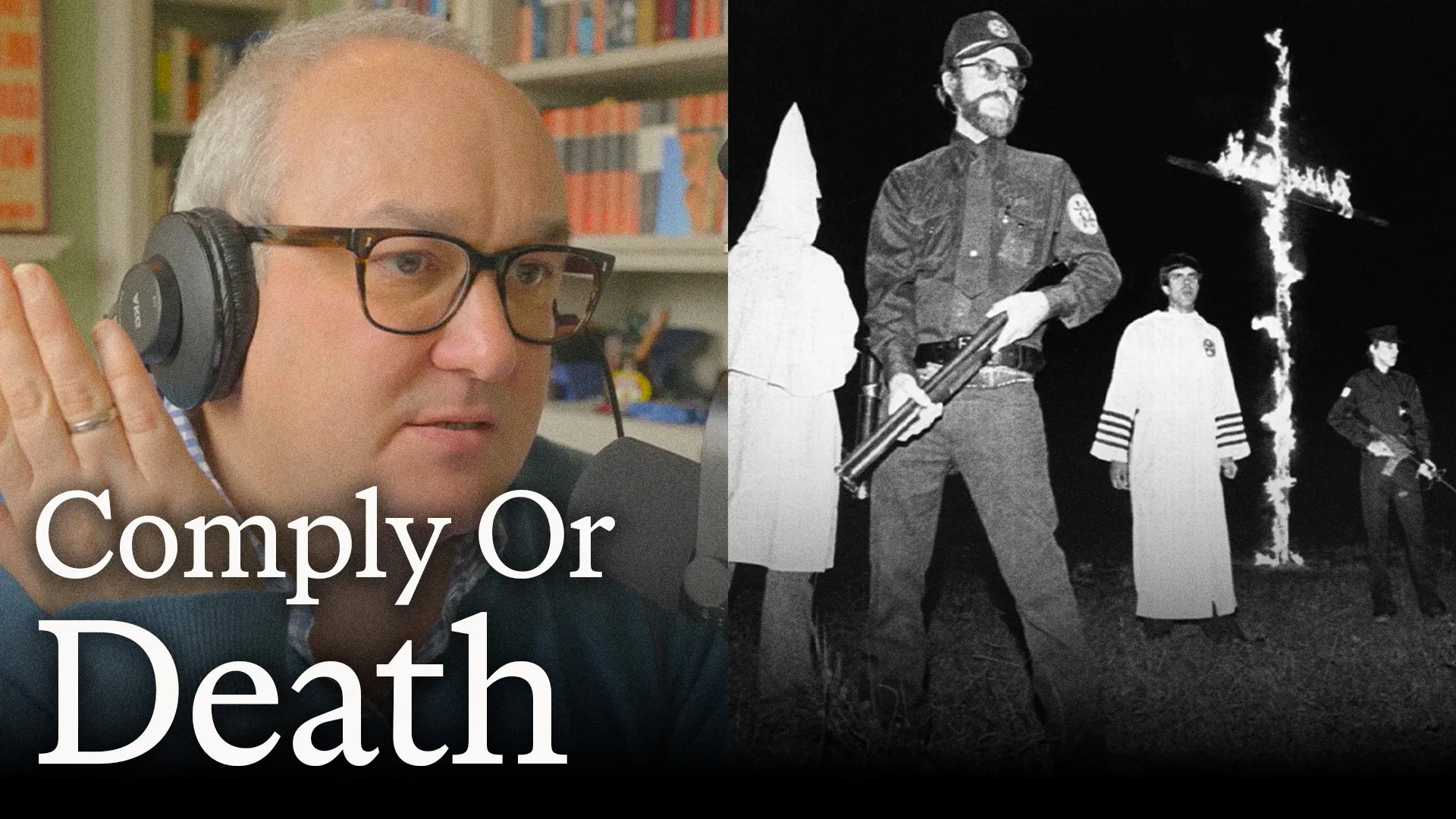
The story of York County, South Carolina, provides a powerful counter-narrative of what was possible during Reconstruction. When President Grant finally suspended habeas corpus and flooded the region with troops, the mass arrests effectively dismantled the Klan's power structure. This demonstrates that federal force, when applied decisively, could work.
The morning after being freed in the Combahee River Raid, 150 men immediately enlisted in the Union Army. This demonstrates a rapid shift from being subjects of liberation to active agents in the fight for others' freedom, challenging passive victim narratives.

Historian Anne Applebaum observes that significant US constitutional amendments often follow profound national traumas like the Revolution or the Civil War. This suggests that without a similar large-scale crisis, mustering the collective will to address deep-seated issues like systemic corruption is historically difficult, as there is no single moment of reckoning.

Hunter Biden argues that historically significant presidents like Teddy Roosevelt (creating National Parks) and Abraham Lincoln (the Emancipation Proclamation) bent or broke constitutional rules to achieve monumental goals, suggesting that transformative leadership often operates outside of accepted legal boundaries.
