Get your free personalized podcast brief
We scan new podcasts and send you the top 5 insights daily.
Google's new state-of-the-art Deep Research agents are still powered by the older Gemini 3.1 Pro model. Their significant performance improvements come entirely from 'harness upgrades' and additional inference techniques. This demonstrates that the systems, tools, and processes surrounding a model are now a primary driver of capability, not just the raw power of the base model itself.

Related Insights
The original playbook of simply scaling parameters and data is now obsolete. Top AI labs have pivoted to heavily designed post-training pipelines, retrieval, tool use, and agent training, acknowledging that raw scaling is insufficient to solve real-world problems.

Performance gains increasingly come from the "harness"—the surrounding system of tools, data connections, and agentic workflows—not the underlying model. Stanford's "meta-harness" concept shows a 6x performance gap on the same model, suggesting the product layer is where real innovation and competitive advantage now lie.

An AI coding agent's performance is driven more by its "harness"—the system for prompting, tool access, and context management—than the underlying foundation model. This orchestration layer is where products create their unique value and where the most critical engineering work lies.

AI progress was expected to stall in 2024-2025 due to hardware limitations on pre-training scaling laws. However, breakthroughs in post-training techniques like reasoning and test-time compute provided a new vector for improvement, bridging the gap until next-generation chips like NVIDIA's Blackwell arrived.
![Gavin Baker - Nvidia v. Google, Scaling Laws, and the Economics of AI - [Invest Like the Best, EP.451] thumbnail](https://megaphone.imgix.net/podcasts/d97fee14-d4d7-11f0-8951-8324b640c1c1/image/d3a8b5ecbf3957de5b91f278a191c9ff.jpg?ixlib=rails-4.3.1&max-w=3000&max-h=3000&fit=crop&auto=format,compress)
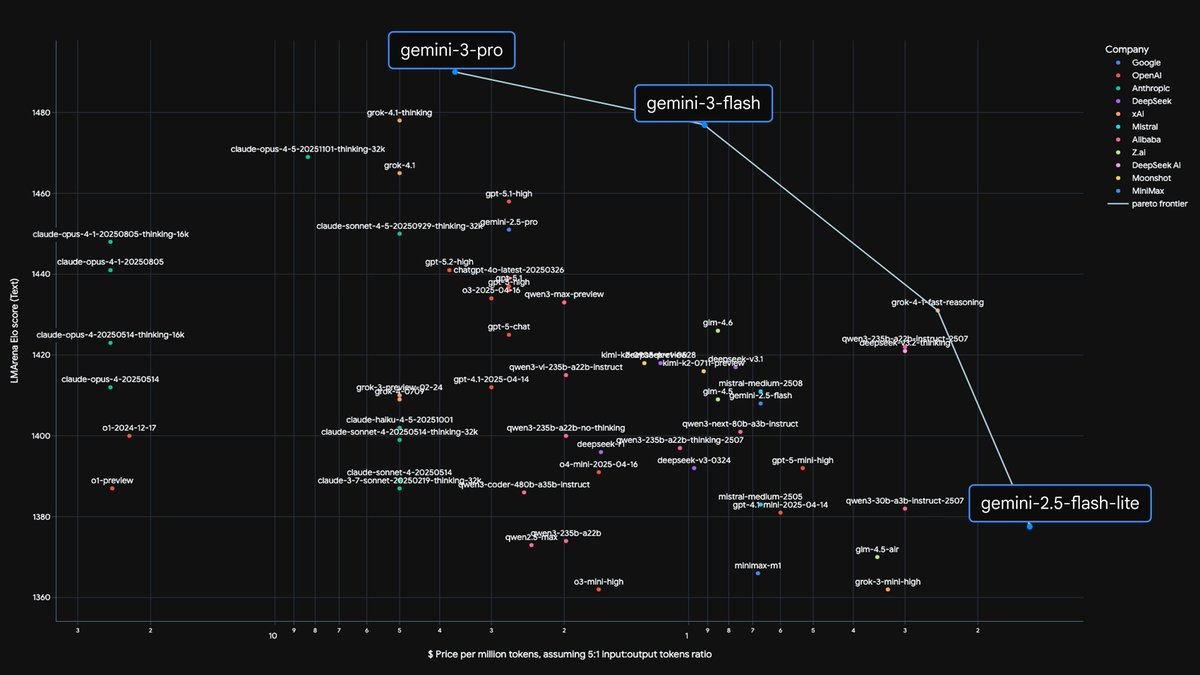
Google's strategy involves creating both cutting-edge models (Pro/Ultra) and efficient ones (Flash). The key is using distillation to transfer capabilities from large models to smaller, faster versions, allowing them to serve a wide range of use cases from complex reasoning to everyday applications.
The pace of AI model improvement is faster than the ability to ship specific tools. By creating lower-level, generalizable tools, developers build a system that automatically becomes more powerful and adaptable as the underlying AI gets smarter, without requiring re-engineering.

Judging an AI's capability by its base model alone is misleading. Its effectiveness is significantly amplified by surrounding tooling and frameworks, like developer environments. A good tool harness can make a decent model outperform a superior model that lacks such support.

The recent leap in AI coding isn't solely from a more powerful base model. The true innovation is a product layer that enables agent-like behavior: the system constantly evaluates and refines its own output, leading to far more complex and complete results than the LLM could achieve alone.
Top-tier language models are becoming commoditized in their excellence. The real differentiator in agent performance is now the 'harness'—the specific context, tools, and skills you provide. A minimalist, well-crafted harness on a good model will outperform a bloated setup on a great one.

The release of Gemini 3.1 Pro highlights a market shift where raw capability is becoming table stakes. Google achieved a massive intelligence jump with zero incremental cost, demonstrating that the new competitive frontier for AI models is commoditizing intelligence and winning on distribution and price efficiency, rather than just holding the top spot on a benchmark for a few weeks.