Get your free personalized podcast brief
We scan new podcasts and send you the top 5 insights daily.
Unlike power-hungry data center satellites that require a specific sun-synchronous orbit, Varda's manufacturing satellites are orbit-agnostic. This operational flexibility allows them to use a wider variety of rocket launches, including less crowded and potentially cheaper missions, creating a key competitive advantage.

Related Insights
Space data centers' viability hinges on a breakeven point where launch costs are outweighed by savings from no permitted land, no need for battery backup (24/7 sun), and 8x more efficient solar panels. Starcloud estimates this economic crossover occurs when launch costs drop to around $500 per kilogram.

Skepticism around orbital data centers mirrors early doubts about Starlink, which was initially deemed economically unfeasible. However, SpaceX drastically reduced satellite launch costs by 20x, turning a "pipe dream" into a valuable business. This precedent suggests a similar path to viability exists for space-based AI compute.

In a world where semiconductor manufacturing is the ultimate bottleneck, the value of a GPU is highest the moment it's produced. The six-plus month delay required to test, launch, and reassemble a data center in space represents an immense opportunity cost, making it an impractical strategy for now.

The primary advantage of orbital data centers isn't cost, but speed to market. Building on Earth involves years of real estate, permitting, and power grid challenges. The space-based model can turn manufactured chips into operational compute within weeks by treating deployment as an industrial manufacturing and launch problem.

Varda Space, an in-orbit manufacturing company, simplifies its business model by treating space launches as a mere shipping cost, not a core competency. Co-founder Will Bruey notes they use SpaceX instead of FedEx, but from a business perspective, 'shipping is shipping.' This focus allows them to concentrate on their true value: manufacturing in microgravity.

On Earth, each new data center is more expensive than the last due to land and energy constraints. In space, manufacturing satellites at scale and declining launch costs (via Starship) mean the marginal cost for each new data center goes down, creating fundamentally different scaling economics.
The merger leverages SpaceX's heavy launch capabilities to deploy space-based data centers for xAI, capitalizing on abundant solar power and the vacuum of space for cooling. This creates a massive competitive advantage by eliminating terrestrial energy and real estate costs.
Varda manufactures products like pharmaceuticals and fiber optics in space, where zero gravity acts as an "off switch" enabling unique molecular structures. Their key advantage is the difficult-to-replicate capability of returning materials safely from orbit.

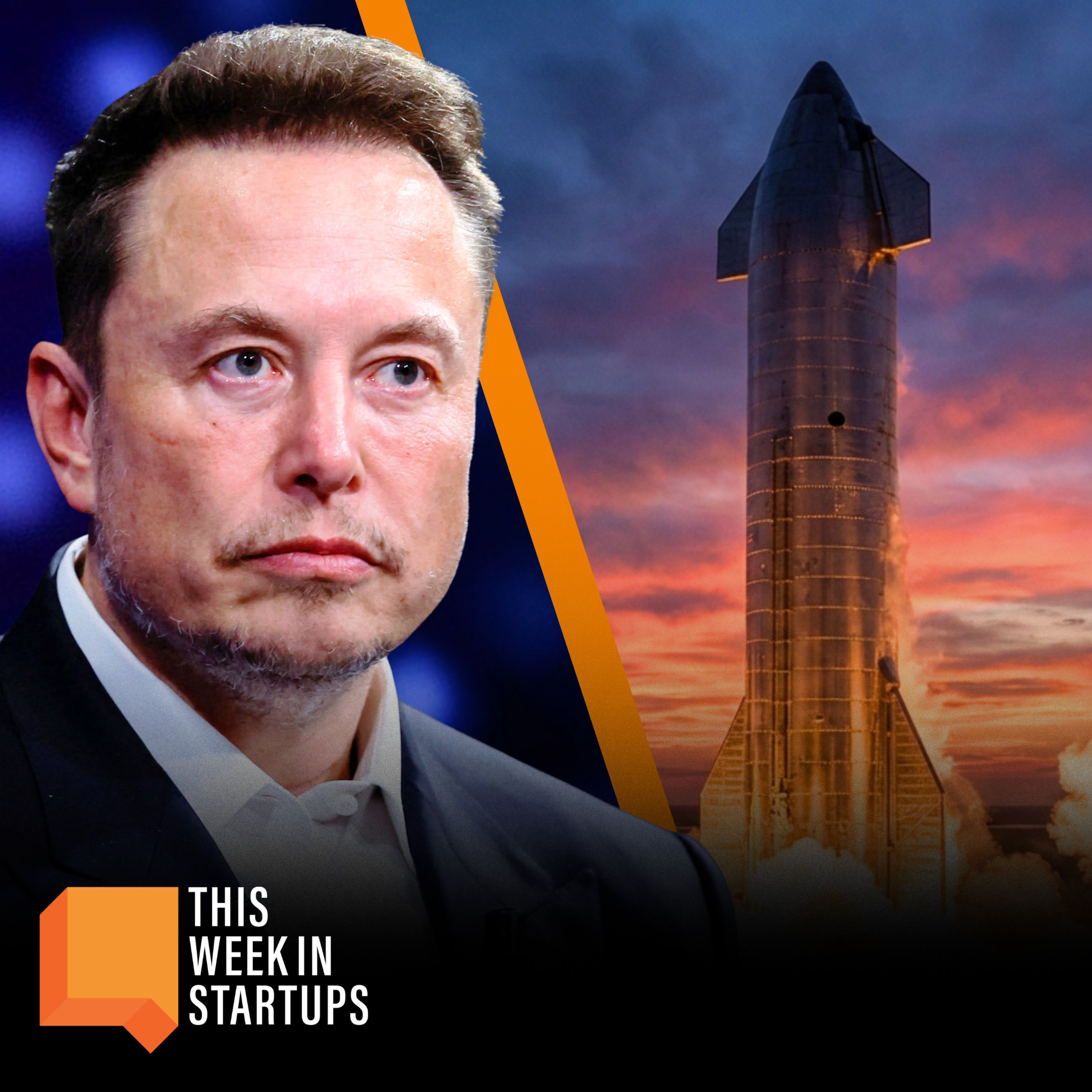
Recent viability for orbital data centers doesn't stem from new server technology, but from SpaceX's Starship rocket. Its success in dramatically lowering the cost of launching mass into orbit is the critical, non-obvious enabler that makes the entire concept economically plausible for the first time.
Beyond potential technical benefits like cooling, a significant economic driver for placing data centers in orbit is regulatory arbitrage. Companies can avoid the lengthy, complex, and often contentious process of securing land and permits for large facilities on Earth.
