Get your free personalized podcast brief
We scan new podcasts and send you the top 5 insights daily.
Space data centers' viability hinges on a breakeven point where launch costs are outweighed by savings from no permitted land, no need for battery backup (24/7 sun), and 8x more efficient solar panels. Starcloud estimates this economic crossover occurs when launch costs drop to around $500 per kilogram.
Related Insights
From a first-principles perspective, space is the ideal location for data centers. It offers free, constant solar power (6x more irradiance) and free cooling via radiators facing deep space. This eliminates the two biggest terrestrial constraints and costs, making it a profound long-term shift for AI infrastructure.
![Gavin Baker - Nvidia v. Google, Scaling Laws, and the Economics of AI - [Invest Like the Best, EP.451] thumbnail](https://megaphone.imgix.net/podcasts/d97fee14-d4d7-11f0-8951-8324b640c1c1/image/d3a8b5ecbf3957de5b91f278a191c9ff.jpg?ixlib=rails-4.3.1&max-w=3000&max-h=3000&fit=crop&auto=format,compress)
The entire strategy of building data centers in space is only economically feasible because SpaceX's Starship is projected to increase launch capacity by 20 times and drastically lower costs. This specific technological leap turns a sci-fi concept into a viable business model.
Google's "Project Suncatcher" aims to place AI data centers in orbit for efficient solar power. However, the project's viability isn't just a technical challenge; it fundamentally requires space transport costs to decrease tenfold. This massive economic hurdle, more than technical feasibility, defines it as a long-term "moonshot" initiative.

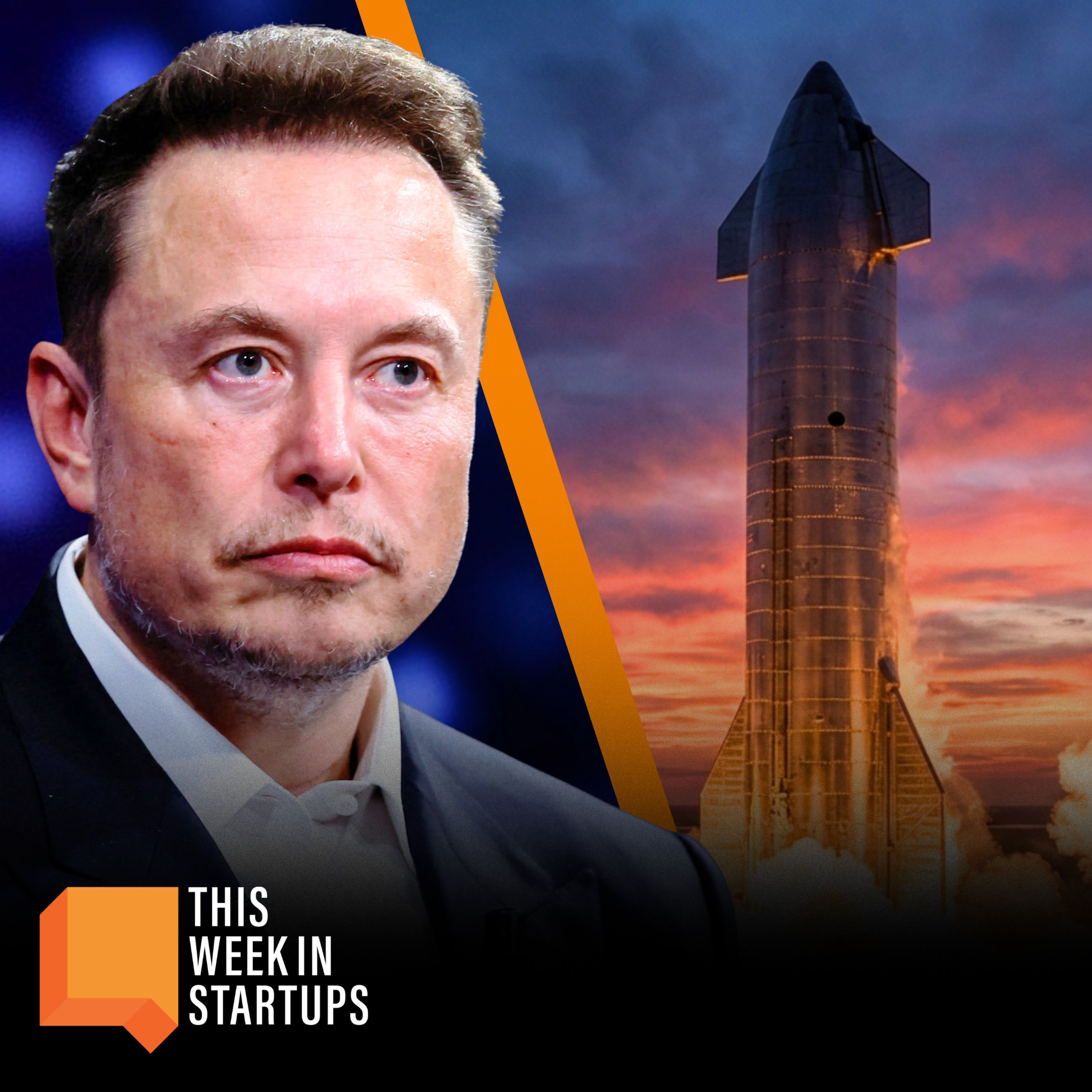
Projections based on SpaceX's launch cost reductions indicate that deploying AI data centers in space will become as economical as building them on Earth by 2035. This transforms a science fiction concept into a near-term business reality, driven by advantages like superior cooling and unlimited solar power.

Unlike current rockets, Starship is designed for full and rapid reusability. This aircraft-like operational model is projected to drop the cost per kilogram to orbit from over $1,400 to potentially as low as $10, enabling an economic revolution for space-based infrastructure.

The two largest physical costs for AI data centers—power and cooling—are essentially free and unlimited in space. A satellite can receive constant, intense solar power without needing batteries and use the near-absolute zero of space for cost-free cooling. This fundamentally changes the economic and physical limits of large-scale computation.

On Earth, each new data center is more expensive than the last due to land and energy constraints. In space, manufacturing satellites at scale and declining launch costs (via Starship) mean the marginal cost for each new data center goes down, creating fundamentally different scaling economics.
Recent viability for orbital data centers doesn't stem from new server technology, but from SpaceX's Starship rocket. Its success in dramatically lowering the cost of launching mass into orbit is the critical, non-obvious enabler that makes the entire concept economically plausible for the first time.

The astronomical power and cooling needs of AI are pushing major players like SpaceX, Amazon, and Google toward space-based data centers. These leverage constant, intense solar power and near-absolute zero temperatures for cooling, solving the biggest physical limitations of scaling AI on Earth.
Due to constant solar power (5x effectiveness, no batteries needed for nighttime) and avoiding terrestrial regulations, Musk predicts space will become the most economically compelling place for AI compute in less than 36 months.