Get your free personalized podcast brief
We scan new podcasts and send you the top 5 insights daily.
To remain relevant, universities need a radical overhaul. Economist Tyler Cowen suggests dedicating one-third of higher education to teaching students how to use AI. The remaining two-thirds should focus on fundamental skills like in-person writing instruction and practical life skills like personal finance.

Related Insights
AI has made knowledge—the ability to produce information—cheap and accessible. The new currency is wisdom: knowing what matters, where to focus, and how to find purpose. This shifts the focus of work and education from learning facts to developing critical thinking, empathy, and judgment.

Former OpenAI scientist Andrej Karpathy posits that once AGI handles most cognitive tasks, education will shift from a professional necessity to a personal pursuit. Similar to how people visit gyms for health and enjoyment despite machines handling heavy labor, learning will become an optional activity for fulfillment.
With industry dominating large-scale model training, academia’s comparative advantage has shifted. Its focus should be on exploring high-risk, unconventional concepts like new algorithms and hardware-aligned architectures that commercial labs, focused on near-term ROI, cannot prioritize.

The traditional, decades-long path to becoming a senior engineer is no longer practical. Aspiring engineers should instead focus on mastering AI coding assistants. You can be highly effective by learning how to prompt, guide, and debug AI-generated code, bypassing the need for deep foundational knowledge.

ASU's president argues that if an AI can answer an assignment, the assignment has failed. The educator's role must evolve to use AI to 'up the game,' forcing students to ask more sophisticated questions, making the quality of the query—not the synthesized answer—the hallmark of learning.

In an age where AI can produce passable work, an educator's primary role shifts. Instead of focusing solely on the mechanics of a skill like writing, the more crucial and AI-proof job is to inspire students and convince them of the intrinsic value of learning that skill for themselves.

The traditional value proposition of college is being challenged by AI tools that offer instant, expert-level information. For aspiring entrepreneurs, this shifts the calculus, making immediate real-world experience a more attractive and faster path to success than incurring debt for a formal degree.

To prepare for AI's career impact, Vanguard's chief economist advises using it as much as possible now. This not only increases your immediate productivity and value but also acts as an early warning system, revealing if your role is truly vulnerable to automation and giving you time to adapt.

Generative AI's appeal highlights a systemic issue in education. When grades—impacting financial aid and job prospects—are tied solely to finished products, students rationally use tools that shortcut the learning process to achieve the desired outcome under immense pressure from other life stressors.
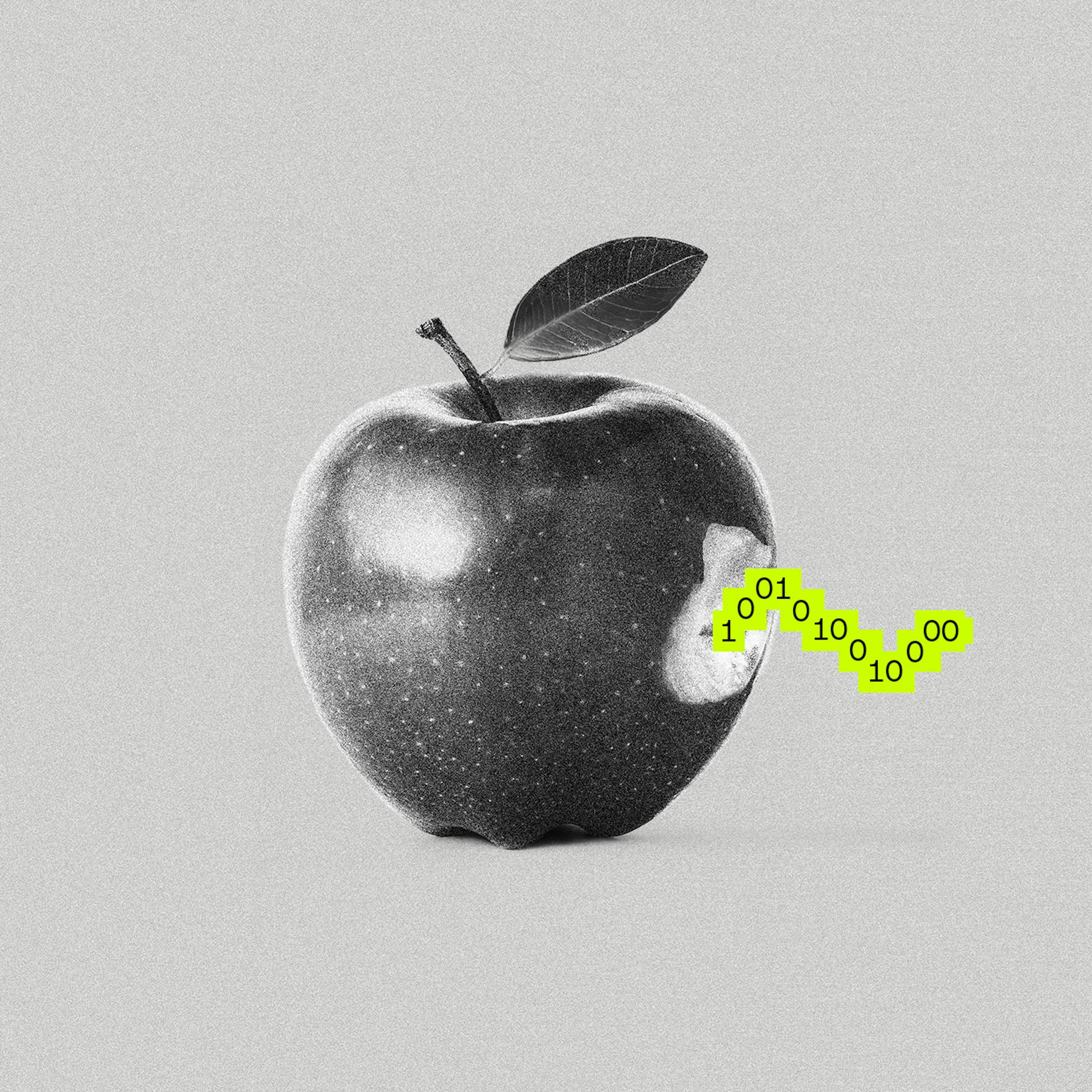
Experience alone no longer determines engineering productivity. An engineer's value is now a function of their experience plus their fluency with AI tools. Experienced coders who haven't adapted are now less valuable than AI-native recent graduates, who are in high demand.
