Get your free personalized podcast brief
We scan new podcasts and send you the top 5 insights daily.
Less-than-truckload (LTL) carriers like Old Dominion build moats through extensive physical networks of service centers. A key barrier to entry for competitors is real estate; ODFL's legacy locations are in dense population centers, while new entrants face "Not In My Backyard" (NIMBY) opposition, forcing them to build further out.

Related Insights
In markets with poor infrastructure, such as Southeast Asia's incomplete address systems, building proprietary logistics is a key differentiator. Sea assigned its best talent to solve this "hard problem," creating a sustainable advantage over competitors by owning the customer experience from click to delivery.

Rockefeller identified transportation as his largest expense and made it his obsession. Instead of just minimizing this cost, he transformed it into a strategic weapon, negotiating secret rebates that not only lowered his costs but also generated profit from competitors' shipments, effectively funding his monopolistic expansion.

While AI agents could shift sales away from traditional retailers, companies with extensive physical infrastructure and forward-positioned inventory have a defense. AI agents prioritizing speed and efficiency for physical goods will likely still favor these established networks, preventing full disintermediation in the new agentic commerce landscape.

Contrary to the belief that a moat always leads to large-cap status, small-cap moats often protect a profitable niche. The moat provides time and protection for management to operate, but the "castle" itself may have a limited growth runway, focusing on returns within a specific market.
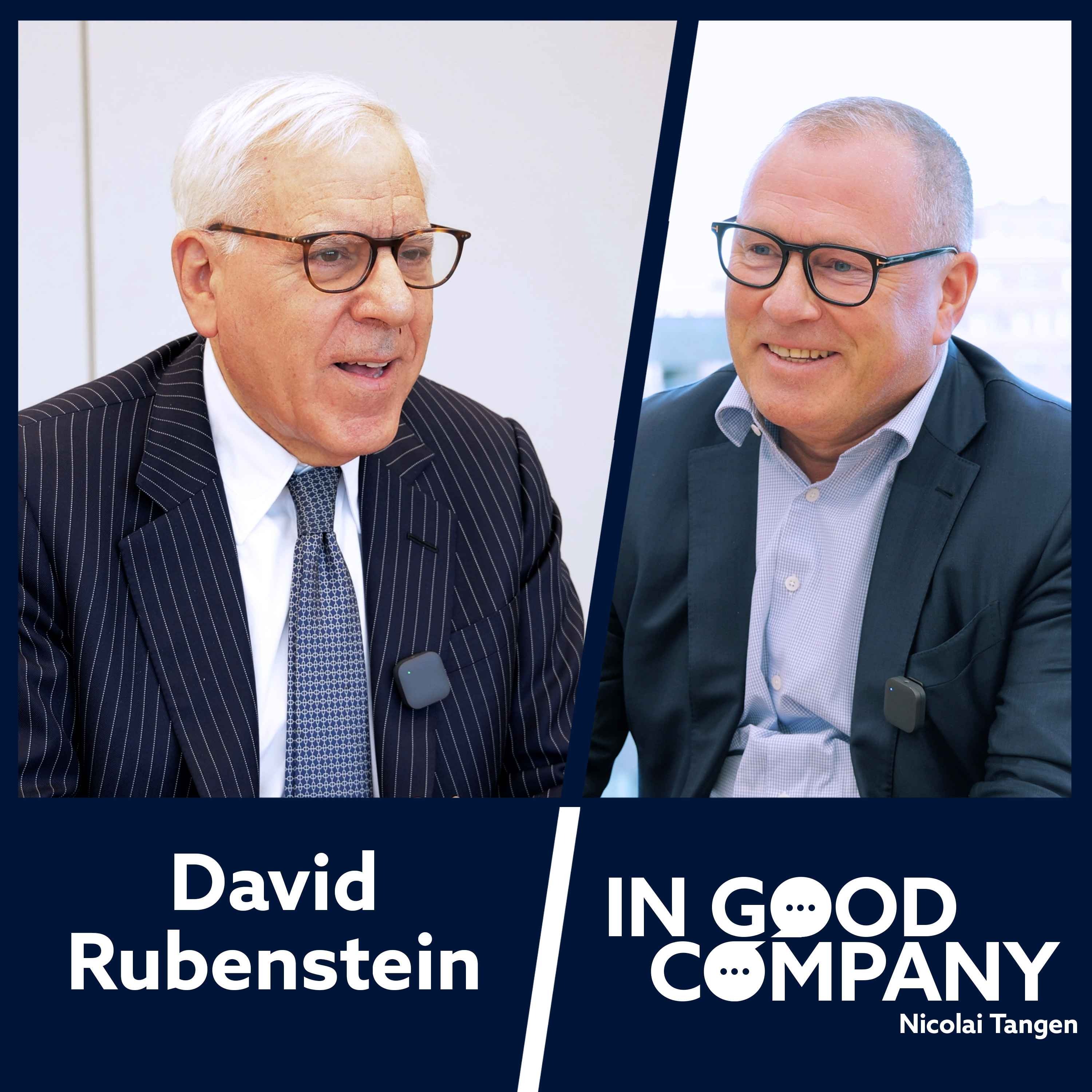
Instead of competing in saturated New York, David Rubenstein founded Carlyle in Washington D.C. He leveraged the location by specializing in government-affected industries like aerospace, creating a unique expertise that Wall Street couldn't easily replicate. This strategy turned a perceived geographic disadvantage into a powerful, defensible market niche.
Amadeus was formed by major airlines to create a neutral distribution system. This origin story provided immediate scale, credibility, and deep industry integration, creating a powerful competitive moat from day one that would be nearly impossible for a startup to replicate.
![Amadeus: The IT Backbone of Travel - [Business Breakdowns, EP.237] thumbnail](https://megaphone.imgix.net/podcasts/c620c8c6-d71a-11f0-9692-afcb97dfa505/image/899d2faf2d0e1f2099a133061a1114be.jpg?ixlib=rails-4.3.1&max-w=3000&max-h=3000&fit=crop&auto=format,compress)
A sustainable competitive advantage is often rooted in a company's culture. When core values are directly aligned with what gives a company its market edge (e.g., Costco's employee focus driving superior retail service), the moat becomes incredibly difficult for competitors to replicate.
![[REPLAY] Paul Black - Gratitude, Fun, and Growth Stocks (Capital Allocators, EP.51) thumbnail](https://static.libsyn.com/p/assets/f/b/7/6/fb76e1c8bfb69e8dd959afa2a1bf1c87/CA_Square_logo_light_background_6.26.24.jpg)
In Texas, mineral rights holders have eminent domain-like powers for oil and gas extraction. However, these rights do not extend to water disposal infrastructure. This legal nuance makes it incredibly difficult for new entrants to acquire necessary land easements, creating a powerful competitive moat for established players with existing networks.
![WaterBridge: Oil and Water - [Business Breakdowns, EP.228] thumbnail](https://megaphone.imgix.net/podcasts/0e99e7ea-98e6-11f0-8315-63bfbdfcc846/image/a11bda9be8779f3e263bf32735c714a2.jpg?ixlib=rails-4.3.1&max-w=3000&max-h=3000&fit=crop&auto=format,compress)
Sustainable scale isn't just about a better product; it's about defensibility. The three key moats are brand (a trusted reputation that makes you the default choice), network (leveraged relationships for partnerships and talent), and data (an information advantage that competitors can't easily replicate).

New technology like AI doesn't automatically displace incumbents. Established players like DoorDash and Google successfully defend their turf by leveraging deep-rooted network effects (e.g., restaurant relationships, user habits). They can adopt or build competing tech, while challengers struggle to replicate the established ecosystem.
