Get your free personalized podcast brief
We scan new podcasts and send you the top 5 insights daily.
Auto auctioneer Copart has a deep moat built on its global network. It can take a car deemed a total loss in the U.S. due to high-cost repairs (e.g., bumper sensors) and auction it in a market like Eastern Europe. Buyers there may not care about the sensors, maximizing recovery value for insurers and creating a hard-to-replicate system.

Related Insights
Amadeus reinvests heavily in R&D, with a spend equivalent to its #3 competitor's total revenue. This creates a widening technology and product gap that smaller players cannot bridge, fortifying its market leadership and making it increasingly difficult for others to keep up.
![Amadeus: The IT Backbone of Travel - [Business Breakdowns, EP.237] thumbnail](https://megaphone.imgix.net/podcasts/c620c8c6-d71a-11f0-9692-afcb97dfa505/image/899d2faf2d0e1f2099a133061a1114be.jpg?ixlib=rails-4.3.1&max-w=3000&max-h=3000&fit=crop&auto=format,compress)
Copycats are inevitable for successful CPG products. The best defense isn't intellectual property, but rapid execution by a team that has 'done it before.' Building a diverse distribution footprint and a strong brand quickly makes it harder for competitors to catch up.

While AI agents could shift sales away from traditional retailers, companies with extensive physical infrastructure and forward-positioned inventory have a defense. AI agents prioritizing speed and efficiency for physical goods will likely still favor these established networks, preventing full disintermediation in the new agentic commerce landscape.

A powerful, overlooked competitive moat exists in the "outsourced R&D" model. These companies, like Core Labs in energy or Christian Hansen in food, become so integral to clients' innovation that they command high margins and valuations that appear expensive when viewed only through the lens of their specific industry.
![[REPLAY] Paul Black - Gratitude, Fun, and Growth Stocks (Capital Allocators, EP.51) thumbnail](https://static.libsyn.com/p/assets/f/b/7/6/fb76e1c8bfb69e8dd959afa2a1bf1c87/CA_Square_logo_light_background_6.26.24.jpg)
GE serves two distinct customers: powerful airframers for the initial sale and a fragmented base of hundreds of airlines for aftermarket services. This split forces new entrants to solve a '3D puzzle' of satisfying both technically demanding OEMs and a global user base simultaneously, creating an immense and durable barrier to entry.
![GE Aerospace: Full Throttle - [Business Breakdowns, EP.234] thumbnail](https://megaphone.imgix.net/podcasts/b4e183c0-c0f9-11f0-9cb9-1fd84f161334/image/52fc2070fb32ee2a270fcf835e7c161a.jpg?ixlib=rails-4.3.1&max-w=3000&max-h=3000&fit=crop&auto=format,compress)
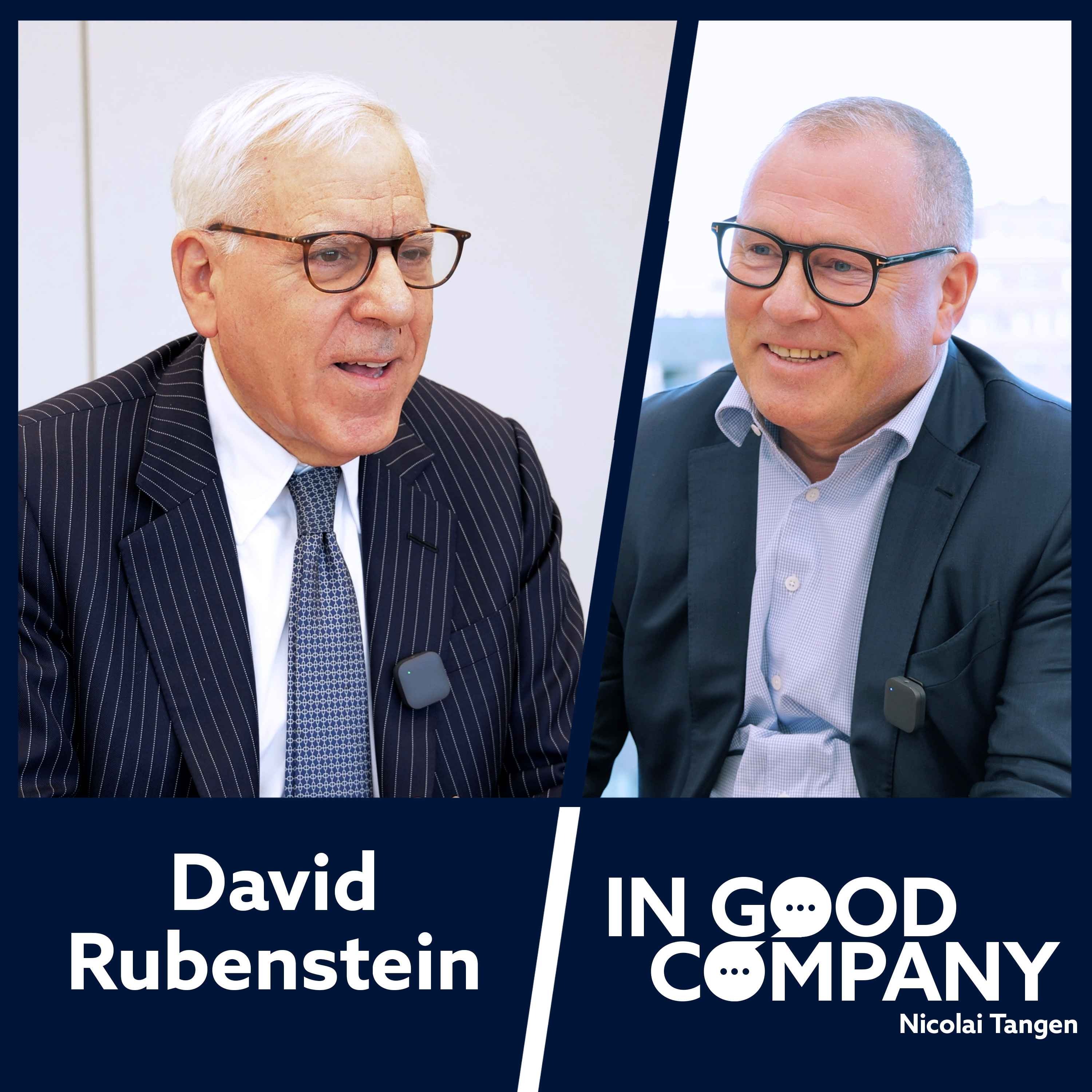
Instead of competing in saturated New York, David Rubenstein founded Carlyle in Washington D.C. He leveraged the location by specializing in government-affected industries like aerospace, creating a unique expertise that Wall Street couldn't easily replicate. This strategy turned a perceived geographic disadvantage into a powerful, defensible market niche.
The long-held belief that a complex codebase provides a durable competitive advantage is becoming obsolete due to AI. As software becomes easier to replicate, defensibility shifts away from the technology itself and back toward classic business moats like network effects, brand reputation, and deep industry integration.

While patents are important, a pharmaceutical giant's most durable competitive advantage is its ability to navigate complex global regulatory systems. This 'regulatory know-how' is a massive barrier to entry that startups cannot easily replicate, forcing them into acquisition by incumbents.
A sustainable competitive advantage is often rooted in a company's culture. When core values are directly aligned with what gives a company its market edge (e.g., Costco's employee focus driving superior retail service), the moat becomes incredibly difficult for competitors to replicate.
Less-than-truckload (LTL) carriers like Old Dominion build moats through extensive physical networks of service centers. A key barrier to entry for competitors is real estate; ODFL's legacy locations are in dense population centers, while new entrants face "Not In My Backyard" (NIMBY) opposition, forcing them to build further out.