Get your free personalized podcast brief
We scan new podcasts and send you the top 5 insights daily.
While clinicians often ponder how to prioritize treatments for patients with multiple actionable biomarkers, this scenario is exceedingly rare in practice. The guiding principle, if it does occur, is to choose the therapy with the strongest supporting clinical trial data, though this remains an infrequent dilemma.
Related Insights
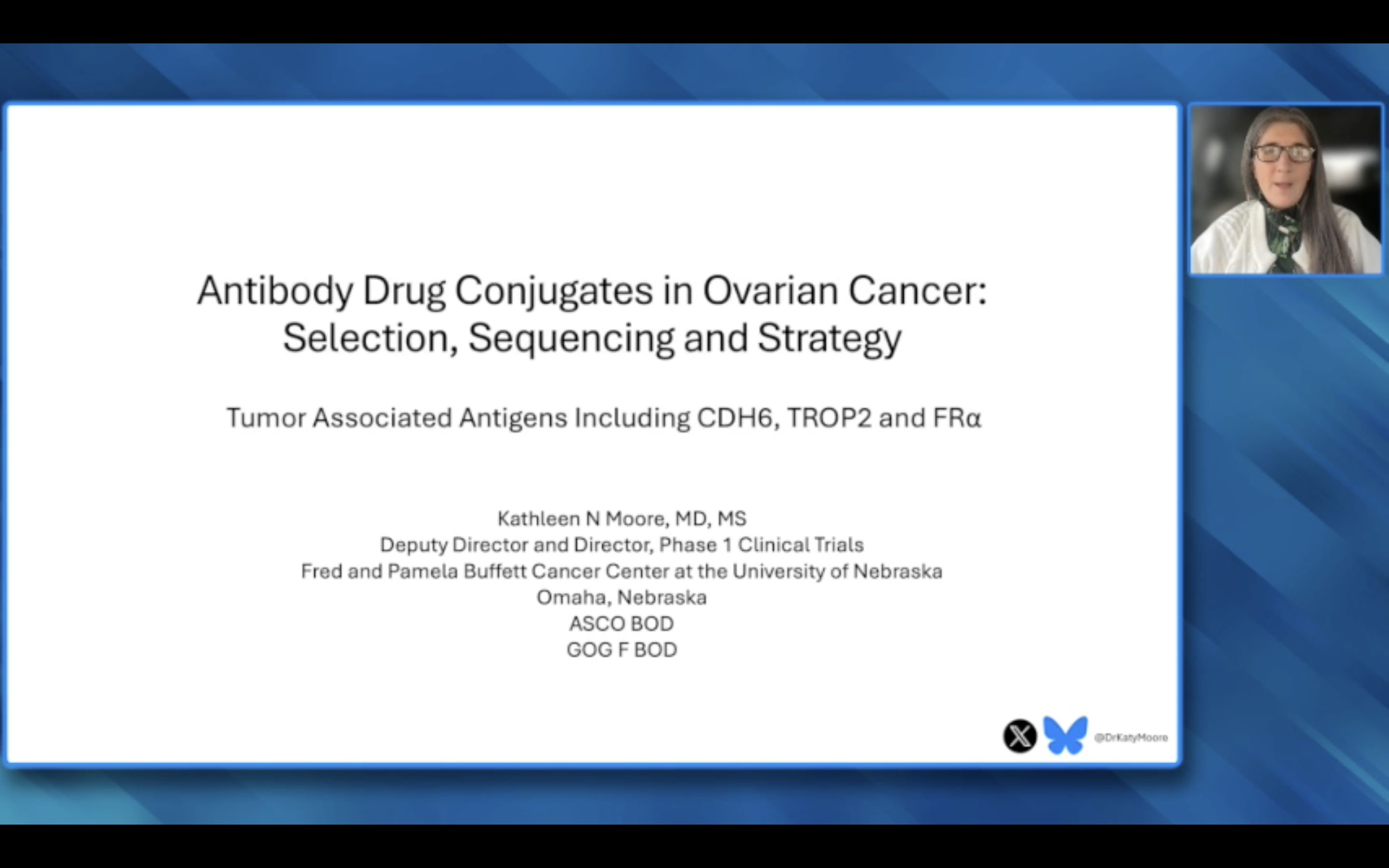
The introduction of ADCs into frontline ovarian cancer treatment creates a new challenge: conflicting biomarkers. A patient's tumor might be positive for both HER2 (an ADC target) and a BRCA mutation (a PARP inhibitor target), forcing clinicians to choose between two effective targeted therapies without clear guidance.
Effective treatment of HER2-driven NSCLC requires more than just identifying mutations. HER2 is a multiplexed biomarker where both genetic mutations (TKD and non-TKD) and protein overexpression (via IHC) are independently actionable. Comprehensive testing is crucial to ensure patients are eligible for the full range of available targeted therapies, including TKIs and ADCs.

The field of multiple myeloma has transformed from having few treatments to an abundance of effective drugs. The primary clinical challenge is no longer finding a therapy that works, but rather determining the optimal sequence and combination of available options, highlighting a unique form of market maturity.

As multiple new drugs like antibody-drug conjugates (ADCs) become available for SCLC, the critical research question will shift from *if* they work to *when* they should be used. Future biomarker strategies must focus on optimizing treatment sequences, considering factors like the drug's target and payload.
When patients present with both ESR1 and PI3K mutations, treatment selection isn't based on a definitive molecular test. Instead, oncologists make a clinical judgment, inferring the dominant resistance pathway from factors like the duration of prior therapy to guide their choice of targeted agent.
An individual tumor can have hundreds of unique mutations, making it impossible to predict treatment response from a single genetic marker. This molecular chaos necessitates functional tests that measure a drug's actual effect on the patient's cells to determine the best therapy.

The future of medicine isn't about finding a single 'best' modality like CAR-T or gene therapy. Instead, it's about strategic convergence, choosing the right tool—be it a bispecific, ADC, or another biologic—based on the patient's specific disease stage and urgency of treatment.

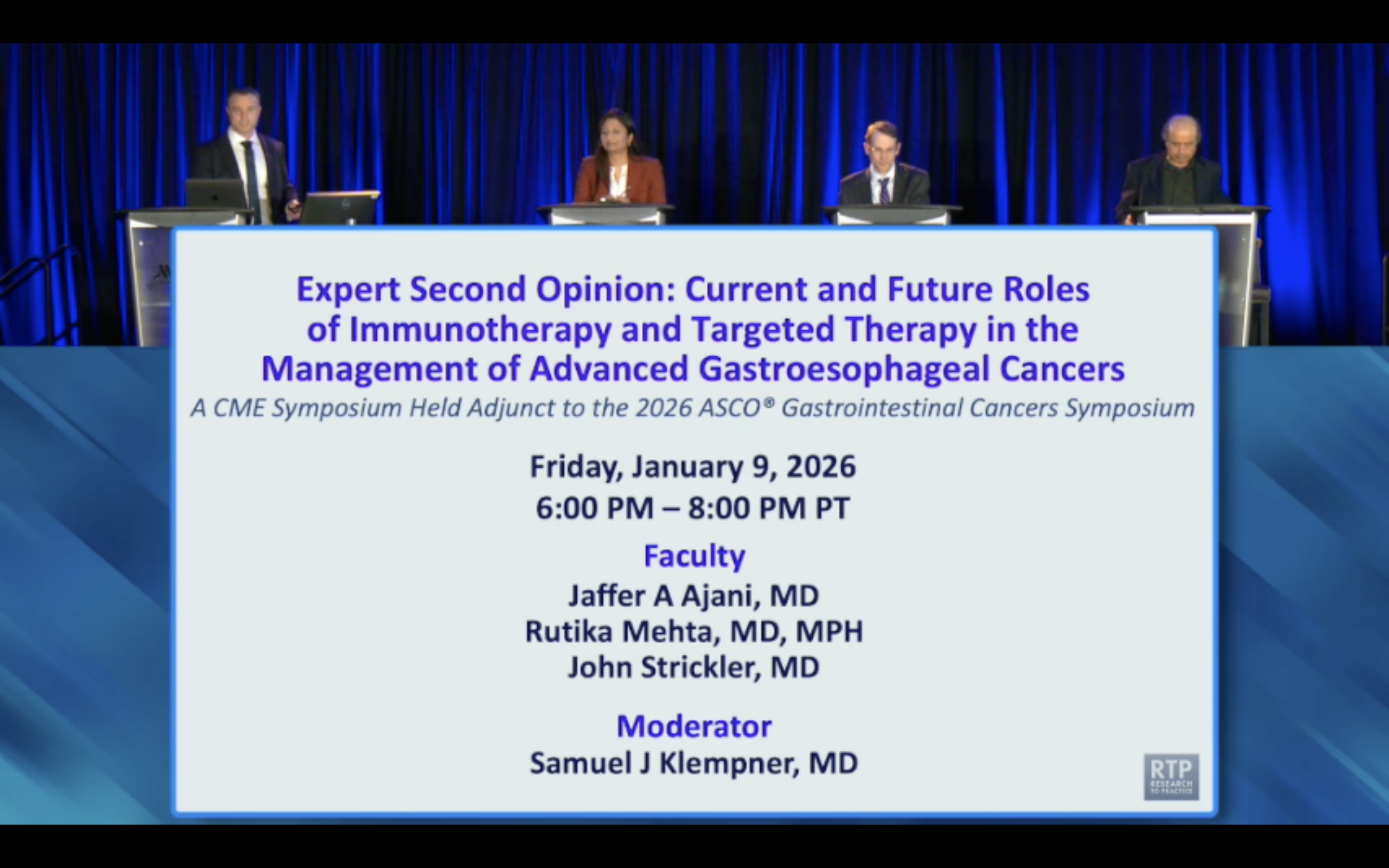
In the increasingly common scenario of gastric cancer with multiple biomarkers (HER2, PD-L1, Claudin), experts recommend a clear hierarchy. Based on data maturity, HER2-targeted therapy is the first choice, followed by PD-L1 immunotherapy, with Claudin-targeted therapy third.

Despite acknowledging that a one-size-fits-all treatment duration is suboptimal, the expert consensus is to follow the study protocol. This conservative, evidence-based approach prevails due to the absence of validated biomarkers, like ctDNA, to safely guide treatment de-escalation for individual patients.

In the increasingly common scenario of a patient with multiple positive biomarkers, a clear hierarchy exists for treatment decisions. Based on the robustness and maturity of clinical trial data, HER2-directed therapy is the top priority, followed by PD-L1 immunotherapy, with Claudin-18.2 targeting considered third.