Get your free personalized podcast brief
We scan new podcasts and send you the top 5 insights daily.
The introduction of ADCs into frontline ovarian cancer treatment creates a new challenge: conflicting biomarkers. A patient's tumor might be positive for both HER2 (an ADC target) and a BRCA mutation (a PARP inhibitor target), forcing clinicians to choose between two effective targeted therapies without clear guidance.
Related Insights
A novel strategy involves combining antibody-drug conjugates (ADCs) with PARP inhibitors. This approach could potentially overcome the need for a germline BRCA mutation, significantly broadening the patient population that could benefit from PARP inhibitor therapy in triple-negative breast cancer.
The B96 trial's potential approval for platinum-resistant ovarian cancer introduces a new treatment sequencing challenge. Clinicians must decide between this immunotherapy combination and the ADC mervituximab, which has a clear biomarker (foliate receptor alpha). The lack of a reliable biomarker for the B96 regimen complicates this decision-making process for patients.

Real-world data shows that in platinum-sensitive ovarian cancer patients who have progressed on PARP inhibitors, subsequent platinum-based chemotherapy has a surprisingly low response rate of only 20%. This quantifies a significant opportunity for highly active ADCs to potentially replace platinum in this growing patient population.
Unlike early ADCs requiring high biomarker expression (e.g., mirvetuximab), next-generation agents show efficacy even in low-expressing tumors. This allows for broader, "all-comer" clinical trial inclusion criteria instead of biomarker-gated entry, potentially expanding patient access to these novel therapies.
The ADC mirvetuximab is the first drug to demonstrate an overall survival benefit for platinum-resistant ovarian cancer. This groundbreaking result establishes a higher efficacy standard that subsequent therapies will likely need to meet for regulatory approval and clinical adoption, raising the bar for future drug development.
Experts question if HER2 status truly predicts ADC efficacy in urothelial cancer. The benefit seen across low-expression levels suggests HER2's main role may be simply to target the chemo payload to cancer cells, rather than indicating a specific biological dependency.

Emerging data shows that a second ADC, particularly one with the same payload, often has limited efficacy. This suggests clinicians must be highly strategic in selecting the first ADC, as it may be their most impactful opportunity for this class of drugs.
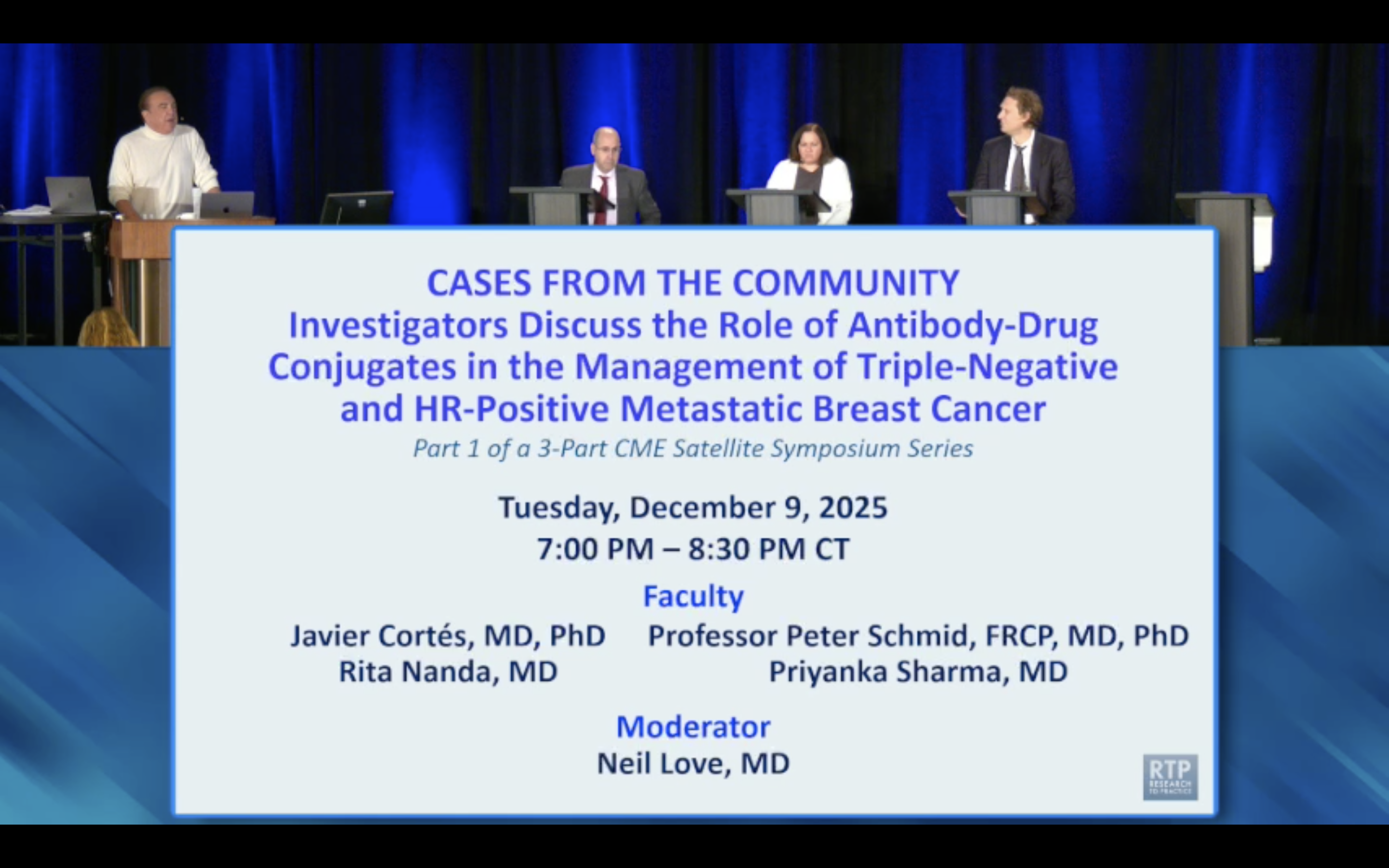
As multiple effective Antibody-Drug Conjugates (ADCs) become available, the primary clinical challenge is no longer *if* they work, but *how* to use them best. Key unanswered questions involve optimal sequencing, dosing for treatment versus maintenance, and overall length of therapy, mirroring issues already seen in breast cancer.
Historically, therapies for platinum-resistant ovarian cancer were so ineffective that the order of administration was irrelevant. With the advent of multiple active ADCs, the concept of treatment sequencing and potential cross-resistance based on payloads or targets has become a critical, and entirely new, clinical consideration for this disease.
Giving adjuvant olaparib to BRCA-mutated patients who have already achieved a pathologic complete response (pCR) from neoadjuvant platinum-based chemotherapy is discouraged. Their prognosis is already excellent, so adding a PARP inhibitor offers little potential benefit while exposing them to unnecessary risks of toxicity, such as MDS/AML.