Get your free personalized podcast brief
We scan new podcasts and send you the top 5 insights daily.
China views US concerns over its "civil-military fusion" as hypocritical, pointing to America's own long-standing military-industrial complex and Defense Production Act. They see this as a motivated double standard used to justify unfair trade actions, which erodes US credibility and trust.

Related Insights
Being designated a 'Chinese military company' by the Pentagon has minimal direct business impact. Its true purpose is performative, creating a chilling effect that discourages Corporate America from partnering with listed firms like Alibaba and BYD due to perceived political risk.

The US is adopting the PRC's tactic of forcing private tech companies into military service. This contradicts free-enterprise principles and threatens to kill the very innovation the government wants to leverage, a known long-term failure of the Chinese model, potentially causing top talent and companies to flee.

To counter China's military-civil fusion, the US can revive its own successful WWII model. During that war, commercial companies like Ford and GM became the backbone of military production, demonstrating that deep commercial integration is key to achieving modern scalability and resilience.

The public, acrimonious dispute between the Pentagon and a leading U.S. AI firm is a strategic gift to China. While America's defense-tech ecosystem is distracted by infighting and political risk, China continues its comprehensive and focused military AI development unimpeded.
From the Chinese perspective, US semiconductor export controls are not just a competitive tactic but an attempt to enforce technological dependency. This directly triggers deep-seated fears from their "century of humiliation," strengthening their resolve to achieve complete self-sufficiency at any cost.
China operates as a two-speed economy. While the consumer side is slowing, Xi Jinping is pouring resources into a state-directed 'national security economy' focused on advanced tech and military modernization. U.S. policy should be narrowly tailored to disrupt this specific sector, not the broader economy.
Chinese state media's critique of Anthropic reveals a strategic narrative: framing US-led AI safety and audit rules as a "double standard." China argues the U.S. is creating "cyberweapons" while attempting to restrict Chinese labs, turning safety discussions into a negotiation over technological and global influence.

The National Security Commission on AI advocates that to win the AI arms race, the U.S. must replicate China's "civil-military fusion" model, which deeply integrates the private tech sector with the military. This strategy risks sacrificing American civil liberties and values under the justification of national security, essentially arguing we must become China to beat China.

The PLA is the armed wing of the Chinese Communist Party, not the state. Xi Jinping is the only civilian on the Central Military Commission, making it the sole locus of party (and civilian) control, unlike Western models with extensive civilian oversight.
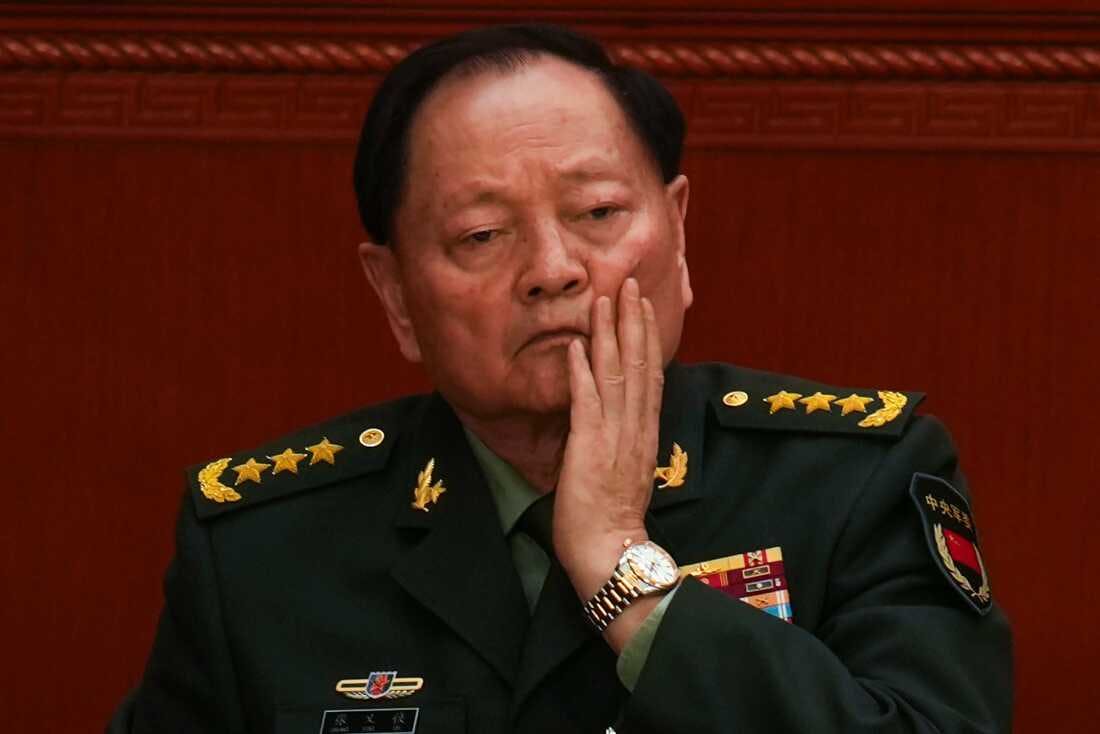
The most significant point of friction for ordinary Chinese citizens is the constant U.S. military presence near its borders, such as naval patrols in the Taiwan Strait and bases in South Korea and Japan. This sense of being militarily encircled is a more potent source of public frustration than economic disputes.
