Get your free personalized podcast brief
We scan new podcasts and send you the top 5 insights daily.
The quality of free AI tools shapes the perception of hundreds of millions of users. By significantly improving the capability of its free offering, a company like OpenAI can directly challenge the narrative of AI skeptics and change mainstream understanding more effectively than any marketing campaign.

Related Insights
The most effective strategy for AI companies to manage public backlash is to make their products pragmatically helpful to as many people as possible. Instead of just warning about disruption ('yelling fire'), companies should focus their communication on providing tools ('paddles') that help people navigate the changes.

Polling data reveals a significant divide: people who regularly use AI are far less negative about it than non-users. This suggests the most effective way to combat public fear is to encourage hands-on interaction and demonstrate tangible benefits, rather than relying solely on messaging.

Sam Altman argues there is a massive "capability overhang" where models are far more powerful than current tools allow users to leverage. He believes the biggest gains will come from improving user interfaces and workflows, not just from increasing raw AI intelligence.
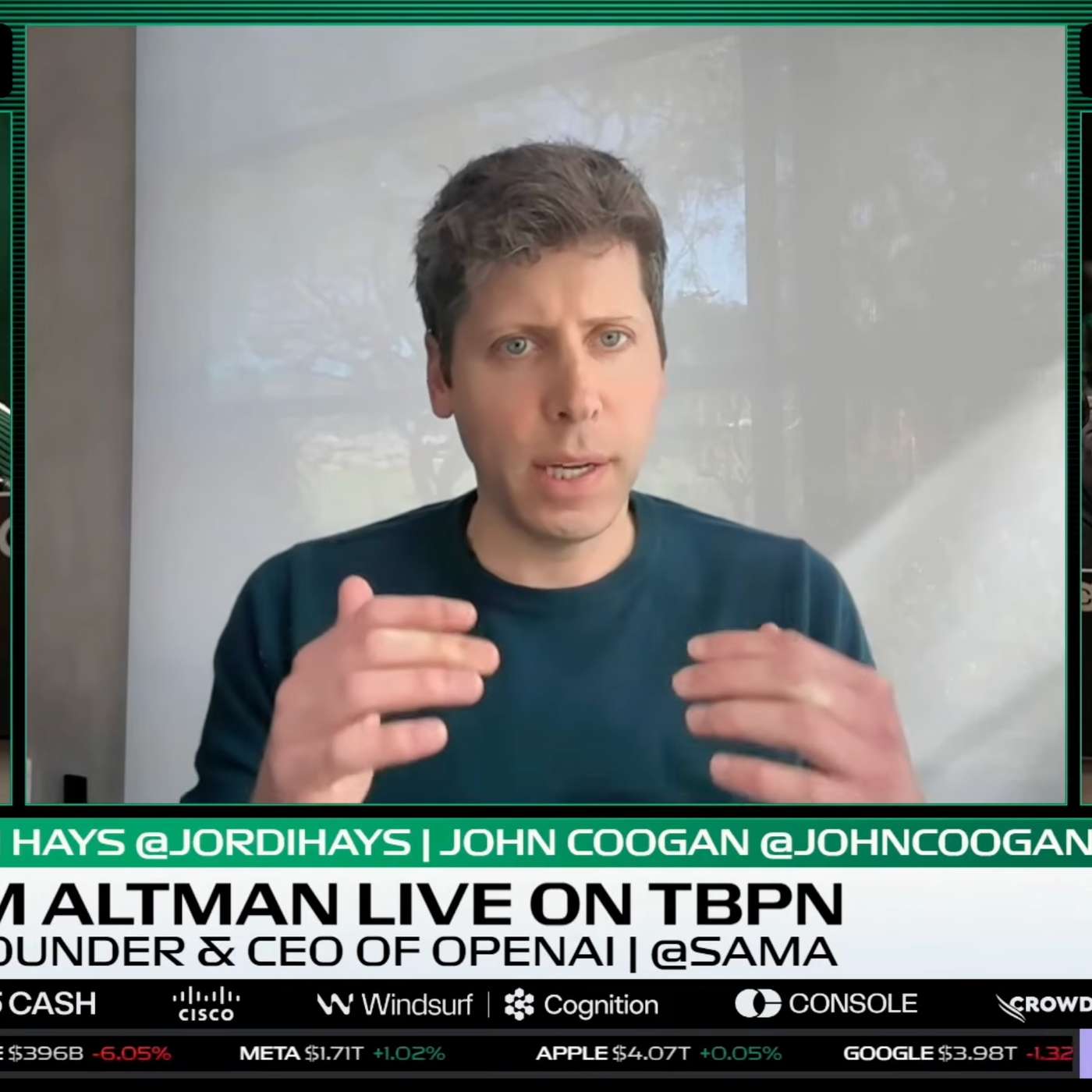
Despite models demonstrating PhD-level capabilities, most people only use them for basic tasks. The biggest hurdle for AI companies is not making models smarter, but bridging this usability gap by making advanced power easily accessible to the average person, likely through better interfaces and agents.

Non-tech professionals often judge AI by obsolete limitations like six-fingered images or knowledge cutoffs. They don't realize they already consume sophisticated AI content daily, creating a significant perception gap between the technology's actual capabilities and its public reputation.
The capabilities of free, consumer-grade AI tools are over a year behind the paid, frontier models. Basing your understanding of AI's potential on these limited versions leads to a dangerously inaccurate assessment of the technology's trajectory.

The public's perception of AI is largely based on free, less powerful versions. This creates a significant misunderstanding of the true capabilities available in top-tier paid models, leading to a dangerous underestimation of the technology's current state and imminent impact.
Public skepticism towards AI is fueled by the perception that wealth is being concentrated by a select few. A radical solution is to grant a broad base of people direct ownership stakes in foundational model companies, aligning incentives and shifting the narrative to one of shared investment in the future.
To achieve mass adoption, ChatGPT must move beyond its current 'computer terminal' interface. The next wave of users are too busy to learn prompting; the product needs clearer affordances and must proactively anticipate needs rather than waiting for commands to provide value.

In response to Anthropic's ads, Sam Altman positioned OpenAI as committed to free access for billions via ads, while casting Anthropic as an "expensive product to rich people." This reframes the business model debate as a question of democratic accessibility versus exclusivity.
