Get your free personalized podcast brief
We scan new podcasts and send you the top 5 insights daily.
Claude Code's "magic moment" came from letting the AI read and write directly to a user's files. This eliminated the painful, universal workflow of copying code between a chatbot and an IDE, demonstrating immediate, tangible value that drove adoption.

Related Insights
Users rarely seek out separate AI functionality. Adoption becomes natural when AI assistance appears contextually within existing workflows, addressing friction points directly where the user is already working. This embedded approach is far more effective than adding AI as a separate, layered-on tool.
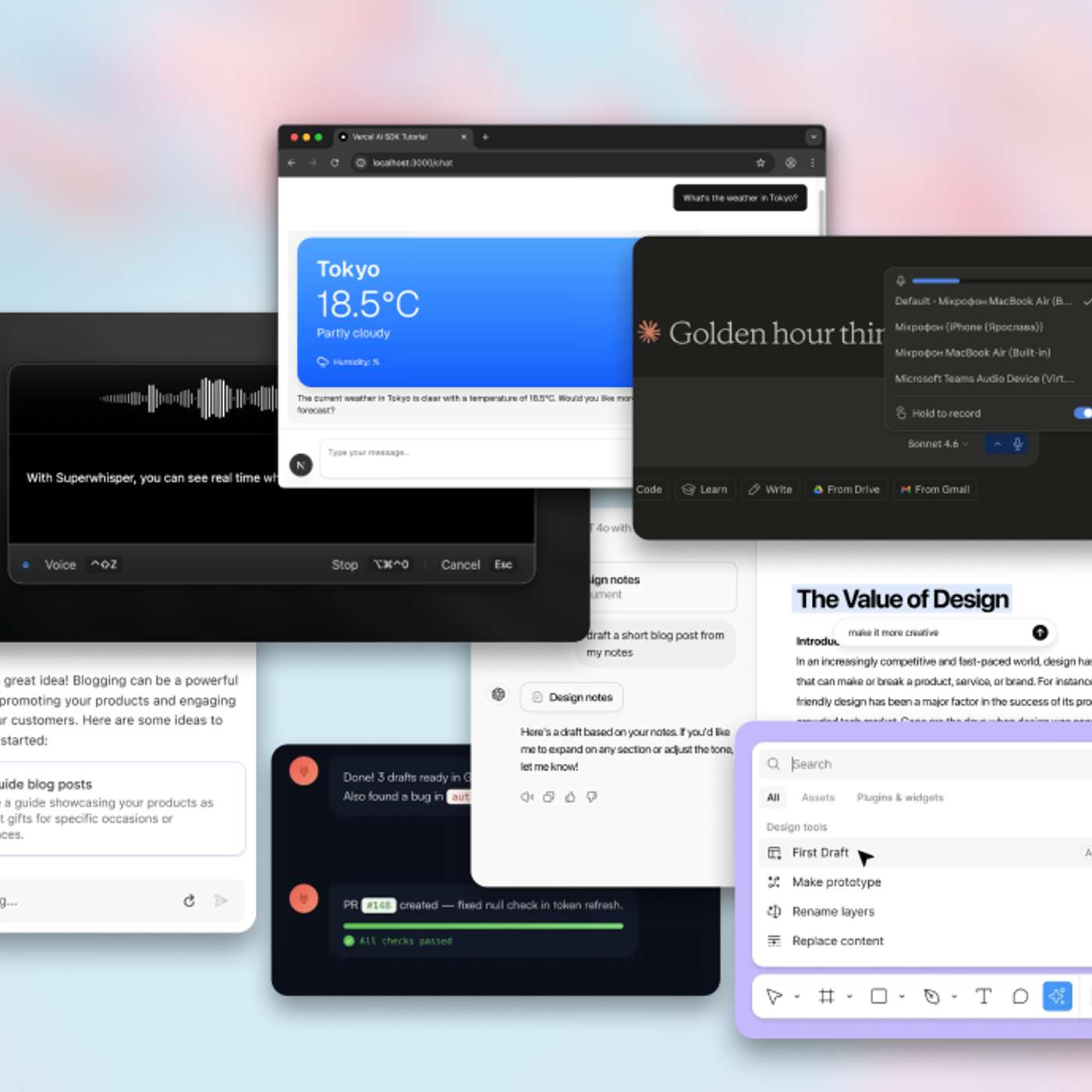
The viral adoption of tools like Claude Code by non-technical users demonstrates a market shift. Unlike advisory AIs (e.g., ChatGPT) that offer guidance, these new "doer" tools actively complete tasks like building a website, providing immediate, tangible value that lowers the barrier to creation for everyone.

The key differentiator in AI is moving beyond model power to how seamlessly it's integrated into daily workflows. Tools like Claude Tag, which embeds AI into Slack, lower the barrier for non-technical users and prove that user experience and contextual integration are becoming primary drivers of value.
To get skeptical engineers to adopt AI, don't focus on complex coding tasks. Instead, provide tools that automate the tedious, soul-crushing "paper cut" tasks like writing unit tests, linting, and fixing design debt. This frames AI as a tool that frees them up for more enjoyable, high-impact work.

Using AI as a separate, copy-paste tool is inefficient. The real breakthrough comes when AI is integrated directly into your work environment, providing full context and eliminating friction, as seen with AI-native IDEs for developers.

Teams embrace AI more quickly when it enables them to perform entirely new tasks they couldn't do before, like coding or advanced data analysis. This is more motivating than using AI for incremental improvements on existing workflows, which can feel less exciting and impactful.

To drive adoption of automation tools, you must remove the user's trade-off calculation. The core insight is to make the process of automating a task forever fundamentally faster and easier than performing that same task manually just once. This eliminates friction and makes automation the default choice.

To get mainstream users to adopt AI, you can't ask them to learn a new workflow. The key is to integrate AI capabilities directly into the tools and processes they already use. AI should augment their current job, not feel like a separate, new task they have to perform.
Tools like Claude Code offer superior capabilities beyond standard chatbots. They can access local file systems, enabling them to read and write files, maintain persistent memory, and execute complex, multi-step "recipes" autonomously, acting as a true virtual assistant rather than a simple text generator.

The key to changing behavior is demonstrating immediate, personal value. Instead of abstract training, identify a universally disliked task—like a weekly report—and build a custom AI solution for it. Solving a major pain point is the most effective way to drive organic adoption.
